The Gondogoro La trek is a 21-day Karakoram crossing that costs from $2,600 per person all-inclusive, climbing the Baltoro Glacier to K2 Base Camp and exiting over the 5,585m Gondogoro La pass into the Hushe valley. It is the grand circuit version of the K2 Base Camp trek — instead of retracing the glacier, you cross a high glaciated pass and stand, on a clear morning, before four of the world’s fourteen eight-thousanders at once. It is mountaineering-grade, weather-dependent, and the finest finish in the range. Here is the honest picture from the Balti team that crosses it every season.
Gondogoro La trek at a glance
- Pass altitude: Gondogoro La, 5,585m (the trek also reaches K2 Base Camp at 5,150m)
- Duration: 21 days, Islamabad to Islamabad
- Cost: from $2,600 per person, all-inclusive on trek
- Season: July to early September — the only window the pass is reliably crossable
- Difficulty: Strenuous and mountaineering-grade at the pass. Fixed ropes, crampons and ice axe required on the crossing; the rest is non-technical glacier trekking.
- Route: Askole → Baltoro Glacier → Concordia → K2 Base Camp → Gondogoro La → Hushe valley
How much does the Gondogoro La trek cost?
Our K2 Base Camp & Gondogoro La Trek runs from $2,600 per person, all-inclusive on trek over 21 days. That covers your guide, cook and porters, all camping and meals, the technical gear and fixed ropes for the pass, permits and community fees, internal transport and trailhead-town hotels. It does not cover international flights, the Pakistan visa fee, personal trekking gear or insurance.
The Gondogoro La costs a little more than the Classic K2 Base Camp out-and-back ($2,300) for good reason: the pass crossing demands extra staff, climbing equipment, fixed ropes and a built-in weather buffer day. You are paying for the safety margin a glaciated 5,585m pass requires. We price fairly because our logistics are local — no broker markup, and no corners cut on the things that keep you safe up high.
What is the Gondogoro La?
The Gondogoro La is a high pass at 5,585m that links the Baltoro Glacier region with the Hushe valley to the south. For trekkers, it transforms the K2 Base Camp trip from an out-and-back into a true traverse: you walk in along the Baltoro, reach K2 Base Camp and Concordia, then climb out over the pass rather than turning back the way you came.
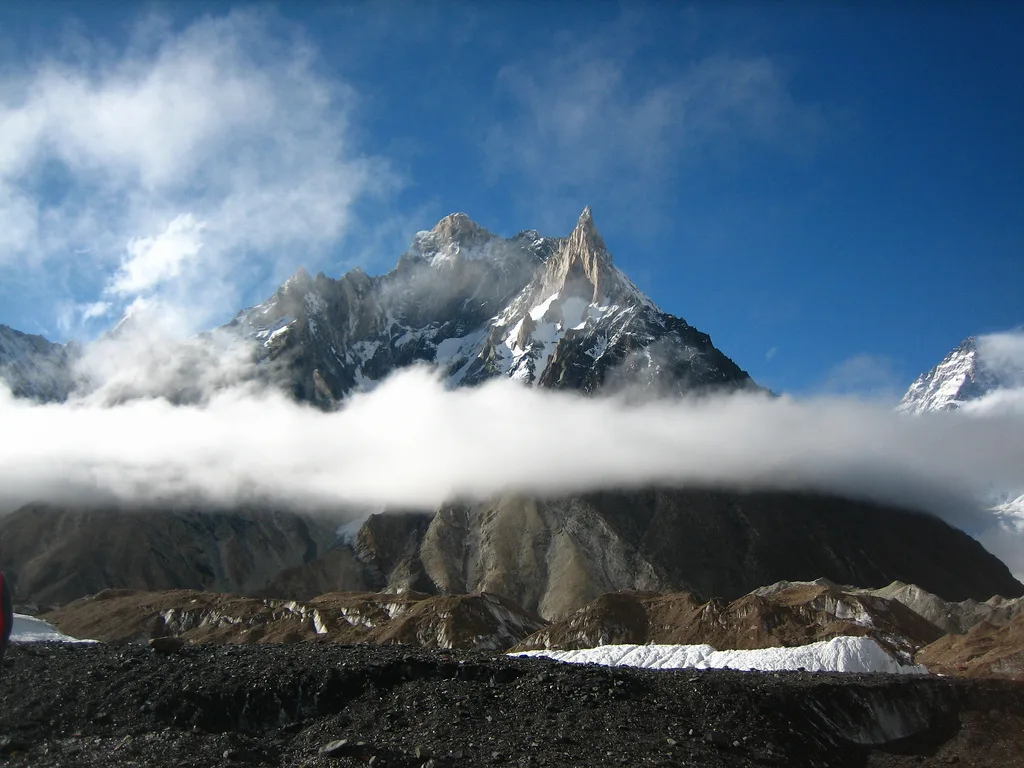
The payoff is the view from the top. On a clear dawn, the north side of the pass looks straight back at K2 (8,611m), Broad Peak (8,051m) and the two Gasherbrums — four eight-thousanders standing together in a single panorama. Very few places on earth put that many of the world’s highest mountains in one frame, and fewer still let a trekker stand among them. South of the pass, the Hushe valley opens green and gentle, a complete change of world after two weeks on the ice.
The route, day by day
Our 21-day itinerary builds in the acclimatisation and a dedicated weather buffer that a glaciated pass demands. The shape of it:
- Days 1–3: Arrive Islamabad (540m), fly to Skardu (2,500m), preparation and acclimatisation in Skardu.
- Day 4: Jeep from Skardu to Askole (3,000m), the last village and trailhead.
- Days 5–7: Askole to Jhola (3,050m), on to Paiju (3,420m), rest day at Paiju before the glacier.
- Days 8–11: Onto the Baltoro (3,795m), Urdukas (3,930m), Goro II (4,295m), Concordia (4,500m).
- Day 12: Concordia to K2 Base Camp (5,150m) and back — the trek’s first high point.
- Days 13–14: Rest at Concordia, then move to Ali Camp (4,800m), the staging camp below the pass.
- Day 15: The crossing — a pre-dawn start over the Gondogoro La (5,585m), down to Khuspang.
- Days 16–17: Khuspang to Dalsampa (4,150m), with a weather buffer day held in reserve for the pass.
- Days 18–21: Dalsampa to Saicho (3,350m), out to Hushe and drive to Skardu (2,500m), fly to Islamabad, depart.
Crossing the pass — the crux
The crossing is the heart of the trek and the part that demands the most respect. From Ali Camp you start in the dark, usually around midnight to one in the morning, to reach and cross the pass while the snow is still frozen firm and the rockfall risk on the descent is lowest. You move roped together, in crampons, with an ice axe; our guides fix ropes on the steep southern descent and bring you down one at a time.
It is genuinely strenuous — a long, cold, high-altitude climb followed by a careful, exposed descent — but it is not technical climbing in the way a summit is. With the fixed ropes, an experienced guide team and reasonable mountain fitness, a fit trekker who has acclimatised properly can cross it safely. The single biggest factor is weather: if conditions are wrong, we wait, which is exactly why the itinerary carries a buffer day. No view is worth forcing a bad crossing.
How hard is the Gondogoro La trek? Fitness and gear
This is a step up from the standard K2 Base Camp trek. You are doing everything the Base Camp trekkers do — two weeks of six-to-eight-hour days on glacier and moraine, nights in tents above 3,500m — and then adding a glaciated pass at 5,585m on top. You do not need prior summit experience, but you should have done multi-day treks before, ideally at altitude, and be comfortable on steep ground.
Train seriously in the months before: long back-to-back hill walks with a loaded daypack, strong cardio, and conditioning for the long descents. What you carry matters as much as your fitness:
- Sturdy, broken-in waterproof boots compatible with crampons, and a sleeping bag rated to at least −15°C
- A full layering system: base layers, fleece, an insulated down jacket and a waterproof shell
- Crampons, an ice axe and a climbing harness for the pass (we provide and fix the ropes; rental can be arranged in Skardu)
- Glacier sunglasses, high-factor sunscreen and a sun hat — the glare on the Baltoro is fierce
- Warm hat, gloves, head torch (essential for the pre-dawn crossing), water bottle, and personal blister and altitude medication
When is the best time to go?
July to early September. The Gondogoro La has a tighter window than the Base Camp trek alone: early in June the pass is often still buried in deep snow and unsafe to cross, and by mid-September the season is closing. July and August give the most stable weather and the best odds of a clear crossing. Because the pass is weather-dependent, we always build a buffer day around it — and we run fixed departures across the season. Message us for the 2026 dates.
Permits, visa and NOC
The Gondogoro La sits in the same restricted border zone as K2 Base Camp, so the paperwork is the same. Foreign trekkers need a Pakistan Trekking & Mountaineering visa (distinct from the standard tourist visa), plus a trekking permit and an NOC (No Objection Certificate) for the route. We arrange the permit and NOC for you and provide a Letter of Invitation to support your visa application; the standard fees are included in your package. Valid travel and medical insurance covering high-altitude trekking and emergency evacuation is required, not optional.
Safety on the crossing
A glaciated 5,585m pass is serious, and we resource it accordingly. Every expedition carries a satellite phone, and we keep established helicopter-rescue contacts for the region. Be clear on how rescue works: a helicopter evacuation can be arranged when conditions allow, but the cost is borne by you and settled through your insurance — so we strongly recommend mountaineering insurance with helicopter-evacuation cover before you join the trek. On the pass itself, we cross before dawn while the snow is frozen, fix ropes on the descent, move roped and in crampons, and our guides will turn the group back rather than force a crossing in bad weather. That judgement is the whole job.
Gondogoro La vs the classic K2 Base Camp trek
Which should you choose? If this is your first big Karakoram trek, or you would rather keep the trip entirely non-technical, take the Classic K2 Base Camp out-and-back — you still see Concordia, K2 Base Camp and everything that makes the Baltoro extraordinary, with no glaciated pass. If you have trekked at altitude before, you are comfortable on steep ground, and you want the single grandest finish in the range, the Gondogoro La is worth every extra day and dollar. For the full background on the approach route, read our complete K2 Base Camp Trek guide.
Why cross with a local Balti team
On a pass like this, the team is everything. We are not a booking broker who hands you to a third party at Skardu airport — our guides, cooks and porters are from the Balti communities of these very valleys, including Hushe at the foot of the pass itself. They have crossed the Gondogoro La season after season; they know when the snow is right and when to wait. Our own staff, our own logistics, our own fixed ropes. Local hands, real safety, fair price.
Frequently asked questions
How much does the Gondogoro La trek cost?
From $2,600 per person for the 21-day K2 Base Camp & Gondogoro La circuit, all-inclusive on trek — guide, porters, camping, meals, pass equipment and permits. International flights, visa fee and insurance are extra.
How high is the Gondogoro La?
The pass is 5,585m. The same trek also reaches K2 Base Camp at 5,150m, so the Gondogoro La is the highest point of the journey.
Do I need climbing experience to cross the Gondogoro La?
You do not need prior summit experience, but you do need solid multi-day trekking fitness, ideally at altitude, and to be comfortable on steep ground. The crossing uses fixed ropes, crampons and an ice axe, with the team roped together — it is mountaineering-grade but guided.
When is the best time to cross the Gondogoro La?
July to early September, with July and August the most stable. Earlier in the season the pass is often still under deep, unsafe snow.
What permits and visa do I need?
A Pakistan Trekking & Mountaineering visa (not the tourist visa), plus a trekking permit and NOC for the restricted zone. We arrange the permit and NOC and provide a Letter of Invitation; standard fees are included.
Is the Gondogoro La crossing safe?
It is serious but well-managed: we cross before dawn on frozen snow, fix ropes on the descent, move roped and in crampons, carry a satellite phone, hold a weather buffer day, and turn back rather than force a bad crossing. Helicopter rescue can be arranged when conditions allow, but the cost is borne by the client through insurance, so we strongly recommend heli-evacuation cover.
Ready to cross the Gondogoro La?
Our 2026 fixed departures are open. Walk the Baltoro to K2 Base Camp, then cross the 5,585m pass into Hushe — with a Balti team, a sat phone in camp, and a rescue plan that actually exists. See the full K2 Base Camp & Gondogoro La Trek, or WhatsApp us ‘Gondogoro’ for the 2026 dates. New to the region? See how it compares in our guide to the best treks in Pakistan.