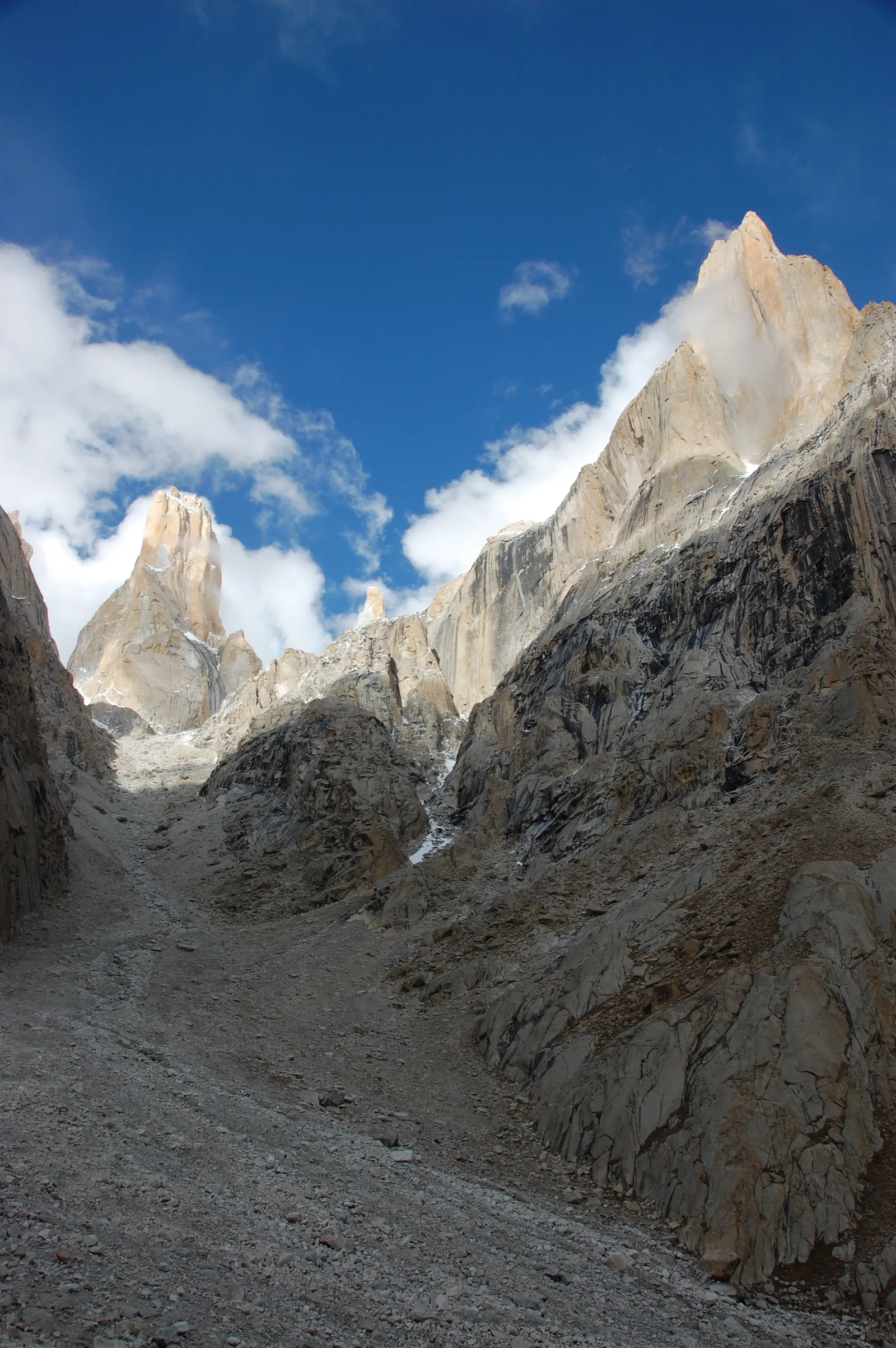
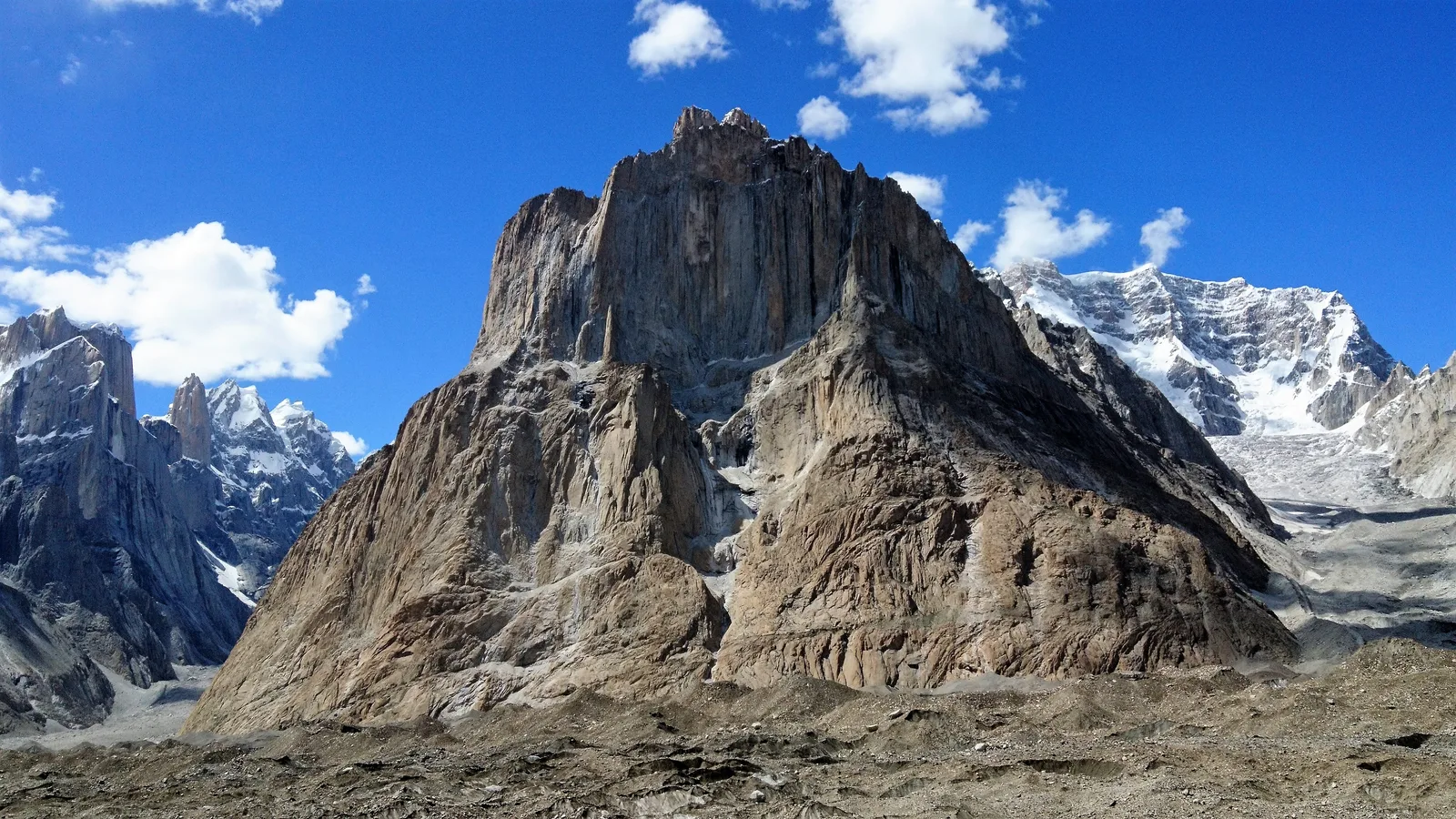
The Trango Towers are a cluster of vertical granite spires on the north side of the Baltoro Glacier in Gilgit-Baltistan, Pakistan, home to some of the hardest big-wall climbing on earth. The tallest, Great Trango Tower, reaches about 6,286 m (20,623 ft), and its east face holds the greatest near-vertical drop of any rock wall on the planet, roughly 1,340 m. Beside it stands the Nameless Tower (about 6,239 m), the clean granite blade most photographs are of. You do not have to be a big-wall climber to stand beneath them: the same Baltoro trek that leads to K2 Base Camp walks you straight past the Trangos, and from the camp at Urdukas you sleep level with them.
We are a Skardu-based team that guides these valleys every summer. This is the honest version of what the Trango Towers are, who has climbed them, and how an ordinary fit trekker gets close enough to feel their scale, written from the trail rather than a brochure.
Key Takeaways
- The Trango Towers sit north of the Baltoro Glacier in the Baltoro Muztagh, a sub-range of the Karakoram.
- Great Trango Tower (~6,286 m) is the high point; its east face is the world’s tallest near-vertical rock wall (~1,340 m).
- The Nameless Tower (~6,239 m) was first climbed in 1976 by Joe Brown’s British team; its famous route, Eternal Flame, was freed by the Huber brothers in 2009.
- Climbing the towers is elite, multi-week big-wall work. Seeing them is far more accessible: they line the Baltoro trek between Paiyu and Urdukas.
- Season is roughly June to September. Permits, a sat phone, and a real rescue plan are non-negotiable on the Baltoro.
Where the Trango Towers actually are
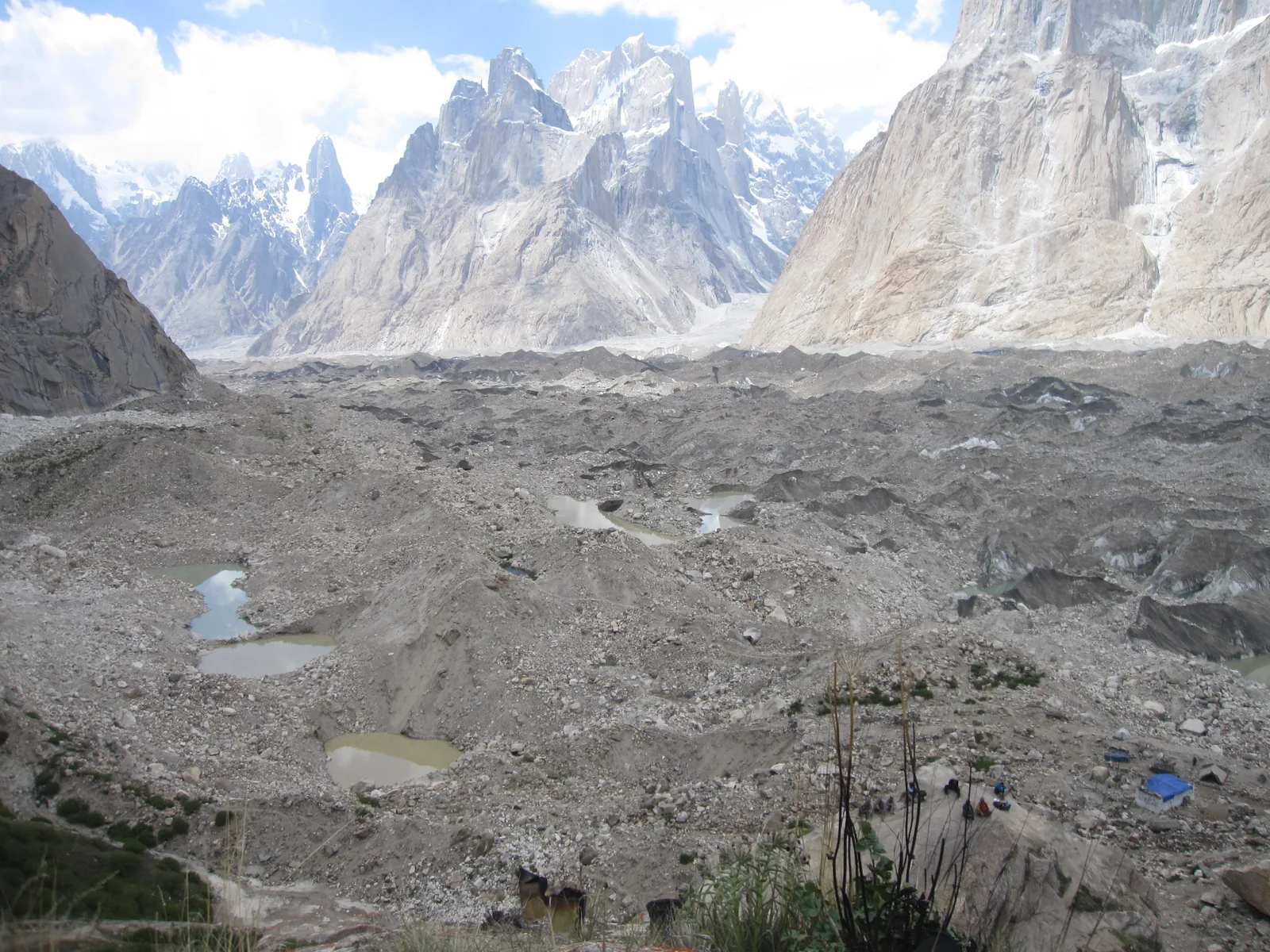
The Trangos lie in Baltistan, northern Pakistan, on a ridge that runs northwest to southeast above the Baltoro Glacier. They belong to the Baltoro Muztagh, the same granite-and-ice sub-range of the Karakoram that holds K2, Broad Peak and the Gasherbrums. To the west of the towers sits the Trango Glacier; to the east, the Dunge Glacier.
The group is not a single peak but a family of spires. Great Trango is a broad massif with three summits, Main (~6,286 m), East (~6,231 m) and West (~6,223 m). Just to its northwest, the Nameless Tower juts roughly 1,000 m clean out of the ridgeline, which is why it dominates every photo taken from Urdukas. Smaller features carry the name too: the Trango Monk, Trango Pulpit (~6,050 m) and Trango Castle (~5,753 m), the last big peak before the glacier. These figures come from the geological and climbing record; where sources vary by a few metres we have marked them approximate.
Why climbers obsess over them
The Trangos combine three brutal things at once: high altitude, enormous route length, and rock that is vertical to overhanging. Great Trango’s east face is, by the standard reference on extremes on Earth, the greatest nearly vertical drop anywhere, about 1,340 m of headwall. That single fact is why the American Alpine Club calls Great Trango one of the most storied big walls in mountaineering.
A short, honest climbing history
Great Trango Tower was first climbed in 1977 by an American team, Galen Rowell, John Roskelley, Kim Schmitz, Jim Morrissey and Dennis Hennek, by a mixed ice-and-rock line finishing on the upper south face. The Nameless Tower fell a year earlier, in 1976, to a British team led by Joe Brown, with Mo Anthoine, Martin Boysen and Malcolm Howells.
The tower’s most famous line, Eternal Flame (named after the Bangles song), was first climbed in 1989 by Kurt Albert, Wolfgang Güllich, Milan Sykora and Christoph Stiegler, almost entirely free. Twenty years later, in 2009, Alexander and Thomas Huber returned to make the first fully free ascent, with climbing up to French 7c+, a milestone documented at the time by PlanetMountain. On the bigger massif, the 1,340 m east-southeast headwall was only completed and returned from once, by Xaver Bongard and John Middendorf via “The Grand Voyage” in 1992, a route that, with the parallel Norwegian attempt, has been called among the hardest big walls in the world. For the full catalogue of lines, Climbing magazine’s profile is the best single read.
Seeing the Trango Towers without climbing them
Here is the good news most operators bury: the Trangos sit right beside the main Baltoro highway to Concordia. The K2 Base Camp trek walks past them, and you do not need any technical skill to do it, just real trekking fitness and patience for altitude. From Paiyu onward the towers come into view, and the campsite at Urdukas, a rare patch of grass perched above the glacier, gives you the classic head-on view of the Nameless Tower at eye level.
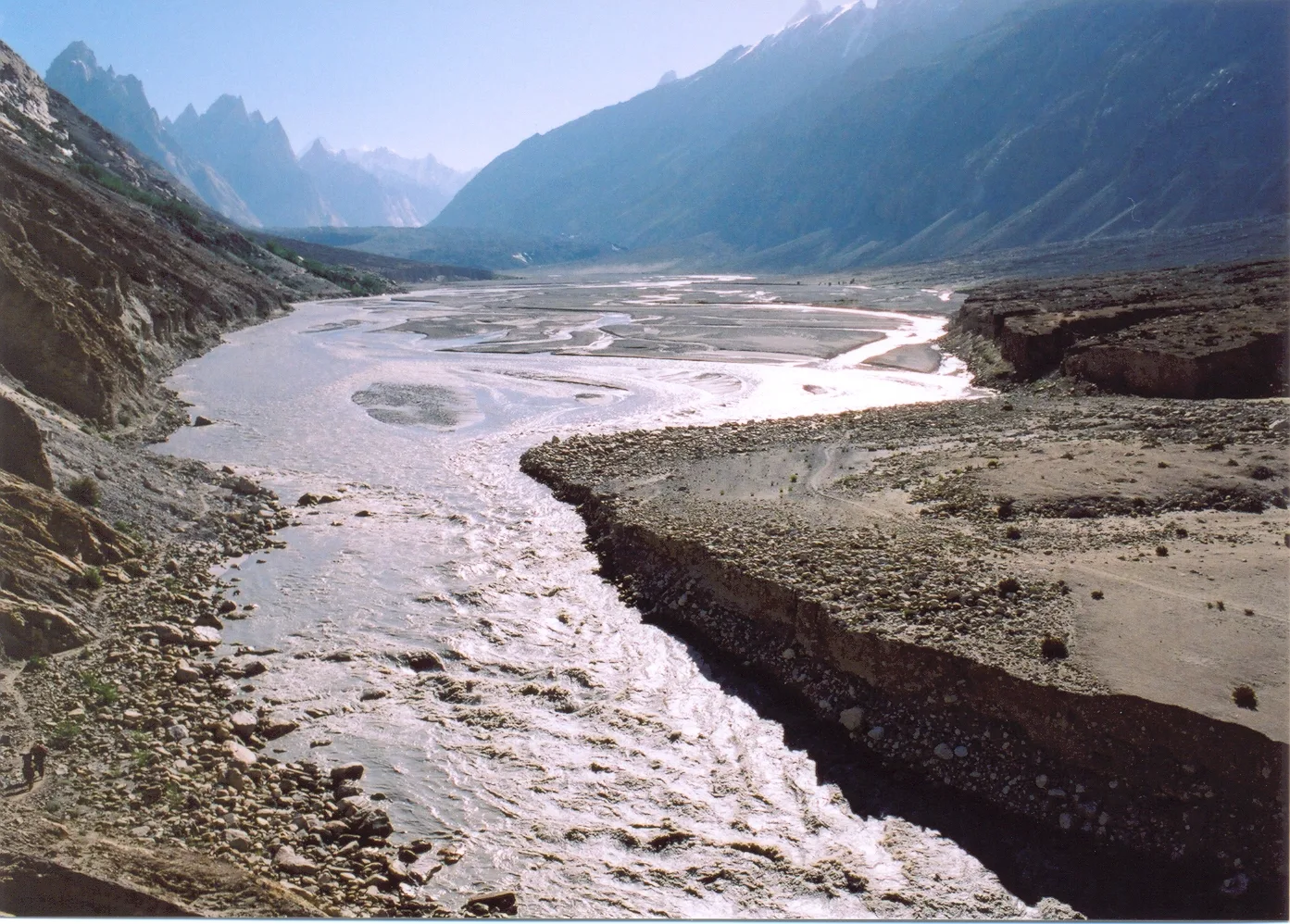
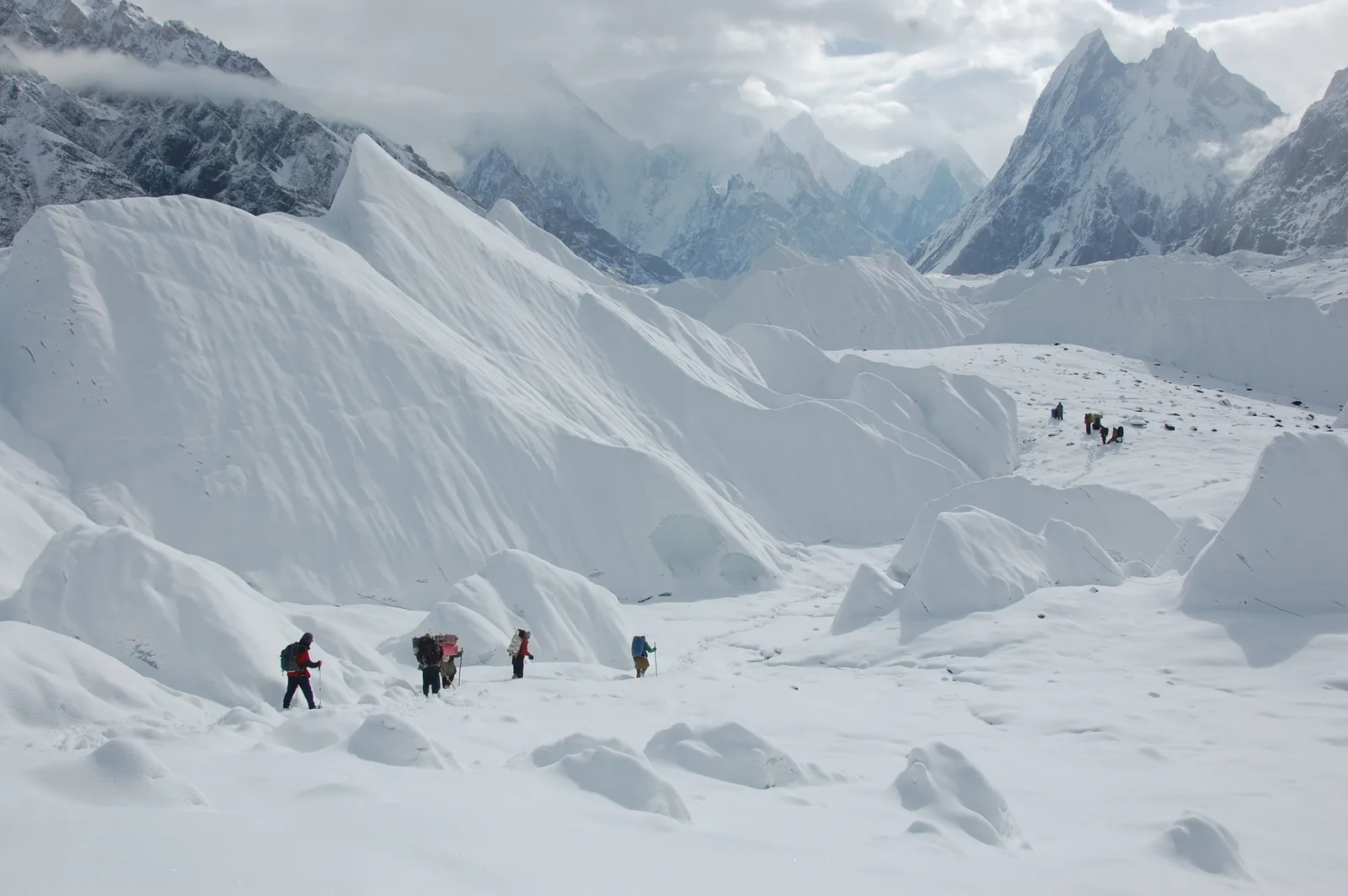
The approach itself is the gateway. You fly or drive to Skardu (see our guide on getting to Skardu), then take a 4×4 jeep along the Braldu gorge to Askole, the last village, roughly seven to nine hours of rough road. From Askole you walk onto the Baltoro and follow the glacier up.
Schematic profile: Skardu to the Trango viewpoints
Approximate, clearly-labelled altitudes along the standard Baltoro approach. Exact figures vary slightly between sources and seasons.
The trekker’s view vs the climber’s objective
Two very different trips share the same first few days. Here is how they compare so you can be honest with yourself about which one you are actually planning.
| Baltoro trek (see the towers) | Trango Tower expedition (climb) | |
|---|---|---|
| Skill needed | Strong hiking fitness; no technical climbing | Elite big-wall, aid and alpine experience |
| Typical length | ~2 weeks if combined with K2 BC | 4–6 weeks; days to weeks on the wall |
| High point reached | Urdukas ~4,050 m / Concordia ~4,600 m | Tower summit ~6,239–6,286 m |
| Permit | Trekking permit / NOC for the region | Mountaineering permit + royalty + LO |
| Main risk | Altitude, glacier travel, weather delays | Rockfall, storms, technical failure, altitude |
When to go, and what the mountain demands
The Baltoro season runs roughly June through September, with the most settled window in July and August. Earlier and the glacier is still heavy with snow and the Braldu road more prone to washouts; later and nights turn hard and cold fast. For climbers, the same window applies, with teams often basing in for weeks to wait out weather on the towers.
Altitude is the quiet danger on the approach, not the rock. Urdukas sits above 4,000 m and Concordia near 4,600 m, high enough that rushing the schedule causes real altitude sickness. Build in acclimatisation days and walk at a sustainable pace; our acclimatisation guide covers how. Pack for genuine cold and sun at once, the Karakoram gear list is the short version.
Doing it safely, with a local team
This is the part budget operators quietly cut. The Baltoro is remote, the nearest road is days away, and weather closes the only airstrip in Skardu without warning. On every expedition and trek we run, that means a satellite phone in camp, established helicopter-rescue contacts for the Baltoro region, insurance guidance, and a plan for what happens if someone goes down at 4,500 m, not a hope that nothing will. Our guides are from the Balti communities that have lived under these mountains for generations; the porters, cooks and logistics are our own, not handed off to a broker. Local hands, real safety, a fair price. If you are weighing routes, our overview of the best treks in Pakistan and the Baltoro climbing season both put the Trangos in context.
Frequently asked questions
How tall are the Trango Towers?
Great Trango Tower, the highest, is about 6,286 m (20,623 ft). The Nameless Tower (Trango Tower) is about 6,239 m (20,469 ft), and the Trango Pulpit about 6,050 m. Figures vary by a few metres between sources.
Can you trek to the Trango Towers without climbing?
Yes. The standard Baltoro Glacier trek toward K2 Base Camp passes directly below them. From Paiyu onward they come into view, and Urdukas (~4,050 m) gives the classic head-on view of the Nameless Tower. It needs trekking fitness and acclimatisation, but no technical climbing.
What is Eternal Flame?
Eternal Flame is the celebrated route on the southeast face of the Nameless Tower, first climbed in 1989 by Kurt Albert and Wolfgang Güllich’s team and first freed by Alexander and Thomas Huber in 2009. It is one of the most coveted big-wall free climbs in the world.
When is the best time to go?
June to September, with July and August the most settled. Outside that window the Braldu road and the glacier become unreliable and nights turn dangerously cold.
How do you get to the start of the trek?
Fly or drive to Skardu, then take a 4×4 jeep along the Braldu gorge to Askole (about 7–9 hours), the last village before the Baltoro. From there you walk onto the glacier.
Stand beneath the Nameless Tower this summer
Planning your trip? WhatsApp us on +92 312 9921574 or email info@karakoramventure.com — you’ll be talking to a local Balti team, not a broker. Ask us about combining the Trango viewpoints with the full Baltoro and K2 Base Camp trek, and we’ll send current dates and pricing.
Sources & further reading: Trango Towers and Baltoro figures from Wikipedia (Trango Towers; Extremes on Earth) and the American Alpine Club / American Alpine Journal; route history from Climbing magazine and PlanetMountain. Altitudes are approximate and rounded; where sources differ we have noted it. Photos via Wikimedia Commons under CC BY / CC BY-SA, credited individually above.