The Biafo–Hispar traverse, better known as the Snow Lake trek, crosses the longest glacial system outside the polar regions: roughly 100 km on ice from Askole in Baltistan, up over Hispar La (about 5,128 m), and down into the Hunza-Nagar valleys. It takes most teams 12 to 18 days, it is non-technical but genuinely serious, and at its heart lies Snow Lake (Lukpe Lawo), one of the largest snow basins on earth outside the poles. This is the honest, in-depth guide, from a Balti team that runs these glaciers.
There is no teahouse on this route. No road, no phone signal, no village for the best part of two weeks. You camp on the ice, rope up to cross it, and walk through a landscape that the explorer Martin Conway mapped in 1892 and that has barely changed since. If the K2 Base Camp trek is the Karakoram’s famous walk, Biafo–Hispar is its great wild one.
Key Takeaways
- What it is: a ~100 km glacier traverse linking the Biafo (67 km) and Hispar (49 km) glaciers — together the world’s longest non-polar glacial system, about 120 km end to end.
- High point: Hispar La, about 5,128 m (some surveys say ~5,150 m).
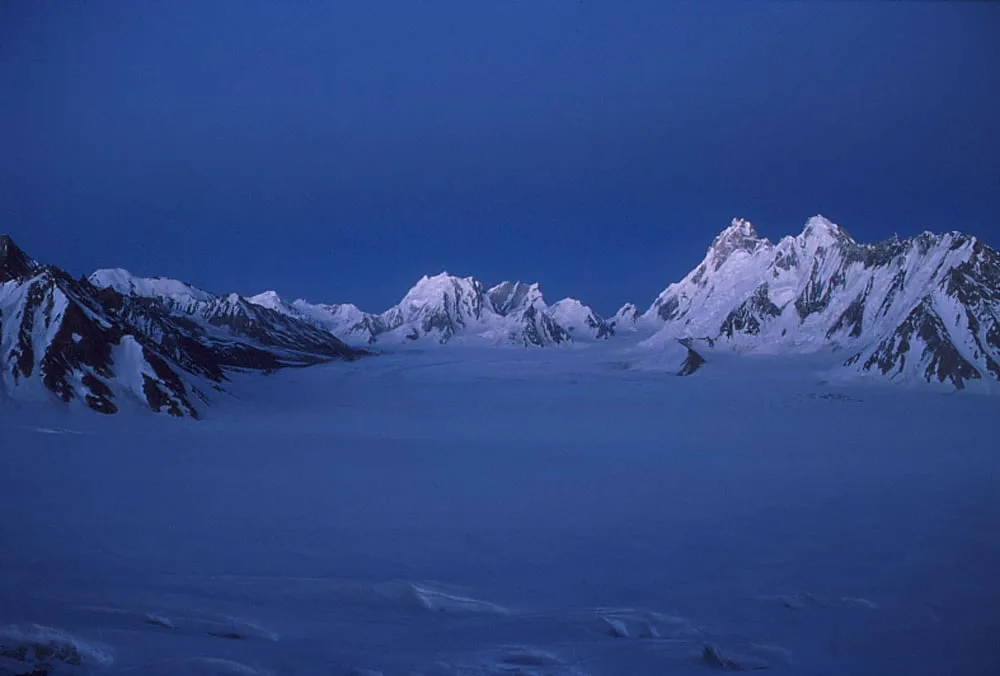
- The heart: Snow Lake (Lukpe Lawo), a snow basin over 16 km across and up to 1,600 m deep in ice.
- Duration: typically 12–18 days on the trek; longer itineraries (up to ~21 days) build in safer acclimatisation.
- Difficulty: no climbing or ropework to summit, but serious — roped glacier travel, crevasses, full camping, real remoteness. Harder than Everest Base Camp.
- Best season: roughly late June to early September.
- Route: Askole → Namla → Mango → Baintha → Snow Lake → Hispar La → Hispar village → Nagar / Hunza.
The route at a glance
Below is a schematic elevation profile of the traverse from east (Askole) to west (Nagar). Camp altitudes vary by operator and conditions, so treat these as approximate.
What is the Biafo–Hispar traverse?
Two huge glaciers meet back to back at a single high saddle. From the east, the Biafo Glacier flows 67 km down toward Askole in Shigar District. From the west, the Hispar Glacier runs 49 km down toward Nagar. They join at Hispar La, and together they form what geographers call the longest glacial system outside the polar regions — around 120 km of continuous ice. The Biafo alone is the third-longest non-polar glacier on earth, after the Siachen and Tajikistan’s Fedchenko.
To traverse it, you walk up one glacier, cross the watershed, and walk down the other — a true crossing of the range, from Baltistan into Nagar, on foot and on ice. For scale and context, our guide to the Baltoro Glacier covers the Karakoram’s other great ice highway.
The route, stage by stage
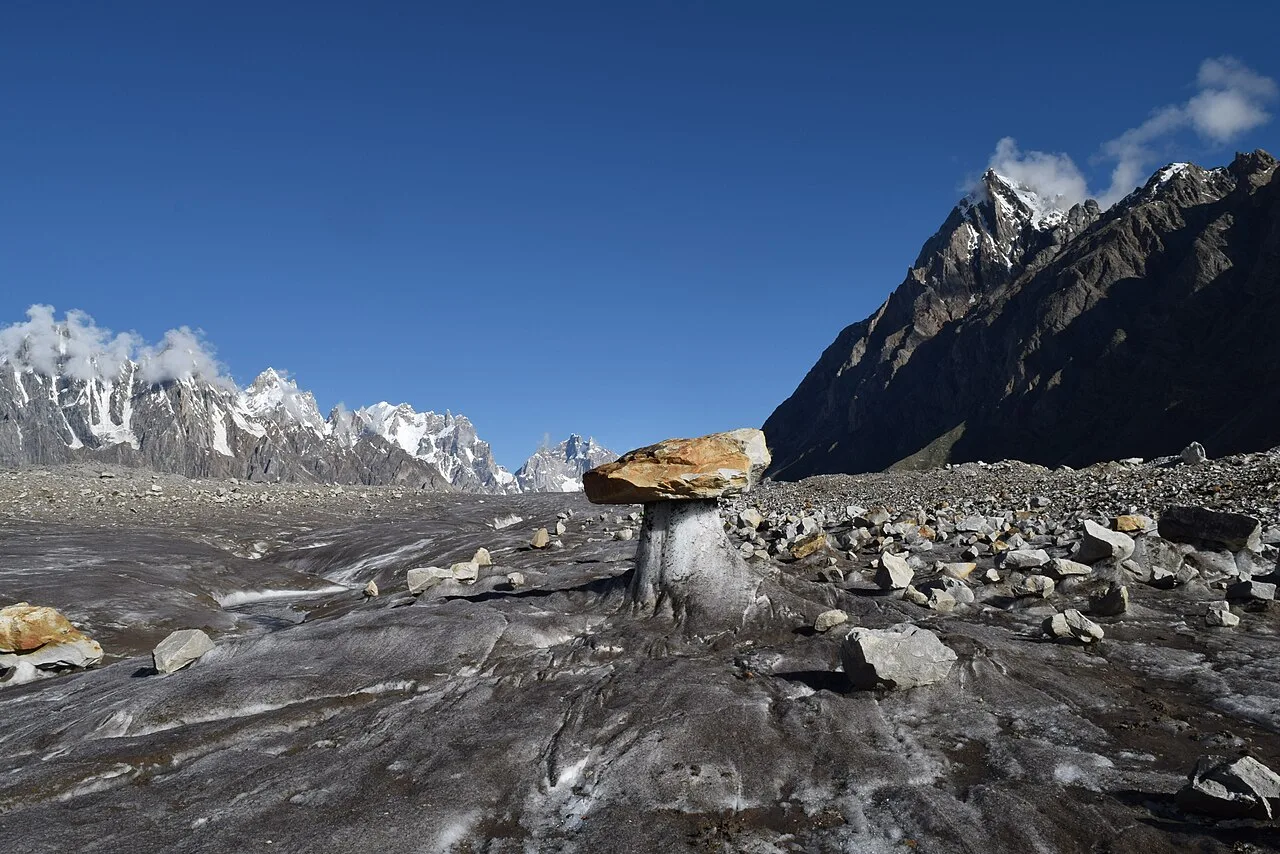
The trek shares its first hours with the K2 crowd. You reach Askole — the last village, roughly a 7–9 hour 4×4 drive from Skardu — then turn west off the Braldu and onto the snout of the Biafo, where the others carry on toward Concordia.
Askole to Baintha (the lower Biafo)
The first camps — Namla and Mango — sit just off the ice behind lateral moraines, with running water and, early in the season, wildflowers. Namla has a waterfall close to camp. Baintha, the third camp, is a green meadow island in the ice and the classic rest and acclimatisation day, with slabs to scramble and the spires of the Ogre group overhead.
Baintha to Snow Lake
Above Baintha the moraine gives way to cleaner snow and the glacier opens out. This is where you rope up properly for crevasse country, and where the world turns white and enormous as you approach Snow Lake.
Over Hispar La and down to Nagar
From Snow Lake you climb to Hispar La, the high point, then begin the long descent of the broken Hispar Glacier. Hispar village is the first green, the first walls, the first people in many days. From there a jeep carries you down to Nagar and on into Hunza.
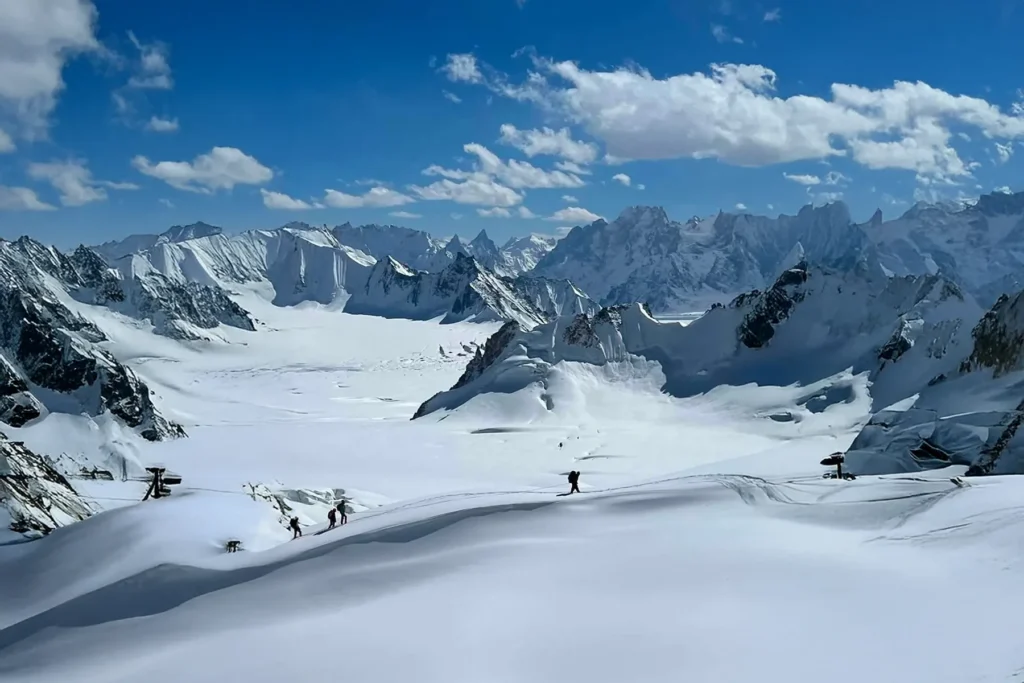
Snow Lake (Lukpe Lawo): the heart of the trek
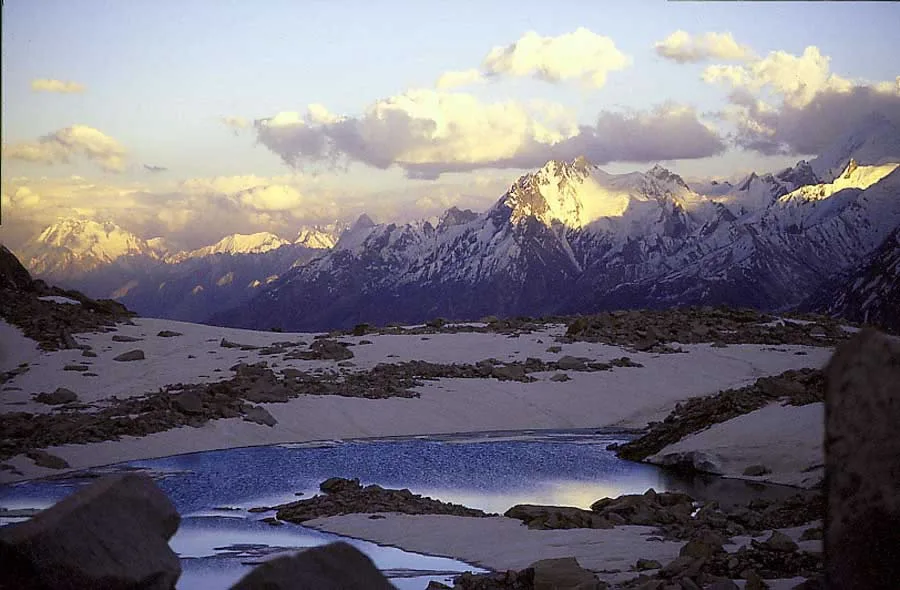
Snow Lake is not water. It is a vast basin of snow and ice at the head of the Biafo, fed by the Sim Gang glacier, more than 16 km across and, in places, up to 1,600 m deep. Martin Conway gave it the name in 1892, and later explorers were so confounded by its scale that some believed it drained nowhere — the writer Mark Horrell has called it the glacier with no outlet. Standing in the middle of it, with peaks ringing the horizon and nothing human in sight, you understand why it captured the imagination of an entire generation of mountain explorers.
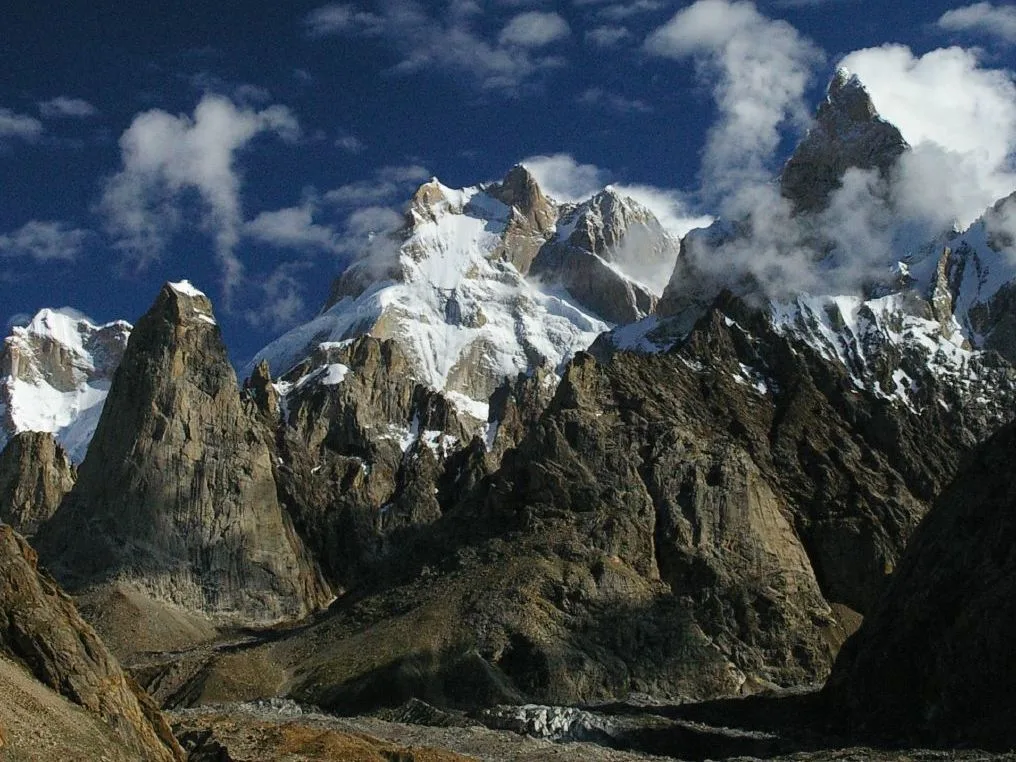
The giants overhead: the Ogre and the Latoks
The Biafo is lined with some of the hardest rock peaks on the planet. Chief among them is Baintha Brakk, the Ogre (7,285 m). It was first climbed in 1977 by Doug Scott and Chris Bonington — a climb that became legend when Scott broke both legs on the descent and crawled out over days. So fearsome is the mountain that 24 years passed before anyone climbed it again. The American Alpine Club’s account of that first ascent is still gripping reading. Beside it stand the Latok spires, among the great unsolved problems of Himalayan climbing.
Crossing Hispar La — the crux
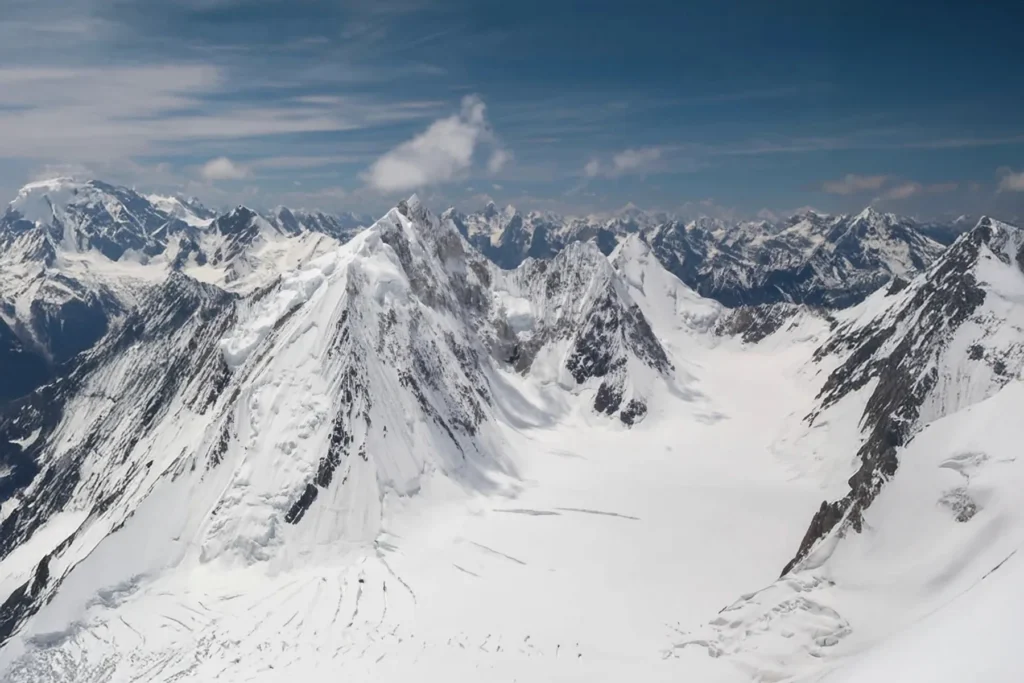
Hispar La (about 5,128 m) is not a technical pass in good conditions, but it is the committing moment of the trek. You are high, far from any help, and crossing heavily crevassed glacier on both sides. Timing, rope work and weather judgement matter more here than anywhere else on the route.
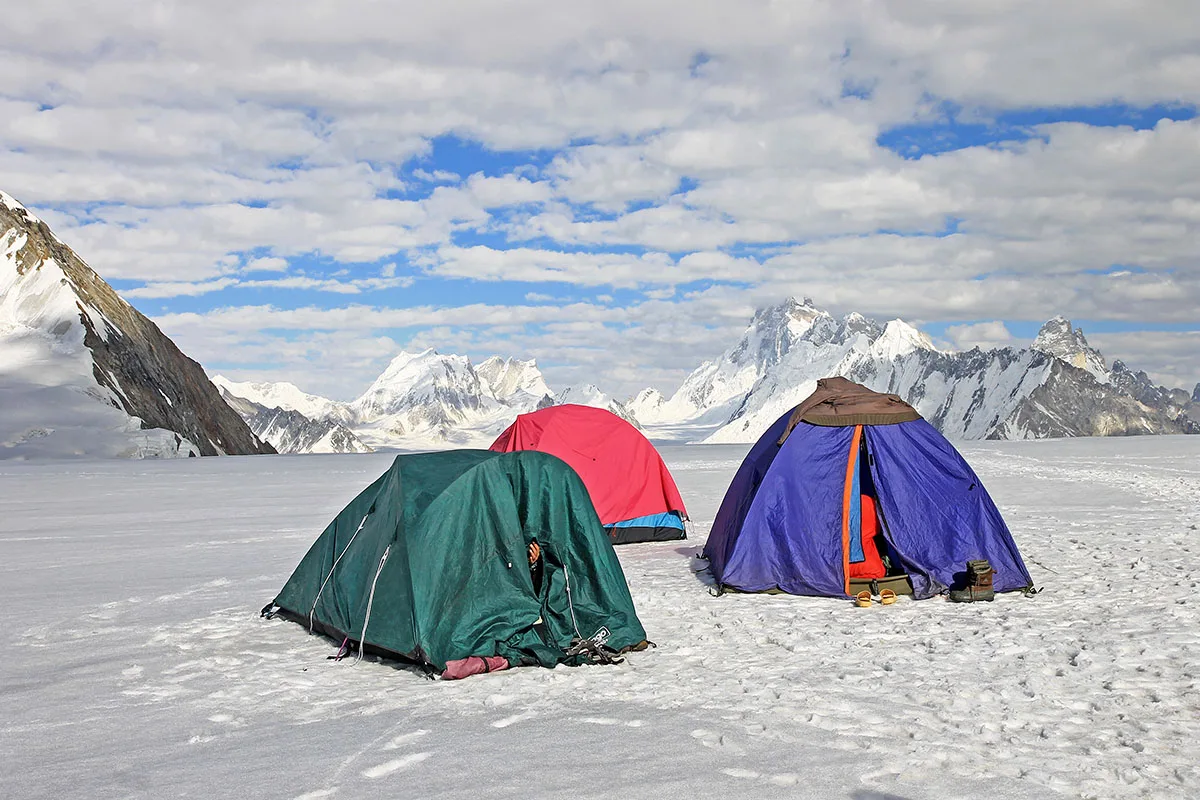
An honest safety word. This is glacier travel, not a trail. There are hidden crevasses across Snow Lake and on both descents, no villages or rescue points for many days, and weather that can pin a team down. We carry rope, crevasse-rescue kit and a satellite phone, build in acclimatisation, and turn around when the mountain says so. Anyone who sells you Snow Lake as an “easy” trek is not being straight with you.
How hard is it, really?
You do not need climbing skills or a summit CV. What you need is real hill fitness, the patience for long glacier days, and the willingness to camp every single night in cold, remote conditions. Many who have done both say Snow Lake is harder than the Everest Base Camp trek: the terrain is rougher, you carry the comforts with you, and there is no teahouse to retreat to. Good acclimatisation is non-negotiable — read our acclimatisation guide and our Karakoram packing list before you commit.
Snow Lake vs K2 Base Camp: which traverse?
| Snow Lake / Biafo–Hispar | K2 Base Camp | |
|---|---|---|
| High point | Hispar La ~5,128 m | K2 BC ~5,150 m |
| Days | ~12–18 | ~12–14 |
| Terrain | Roped glacier travel, crevasses | Glacier moraine, mostly unroped |
| Crowds | Very few; true wilderness | Popular in season |
| Best for | Experienced trekkers seeking remoteness | First big Karakoram trek |
Best season and how long to allow
The window is short: roughly late June through early September, when the high snow has settled and Hispar La is crossable. Earlier, the pass holds too much unstable snow; later, the weather turns. Allow buffer days for the flight to Skardu (see how to get to Skardu), which is weather-dependent, and for sitting out storms on the ice. A trip pairs naturally with a few recovery days in Hunza or a visit to Deosai National Park on the way in.
Permits, visa and local guides. A traverse like this needs a Trekking & Mountaineering visa (not a tourist visa) and the relevant trekking permits, and rules change year to year — so we confirm the current requirements for your exact route rather than guessing. Just as important: every Karakoram Venture guide on this trek is a local Balti, born in these valleys, trained in glacier travel and rescue. You are not handed to a broker. Local hands, real safety, fair price.
A short history of Snow Lake
The traverse was first completed in 1892 by Martin Conway, who crossed from Hispar over the pass and down the Biafo to Askole, and gave Snow Lake its English name. The American explorers Fanny Bullock Workman and William Hunter Workman surveyed it in the early 1900s. In the 1930s, Eric Shipton and Bill Tilman returned to map the Snow Lake country and the ranges around the Ogre — expeditions recorded in the Himalayan Journal. Walking it today, you follow their footsteps almost exactly.
Frequently asked questions
Do I need mountaineering experience for the Snow Lake trek?
No summit climbing or technical skills are required, but you must be comfortable with long days, high altitude and roped glacier travel. It suits fit, experienced trekkers rather than first-timers. Your guides handle the rope work and route-finding.
How long is the Biafo–Hispar traverse?
About 100 km on the glaciers, usually walked over 12–18 days, with longer itineraries up to roughly 21 days for safer acclimatisation and weather buffer.
How high is Hispar La?
Around 5,128 m (about 16,800 ft); some surveys list it closer to 5,150 m. It is the high point and the crux of the crossing.
Is Snow Lake harder than Everest Base Camp?
Most trekkers who have done both say yes — it is remoter, rougher underfoot, fully self-supported with camping every night, and with no teahouses or quick exit.
When is the best time to do the Snow Lake trek?
Roughly late June to early September, when Hispar La is crossable and the high snow has stabilised.
Ready to cross the Karakoram on ice? Talk to us on WhatsApp at +92 312 9921574 or email info@karakoramventure.com. You will reach a local Balti team in Skardu who have walked Snow Lake themselves — not a broker reselling your trip. Tell us your experience, dates and group size, and we will build a properly paced, properly resourced traverse for you.
Sources: Wikipedia (Biafo Glacier, Hispar Glacier, Snow Lake, Baintha Brakk, Askole, Martin Conway); The Himalayan Journal; American Alpine Club; Mark Horrell. Altitudes and distances compiled from these references and our own guiding experience; figures are approximate and conditions change. Photos via Wikimedia Commons under the CC BY / CC BY-SA licences credited in each caption. Prices and dates change — confirm current details with us before booking.