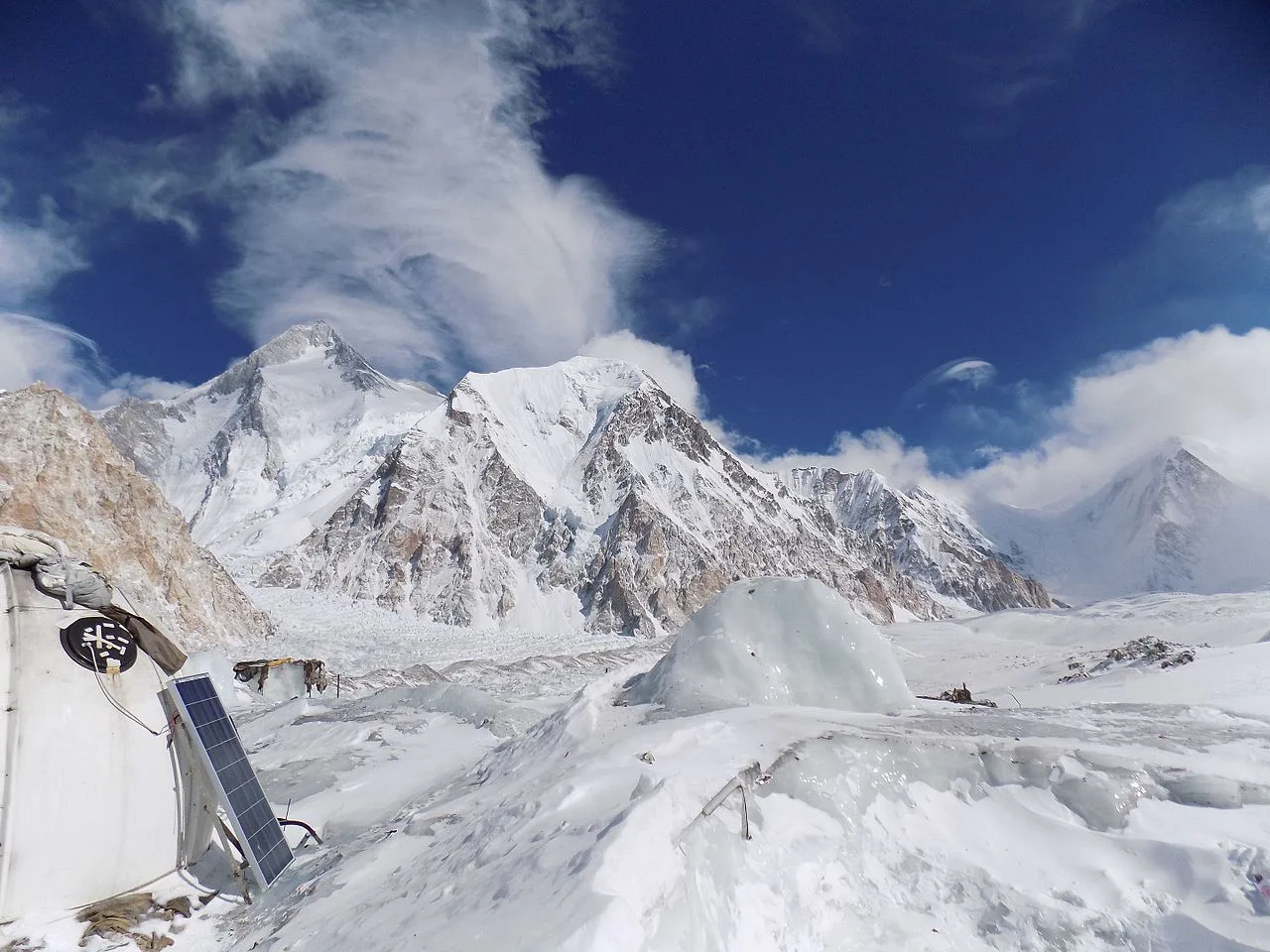
Gasherbrum I (8,080 m) and Gasherbrum II (8,035 m) are the two eight-thousanders of the Gasherbrum massif, climbed from a single base camp at the head of the Baltoro Glacier in Pakistan’s Karakoram. Gasherbrum I, also called Hidden Peak, is the 11th-highest mountain on earth; Gasherbrum II is the 13th, and widely regarded as one of the more achievable 8,000 m peaks. Both sit on the Pakistan–China border, reached by trekking from Skardu through Askole to Concordia, then onto the Abruzzi and South Gasherbrum glaciers. The season runs roughly June to September. This is a guide to the peaks, the route, the history and the honest difficulty — written by a Balti team that works these glaciers.
Key Takeaways
- Gasherbrum I — 8,080 m (approx; sources give 8,068–8,080 m), 11th-highest peak. First climbed 5 July 1958 by an American team.
- Gasherbrum II — 8,035 m, 13th-highest. First climbed 7 July 1956 by an Austrian team; the “easiest” relative to the other Karakoram 8,000ers.
- Both share one base camp (~5,000–5,150 m) reached via the Baltoro Glacier and Concordia.
- Approach: Skardu → Askole by jeep (~7–9 hrs), then 6–8 days trekking to base camp.
- Season: June–September. A Trekking & Mountaineering visa plus expedition permit/royalty and a licensed Pakistani operator are required.
Two eight-thousanders, one base camp
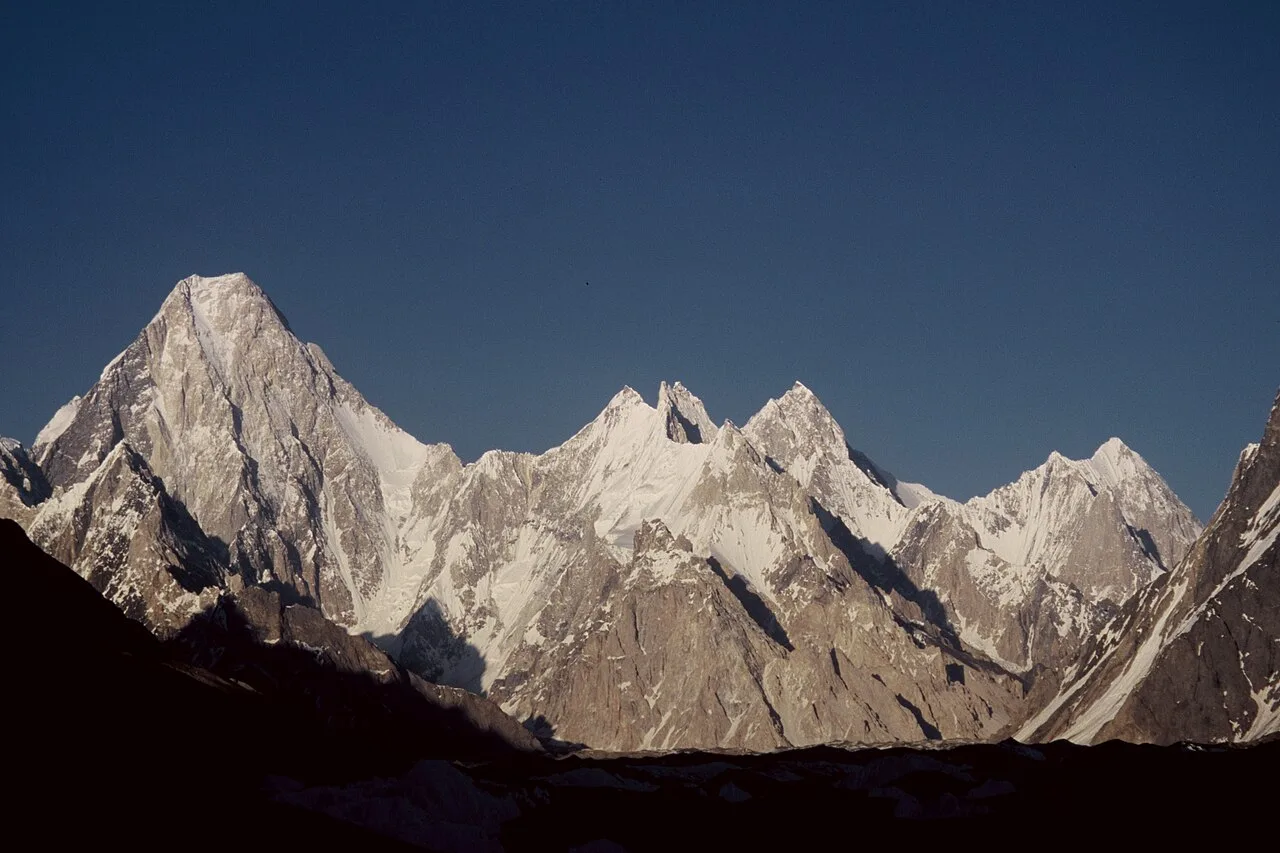
Most people fix on K2 and forget that the Baltoro hides two more eight-thousanders just a few kilometres south-east. The Gasherbrum group is a compact knot of peaks — Gasherbrum I through VII — rising at the very head of the glacier, on the frontier with China. Two of them break 8,000 m: Gasherbrum I (Hidden Peak) and Gasherbrum II. The name is often translated as “shining wall,” from the Balti rgasha (beautiful) and brum (mountain) — though the famous shine belongs mostly to the pyramid of Gasherbrum IV that guards the group.
What makes these two peaks unusual is logistics. They are climbed from effectively the same base camp on the South Gasherbrum Glacier, so a single expedition can attempt both, or focus on one and acclimatise on the other. That is also why the classic trek to the four 8,000 m base camps — K2, Broad Peak, Gasherbrum I and II — is one of the great walks on earth, even for those with no intention of climbing.
The peaks: heights, ranking, and the numbers
Heights vary slightly between sources and surveys, so we mark them approximate where they do. Gasherbrum I stands at roughly 8,080 m with a prominence of about 2,155 m, making it the 11th-highest independent mountain in the world. Gasherbrum II is about 8,035 m, the 13th-highest. Both are firmly in the Baltoro Muztagh of the central Karakoram.
| Gasherbrum I (Hidden Peak) | Gasherbrum II | |
|---|---|---|
| Height (approx) | ~8,080 m | ~8,035 m |
| World ranking | 11th-highest | 13th-highest |
| First ascent | 5 July 1958 (USA) | 7 July 1956 (Austria) |
| Normal route | Japanese Couloir / NW face | SW ridge (south side) |
| Relative difficulty | Hard — steeper, more technical | Most achievable Karakoram 8,000er |
| First winter ascent | 9 March 2012 (Poland) | 2 February 2011 |
A short, honest history
Gasherbrum II was the first of the pair to fall. On 7 July 1956, Austrians Fritz Moravec, Josef Larch and Hans Willenpart reached the summit by the south-west ridge — a bold, lightly-supported push for its day. Moravec later recalled that high on the mountain it was warm enough to climb without parkas, a reminder that the Karakoram in mid-summer is not always the freezer people imagine. The route they pioneered is, with variations, still the line most climbers follow today.
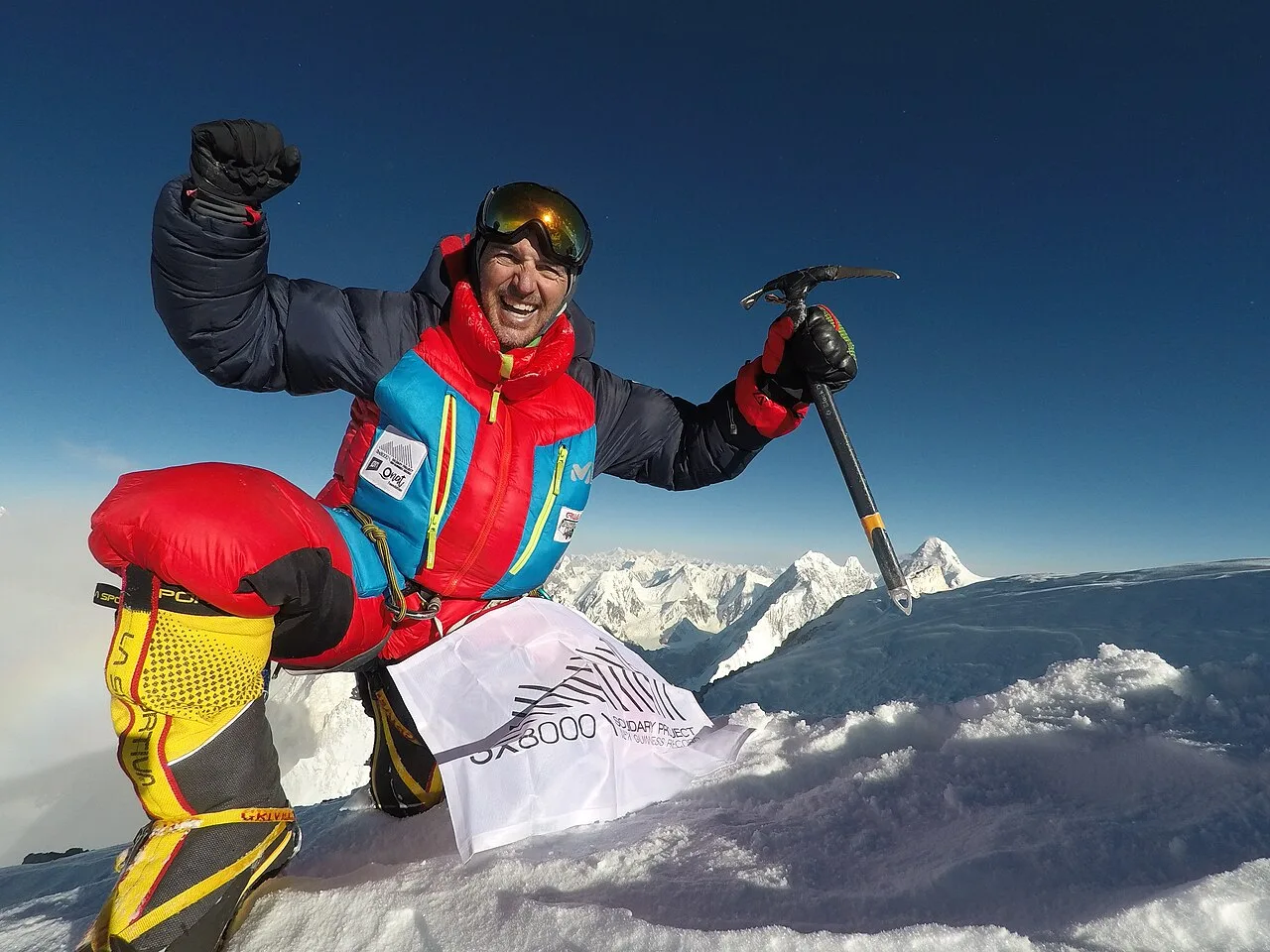
Gasherbrum I came two years later. On 5 July 1958, Americans Pete Schoening and Andy Kauffman summited as part of an eight-man team led by Nick Clinch — the only major Himalayan or Karakoram eight-thousander first climbed by an American expedition. Seventeen years on, the mountain wrote a second chapter in alpinism: in 1975 Reinhold Messner and Peter Habeler climbed a new route on Hidden Peak alpine-style — no fixed ropes, no stocked high camps, no bottled oxygen, no porters above base — a turning point that pointed the way to the modern, fast-and-light era. You can read the original account in the Himalayan Journal and the American Alpine Club.
The winters came much later and at a cost. On 2 February 2011, Simone Moro, Denis Urubko and Cory Richards made the first winter ascent of Gasherbrum II — the first winter ascent of any 8,000 m peak in Pakistan — and were nearly killed by an avalanche on the descent, an escape Richards filmed for the documentary Cold. Gasherbrum I held out until 9 March 2012, when Poland’s Adam Bielecki and Janusz Gołąb summited via the normal route. That same expedition season took the lives of Gerfried Göschl, Cedric Hahlen and Nisar Hussain Sadpara, lost high on the mountain — a sober line in the record that we don’t gloss over. The full story is told by ExplorersWeb and the American Alpine Journal.
The route in: Skardu to Gasherbrum Base Camp
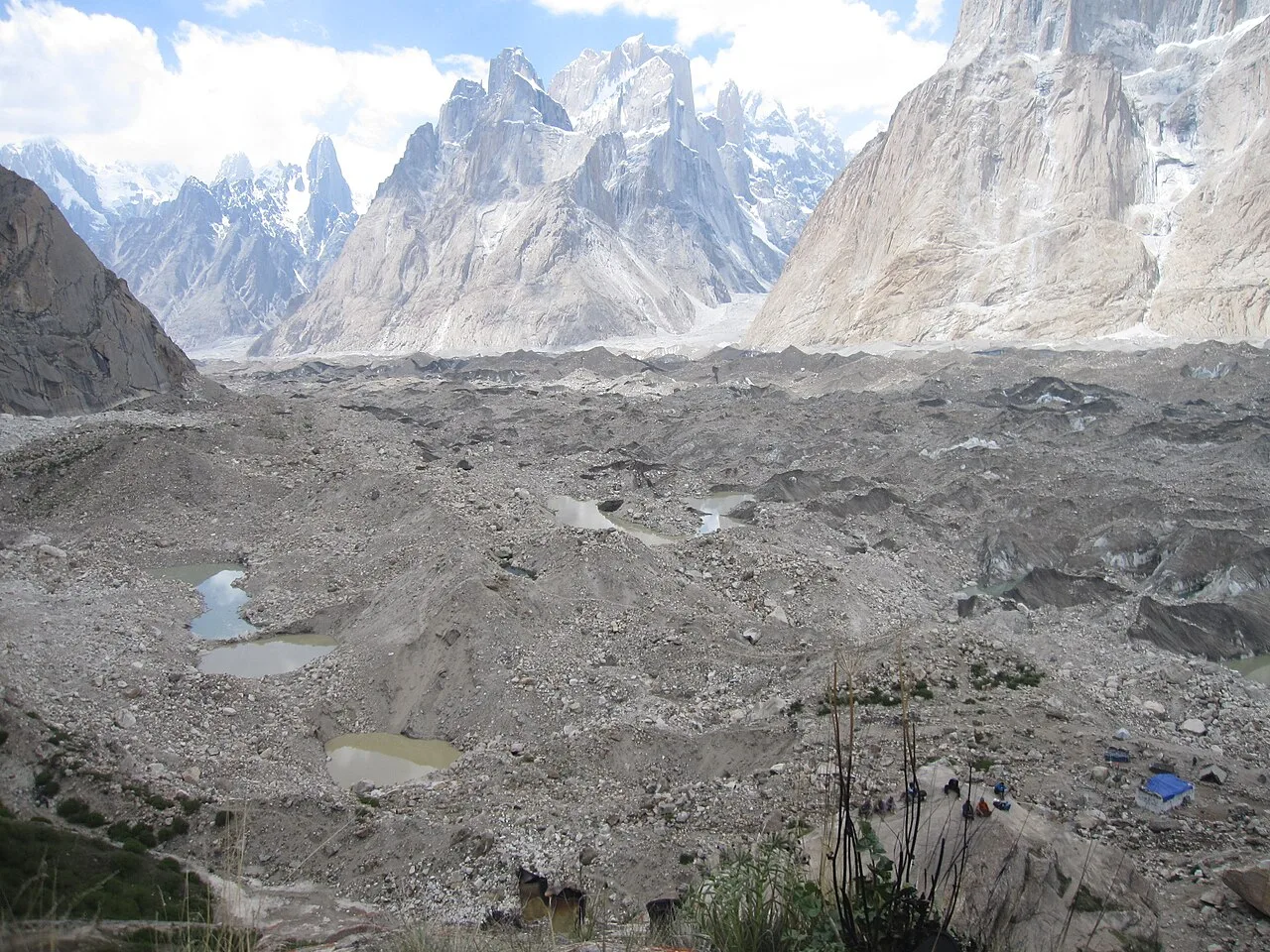
The approach is the same celebrated walk that leads to Concordia and the K2 base camps, only it carries on past the turning. From Skardu (~2,230 m) a 4×4 jeep grinds up the Braldu gorge to Askole (~3,000 m) in roughly seven to nine hours — the last village and the true trailhead. From there it is a multi-day trek along the Baltoro Glacier, one of the longest glaciers outside the polar regions at around 63 km, through the camps at Paiju, Khoburtse and Urdukas (~4,050 m), where the Trango Towers and Cathedral spires line the sky.
At Concordia (~4,691 m), the great glacial confluence where the Baltoro, Godwin-Austen and Abruzzi glaciers meet, the trail to K2 base camp peels north. For Gasherbrum, you turn south-east, up the Upper Baltoro onto the Abruzzi Glacier, and finally the South Gasherbrum Glacier to base camp at roughly 5,000–5,150 m. From there, climbers establish a chain of high camps — broadly Camp 1 (~5,900 m), Camp 2 (~6,400 m) and Camp 3 (~7,000 m) — before a summit push. The schematic below shows the profile; treat altitudes as approximate.
Climbing Gasherbrum II vs Gasherbrum I
If you are eyeing your first 8,000 m peak, Gasherbrum II is the usual answer in the Karakoram. The standard south-side route is mostly snow and ice at moderate angles, with a glacier approach, a few fixed sections, and no single feature as fearsome as K2’s Bottleneck or the Gondogoro La’s headwall. That does not make it easy — nothing at 8,000 m is — but it is the most forgiving of the big Karakoram peaks, which is exactly why it sees the most ascents.
Gasherbrum I is a harder mountain. The normal line threads the steep Japanese Couloir before gaining the upper face, with more sustained technical ground, more objective hazard, and a longer, more committing summit day. Many climbers use GII to acclimatise and build confidence before turning to Hidden Peak. Both demand real altitude experience, crevasse-rescue skills, and patience for weather windows that can keep you pinned in camp for days.
Be honest about the risk. These are serious high-altitude expeditions. Avalanches, hidden crevasses, storms, and the slow grind of altitude have killed strong, experienced climbers on both peaks. Independent insurance with helicopter evacuation and high-altitude cover is essential, and good operators carry a satellite phone and a real rescue plan. We name this plainly because it is the part budget outfits quietly cut.
When to go & what permits you need
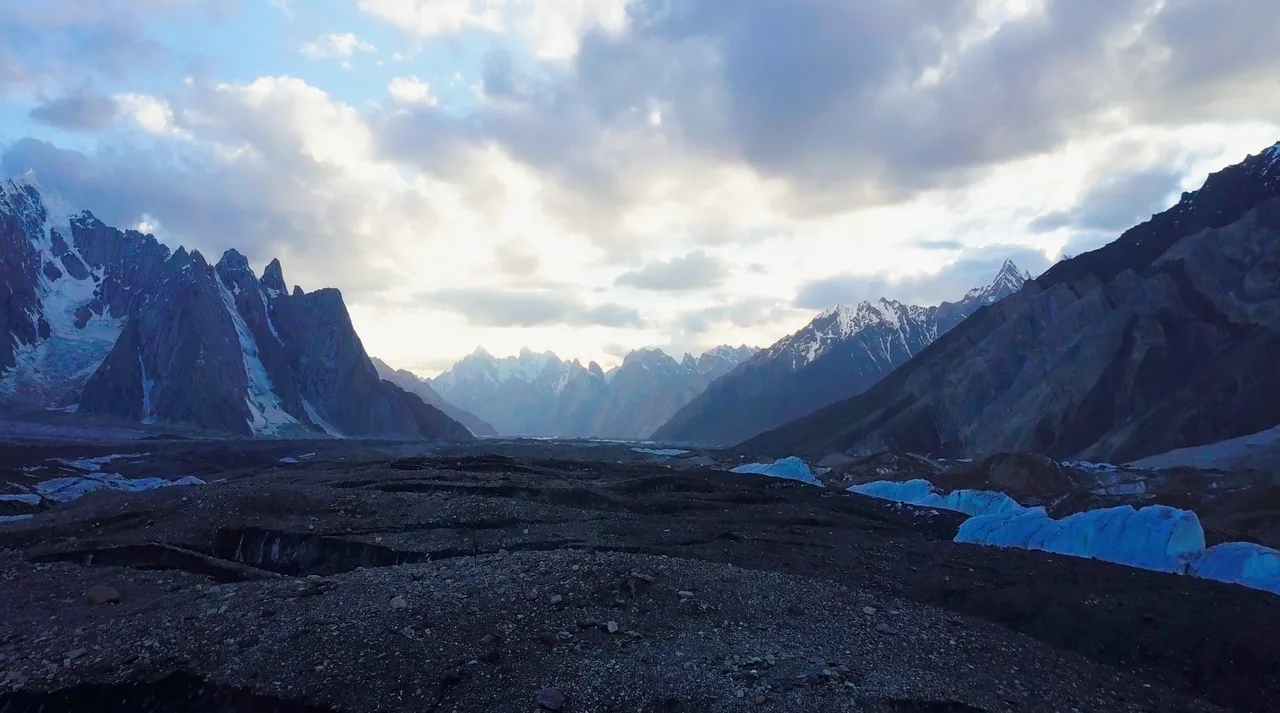
The climbing season is short. The window opens around June and runs into September, with July and August the prime months for the higher camps. Earlier than June and the approach can still hold heavy snow; later, conditions deteriorate fast. The trek in alone is six to eight days each way, so a full expedition typically runs five to seven weeks door to door.
Permits & visa — don’t guess this. Climbing Gasherbrum I or II requires a Trekking & Mountaineering visa (not an ordinary tourist visa), a mountaineering permit and peak royalty paid to the Government of Pakistan, and a licensed Pakistani operator with a registered liaison/guide. Rules, fees and any seasonal access conditions change — we handle the paperwork and confirm the current requirements for you before you book flights.
How hard is it, really?
Plainly: this is hard, cold, and remote, and you should arrive fit and already comfortable with crampons, ice axe, fixed ropes and glacier travel. Gasherbrum II is the gentler introduction to 8,000 m climbing; Gasherbrum I is a step up that rewards the experience you gain on its neighbour. Neither is a trek — for the walking version, the classic Karakoram treks or the crossing of the Gondogoro La will put you under these giants without the summit commitment. If your sights are higher still, see our guides to Broad Peak and K2.
Frequently asked questions
Which is easier, Gasherbrum I or Gasherbrum II?
Gasherbrum II. Its standard south-side route is the most achievable of the Karakoram eight-thousanders and is a common first 8,000 m peak. Gasherbrum I, via the Japanese Couloir, is steeper, more technical and more committing.
How high are Gasherbrum I and II?
Gasherbrum I is about 8,080 m (the 11th-highest mountain on earth) and Gasherbrum II about 8,035 m (13th-highest). Heights vary slightly by source.
How long does a Gasherbrum expedition take?
Plan on roughly five to seven weeks door to door: a 6–8 day trek in from Askole, several weeks of acclimatisation and camp-stocking around base camp, a summit window, and the walk out.
Do I need a special permit or visa?
Yes. You need a Trekking & Mountaineering visa (distinct from a tourist visa), a mountaineering permit with peak royalty paid to the Government of Pakistan, and a licensed operator. We arrange the permits and confirm current requirements before you commit.
When is the best time to climb?
June to September, with July and August the prime summit months. Outside that window the approach and upper mountain are usually out of condition.
Ready to climb the twin giants of the Baltoro? Our Four 8,000 m Base Camp Trek puts you under K2, Broad Peak and both Gasherbrums — the ideal recon and acclimatisation for a future expedition, and a magnificent trek in its own right.
Thinking about Gasherbrum? Talk it through with people who actually work these glaciers. WhatsApp us on +92 312 9921574 or email info@karakoramventure.com — you’ll be planning with a local Balti team, not a broker. Local hands, real safety, fair price.
Sources & further reading: American Alpine Club & American Alpine Journal; The Himalayan Journal (Himalayan Club); ExplorersWeb; Planetmountain. Altitudes and dates cross-checked against multiple references and marked approximate where sources differ. Images via Wikimedia Commons under the licences credited in each caption.
Climb GII with us. Our 42-day Gasherbrum II Expedition runs the normal route from the Gasherbrum base camp — peak royalty and permits, liaison officer, one high-altitude porter per climber above BC, oxygen, high camps and fixed rope. Full-board $15,400pp, base-camp service $6,900, minimum team of four. Prior 6,500m experience and a climbing CV required; we do not sell summits.
Climb Hidden Peak with us. Our 45-day Gasherbrum I Expedition runs from the Gasherbrum base camp — peak royalty and permits, liaison officer, one HAP per climber above BC, oxygen, high camps and fixed rope. Full-board $16,800pp, base-camp service $7,400, minimum team of four. Prior 7,000m experience required and a previous 8,000m summit strongly preferred.
Both twins in one season. Our 55-day Gasherbrum I & II Double Expedition uses the base camp they share — one approach, one acclimatisation programme, GII first then Hidden Peak. Both royalties and permits included, one HAP per climber above BC on each peak. $26,900pp full-board, against $32,200 booked separately. Minimum team of four.