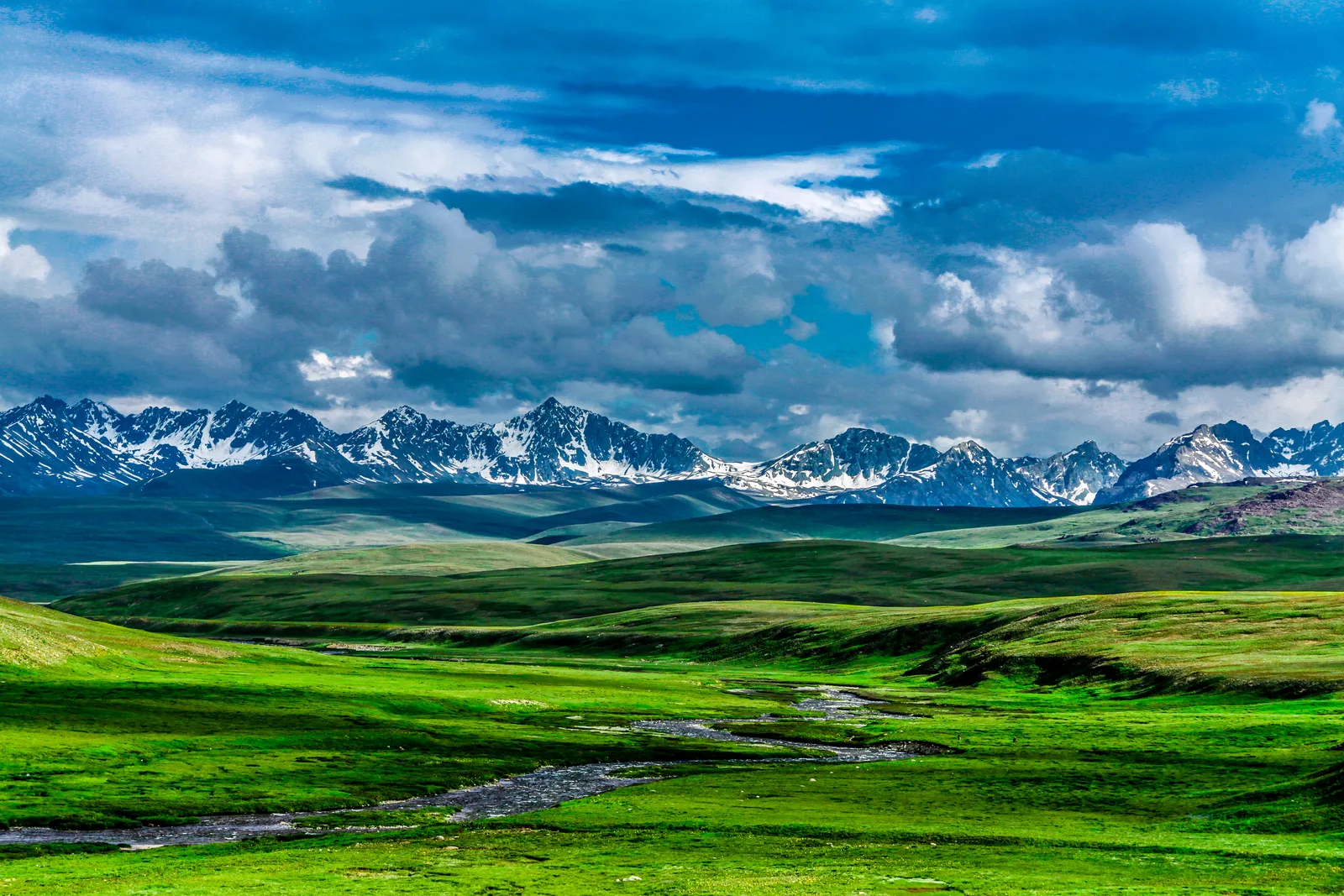
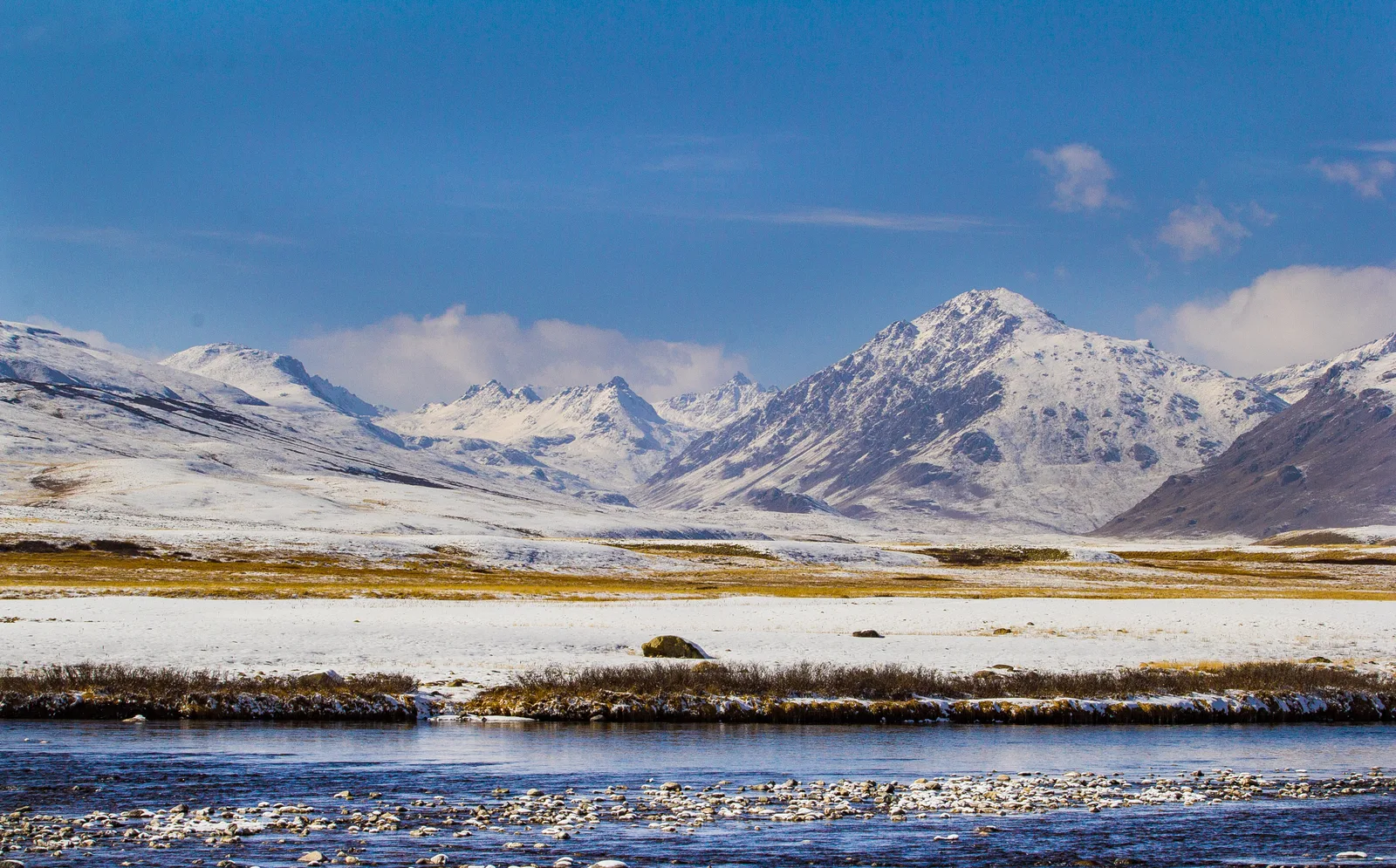
Deosai National Park is a 4,114-metre alpine plateau between Skardu and Astore in Gilgit-Baltistan — the second-highest plateau on earth after Tibet, reachable only by 4×4 in summer, and the last refuge of the Himalayan brown bear. The road opens in June once the snow is cleared and stays passable until around October. From Skardu it is roughly a 1.5–3 hour jeep drive over the rim and onto a sea of green meadow, glacial streams, and the deep blue of Sheosar Lake. This is the guide our team uses when we take travellers up there: when to go, which route to take, what the river crossings really involve, and how to see it without wrecking the place.
Key Takeaways
- Elevation: average ~4,114 m (13,497 ft) — the world’s second-highest plateau after the Tibetan Changtang.
- Season: roughly June to October; the park was closed on 15 November 2025 and reopens once snow is cleared. Best colour and weather: late June through August.
- Access: 4×4 only — ~30–44 km from Skardu via Sadpara, or ~70 km from Astore via Chilam.
- Sheosar Lake: ~4,250 m, one of the highest large lakes anywhere; Nanga Parbat is visible on a clear day.
- Wildlife: the Himalayan brown bear — up from 19 animals in 1993 to about 78 in 2022 — plus ibex, marmots, wolves and 120+ bird species.
- Honest note: it is high, cold at night even in July, and remote. Altitude is real here.
Where Deosai is — and why “Land of Giants”
Deosai sits east of Nanga Parbat, in the western Himalaya where it brushes up against the Karakoram, straddling the boundary between Skardu and Astore districts. The plateau averages 4,114 metres, which makes it the second-highest plateau in the world after Tibet’s Changtang. The park core protects about 843 km² of this high steppe (figures for the wider plateau run larger, into the thousands of km²).
The name comes from Shina: deo (giant) and sai (shadow) — the “land of the giant.” The Balti who have grazed these meadows for generations call it Ghbiarsa, “the summer’s place,” because for half the year it is buried in snow and simply cannot be reached. That single Balti word tells you most of what you need to know about planning a trip: Deosai is a summer-only country.
When to go: the season is short and snow decides it
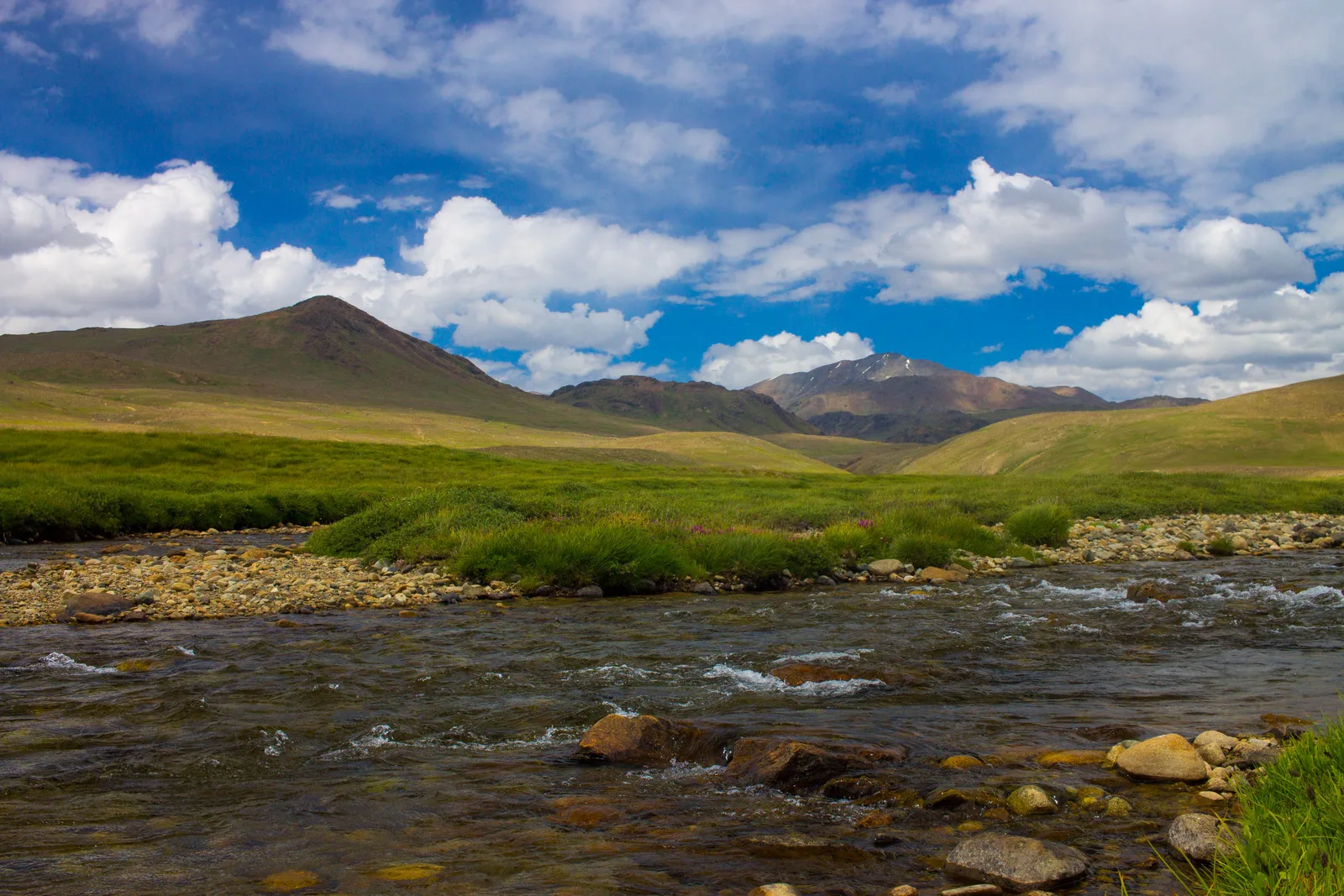
Between November and May the plateau is locked under snow. The Gilgit-Baltistan authorities formally closed the park on 15 November 2025 and it reopens in June 2026 once crews clear the passes. In practice the reliable window is late June through September, with a tail into October in a dry year. Come in early July and the meadows are green and threaded with wildflowers and butterflies; by late September the grass is turning gold and the first snow is never far off.
Even at the height of summer this is a cold, high place. Daytime can be warm and bright, but nights drop sharply and weather changes fast at 4,000 m. We tell every traveller the same thing we’d tell family: bring real layers, and treat the altitude with respect. If Deosai is your first day above 4,000 m, read our acclimatisation guide for high-altitude travel in Pakistan before you go.
Getting there: two routes, both 4×4 only
There is no sealed highway across Deosai. Whichever way you come, the last stretch is a rough jeep track, and a capable 4×4 with a driver who knows the crossings is not optional — it is the trip. Most travellers come up from Skardu; some link it with Astore as a through-route.
| Route | From | Distance / time* | Good for |
|---|---|---|---|
| Skardu via Sadpara | Skardu town | ~30–44 km, ~1.5–3 hrs to the plains | Shortest access; day trips and Bara Pani |
| Astore via Chilam | Astore valley | ~70 km; Chilam ~4 hrs from Astore town | Sheosar Lake side; through-trips to/from the KKH |
| Skardu → Astore traverse | Either end | Full-day crossing | Seeing the whole plateau in one push |
*Distances and times vary with road condition, river levels and weather; treat them as approximate.
Getting yourself to Skardu in the first place is its own decision — fast flights from Islamabad versus the long overland road. We break both down in how to get to Skardu.
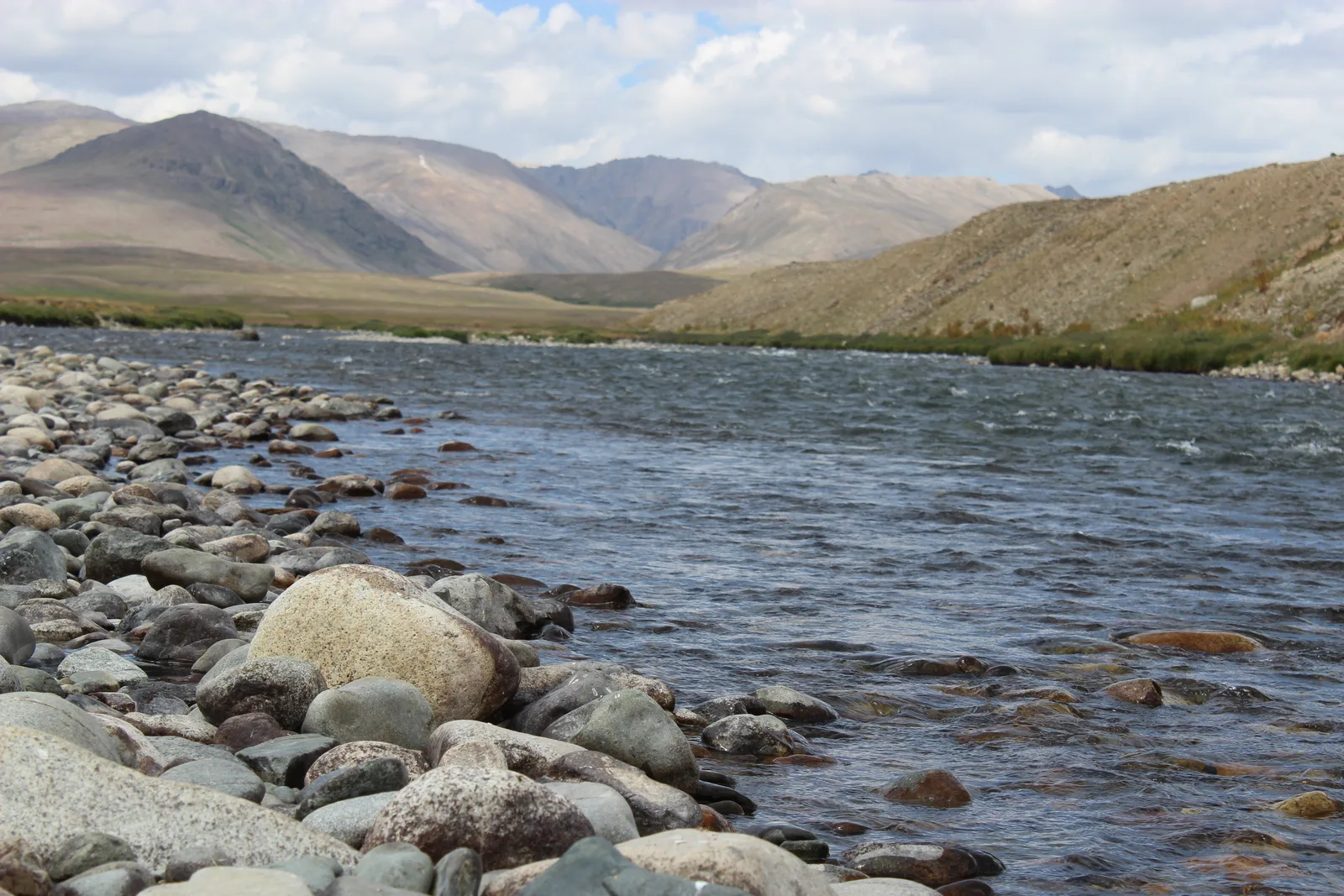
Safety — the river crossings are real. The plateau is split by two streams, Kala Pani and Bara Pani. Kala Pani is usually shallow enough to drive. Bara Pani is crossed on a small wooden bridge rated for limited weight, so jeeps cross empty while passengers walk over — standard practice, not a stunt. Levels rise with afternoon snowmelt, so timing matters. This is exactly why we run Deosai with experienced local drivers and, on overnight trips, carry a satellite phone: there is no mobile signal and the nearest help is hours away.
Sheosar Lake: the blue heart of the plateau
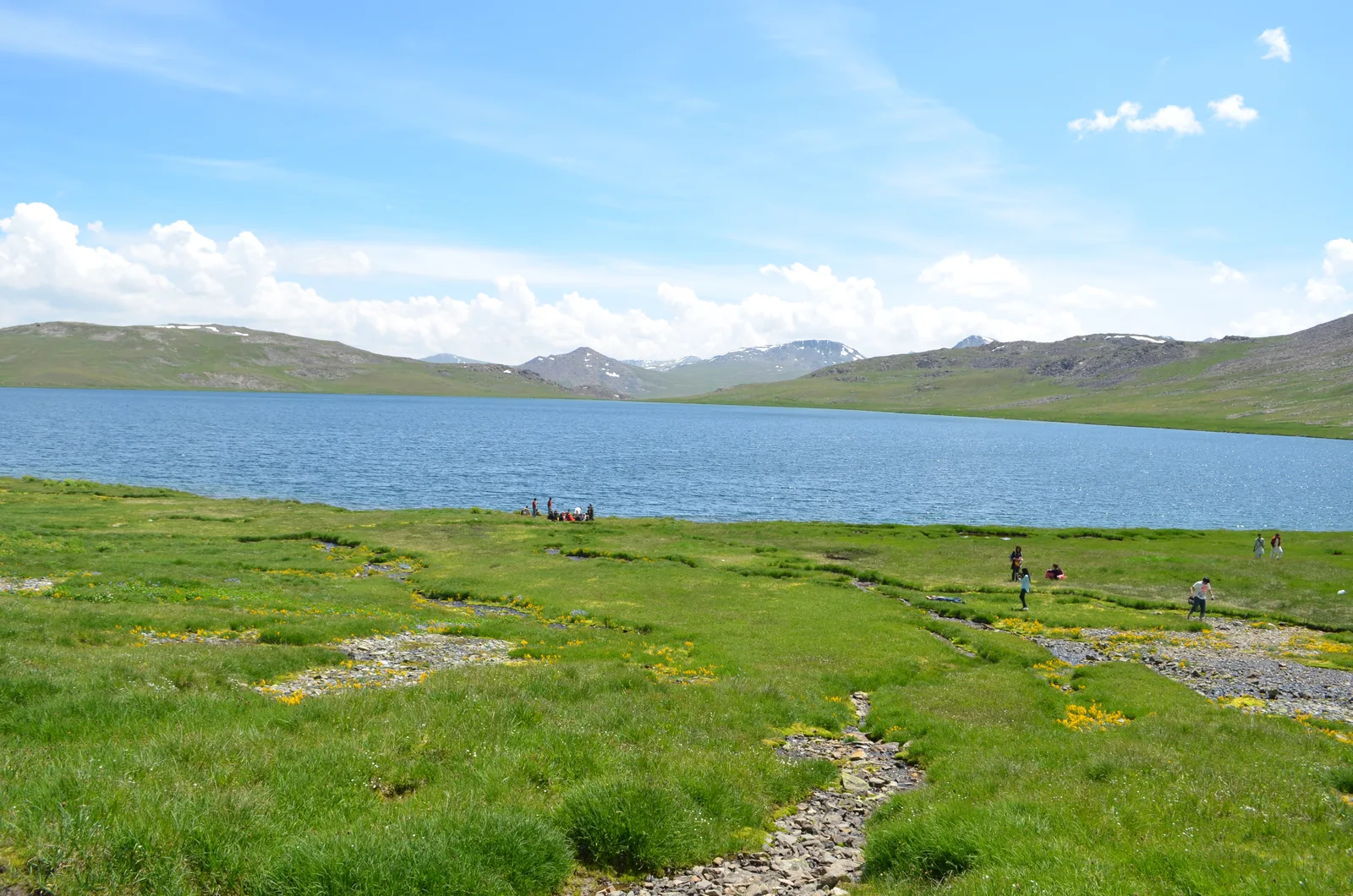
At the western edge of the park, near Chilam, sits Sheosar Lake — about 4,250 m up, roughly 2.3 km long, and one of the highest large lakes on earth. The name is Shina for “Blind Lake,” because it sits so hidden, with no obvious river feeding it. On a clear morning the snow wall of Nanga Parbat shows on the horizon, mirrored in still water ringed by meadow. It is the single most photographed spot on Deosai, and it earns it.
The brown bear — and why the park exists
Deosai was made a national park in 1993 for one reason above all: to save the Himalayan brown bear. Hunted and poached to the edge, the population on the plateau had fallen to about 19 animals. With the Himalayan Wildlife Foundation running check posts and a research camp, and the park later handed to the Gilgit-Baltistan wildlife department, numbers climbed to roughly 40 by 2005 and about 78 by 2022. It remains a fragile recovery — the bears are still pressured by climate change and disturbance.
Bears are shy and you are not guaranteed a sighting; that is how it should be. What you will almost certainly see are fat golden Himalayan marmots whistling from their burrows, and with luck ibex high on the slopes, foxes, and raptors overhead — golden eagles, lammergeier, Himalayan vultures. Deosai counts more than 120 bird species across the season.
Park & permit notes. Deosai is an IUCN-category wilderness area and a UNESCO World Heritage tentative site — treat it accordingly. There is a national-park entry fee collected at the gate, and rules that actually matter: stay on existing tracks, never feed or approach wildlife (especially bears), and carry every scrap of rubbish back out. No foreign trekking permit is needed just to visit the plateau, but regulations and fees change — we confirm the current position before each trip. Pack out, leave the meadow as you found it.
How we run Deosai — and how it fits a Skardu trip
Most travellers do Deosai as a long day from Skardu: up over Sadpara at first light, out to Bara Pani and as far as Sheosar if time and river levels allow, back by evening. If you want the plateau at its best — dawn light, bear-watching hours, a real chance at the wildlife — an overnight in tents near Bara Pani is worth the cold. We carry proper kit, a cook, and communications, because at 4,000 m a casual camp is not the place to cut corners.
Deosai also pairs naturally with the rest of a Skardu itinerary. Many of our travellers run it alongside the Sarfaranga Cold Desert jeep safari for two completely different high-altitude landscapes in one trip, or fold it into a longer expedition as an acclimatisation and rest day. If you are weighing up the big routes, our overview of the best treks in Pakistan and the flagship K2 Base Camp trek both sit well around a Deosai day.
That is our promise on this plateau in a sentence: a Balti team that has driven these crossings for years, a real plan if something goes wrong, and a fair price that doesn’t come out of your safety. Local hands, real safety, fair price.
Frequently asked questions
Is Deosai open right now?
The season runs roughly June to October. The park was closed on 15 November 2025 for winter and reopens in June 2026 once the snow is cleared from the roads. Exact opening shifts year to year with snowfall — WhatsApp us for the current status.
How high is Deosai, and will I feel the altitude?
The plateau averages about 4,114 m, and Sheosar Lake is near 4,250 m. That is high enough that some people feel mild altitude effects, especially on a fast day trip from Skardu (~2,230 m). Hydrate, don’t rush, and tell your guide how you feel.
Can I drive my own car onto Deosai?
No — it is a 4×4-only track with river crossings, including the weight-limited Bara Pani bridge. You need a proper high-clearance jeep and a driver who knows the route and the water levels.
Will I see a brown bear?
Maybe, but never guaranteed — they are shy and there are only around 78 on the whole plateau. Early morning and an overnight stay improve your odds. Marmots, ibex and raptors are far more reliable.
Day trip or overnight?
A day trip from Skardu covers Bara Pani and, conditions allowing, Sheosar Lake. An overnight camp gives you dawn light and the best wildlife hours — bring warm gear, because nights are cold even in July.
Thinking about Deosai this summer? Tell us your dates and we’ll build a Deosai day or an overnight camp around the rest of your Skardu trip. WhatsApp us on +92 312 9921574 or email info@karakoramventure.com — you’ll be talking to a local Balti team who drive these crossings, not a broker reading a brochure.
Sources: Deosai National Park and Sheosar Lake (Wikipedia); Himalayan brown bear population figures via The Express Tribune (2022); Himalayan Wildlife Foundation; UNESCO World Heritage tentative list; Forest, Wildlife & Environment Department, Government of Gilgit-Baltistan. Altitudes and distances are approximate and rounded; sources vary. Photographs via Wikimedia Commons under CC BY-SA, credited per image.
Want to cross the whole plateau? Our 7-day Deosai Jeep Safari runs Skardu to Astore end to end — over the Sadpara rim, two nights camping at Bara Pani and Sheosar Lake (4,250m), then out at Chilam into the Astore valley. Local drivers who know the crossings, sat phone in the vehicle, from $890 per person.