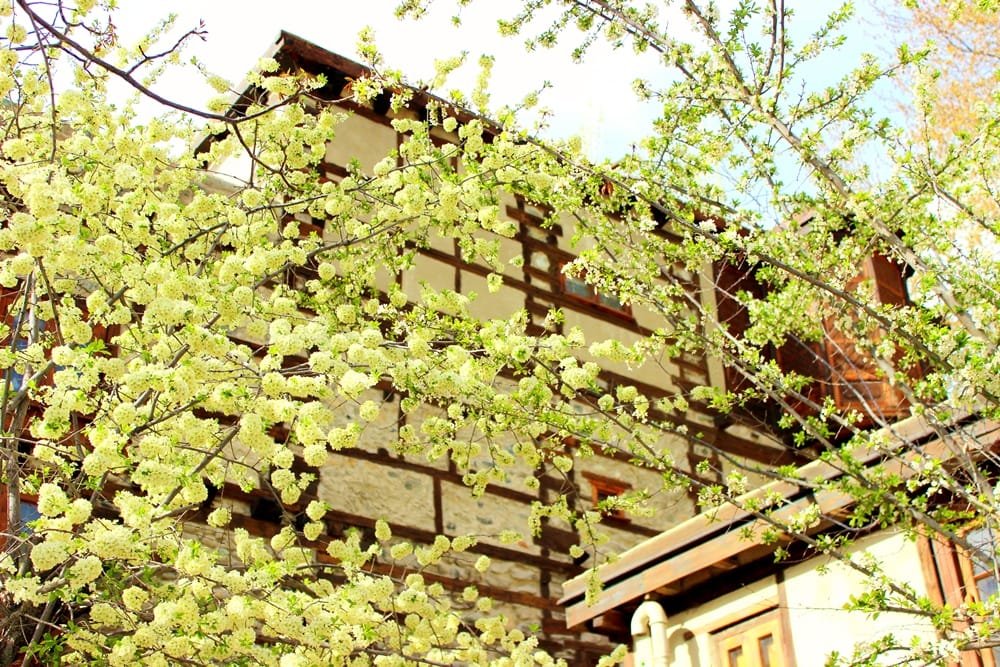
Shigar Valley is a green, orchard-filled corridor in Gilgit-Baltistan, about 30 km (roughly an hour by jeep) north of Skardu, sitting at around 2,250 m. Its centrepiece is Shigar Fort — Fong Khar, the “Palace on the Rock” — a 17th-century Raja’s palace built on a boulder, restored by the Aga Khan programme between 1999 and 2004 and a 2006 UNESCO Asia-Pacific Heritage Award winner. The valley runs about 170 km from Skardu all the way to Askole, and it is the road-head gateway to the Baltoro Glacier and K2. You can see Shigar as an easy half-day trip, an overnight heritage stay, or the first night of a serious expedition.
We run Shigar out of Skardu with our own Balti team, and we’ll be straight with you: this is not a hard mountain day. It is low, gentle and beautiful — apricot blossom in spring, golden poplars in autumn, an old fort and an older mosque. The reason it matters to a climber is that almost every expedition to K2, Broad Peak and the Gasherbrums drives through Shigar on the way to Askole. So treat this as two things at once: a heritage stop worth a day on its own, and the gateway to the highest mountains on earth.
Key takeaways
- Where: Shigar Valley, Shigar District, Gilgit-Baltistan — about 30 km / an hour by jeep north of Skardu, at roughly 2,250 m.
- Shigar Fort (Fong Khar): built in the early 17th century by the Amacha rajas, restored 1999–2004 by Aga Khan Cultural Service Pakistan, now a Serena heritage hotel and museum; winner of the 2006 UNESCO Asia-Pacific Heritage Award.
- Amburiq Mosque: 14th-century, one of the oldest mosques in Baltistan, restored to a 2005 UNESCO Award of Merit.
- The gateway: the valley stretches ~170 km from Skardu to Askole — the road-head for the Baltoro Glacier, Concordia and K2.
- Best time: spring blossom (Mar–May) and golden autumn (mid-Sep onward); summer is warm, green and busy.
- Difficulty: easy. A low-altitude day trip or overnight — no trekking fitness required.
Where Shigar is, and why it matters
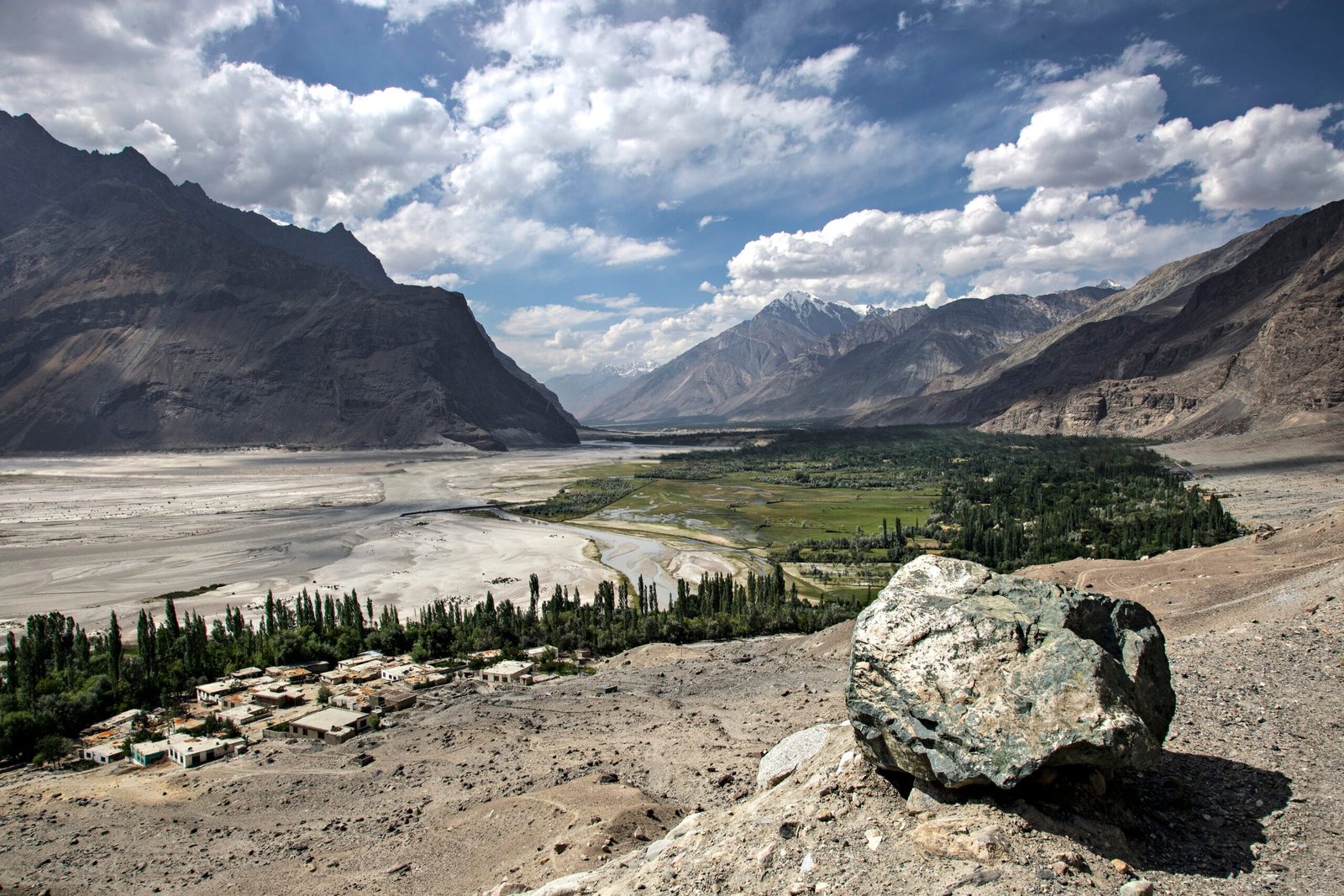
Shigar sits in its own district north of Skardu, watered by the Shigar River — the braided river you cross to leave the Skardu basin. The drive is short: roughly 30 km (19 miles), about 40 minutes to an hour by jeep on the Skardu–Shigar road, climbing gently to around 2,250 m. The valley itself is wide and cultivated, terraced with wheat and orchards of apricot, apple, cherry and mulberry, with bare Karakoram walls rising straight off the fields.
The local language is Balti, and this corner of the world was once called “Little Tibet.” What gives Shigar its strategic weight is geography: the valley runs about 170 km from Skardu up to Askole, the last village before the glaciers. Every jeep heading for the Baltoro Glacier, Concordia and the K2 Base Camp trek passes through here. Shigar is where the mountains begin.
The route: Skardu to Shigar, step by step
As a day trip or an overnight, Shigar is simple. Here is how we usually run it:
- Skardu start. Leave Skardu after breakfast; cross the Shigar River bridge out of the Skardu basin.
- The Skardu–Shigar road (~1 hr). A jeep road past the cold-desert dunes and the river, with peaks opening up on both sides.
- Shigar town. Arrive in the main valley settlement — orchards, irrigation channels, old wooden houses.
- Shigar Fort (Fong Khar). Tour the restored palace and museum; lunch or tea in the garden if you have time.
- Amburiq Mosque. A short hop to the 14th-century mosque, Shigar’s oldest monument.
- Return or push on. Drive back to Skardu by evening, stay overnight at the fort, or continue up-valley toward Dassu and Askole if you are bound for the Baltoro.
Shigar Fort: Fong Khar, the Palace on the Rock
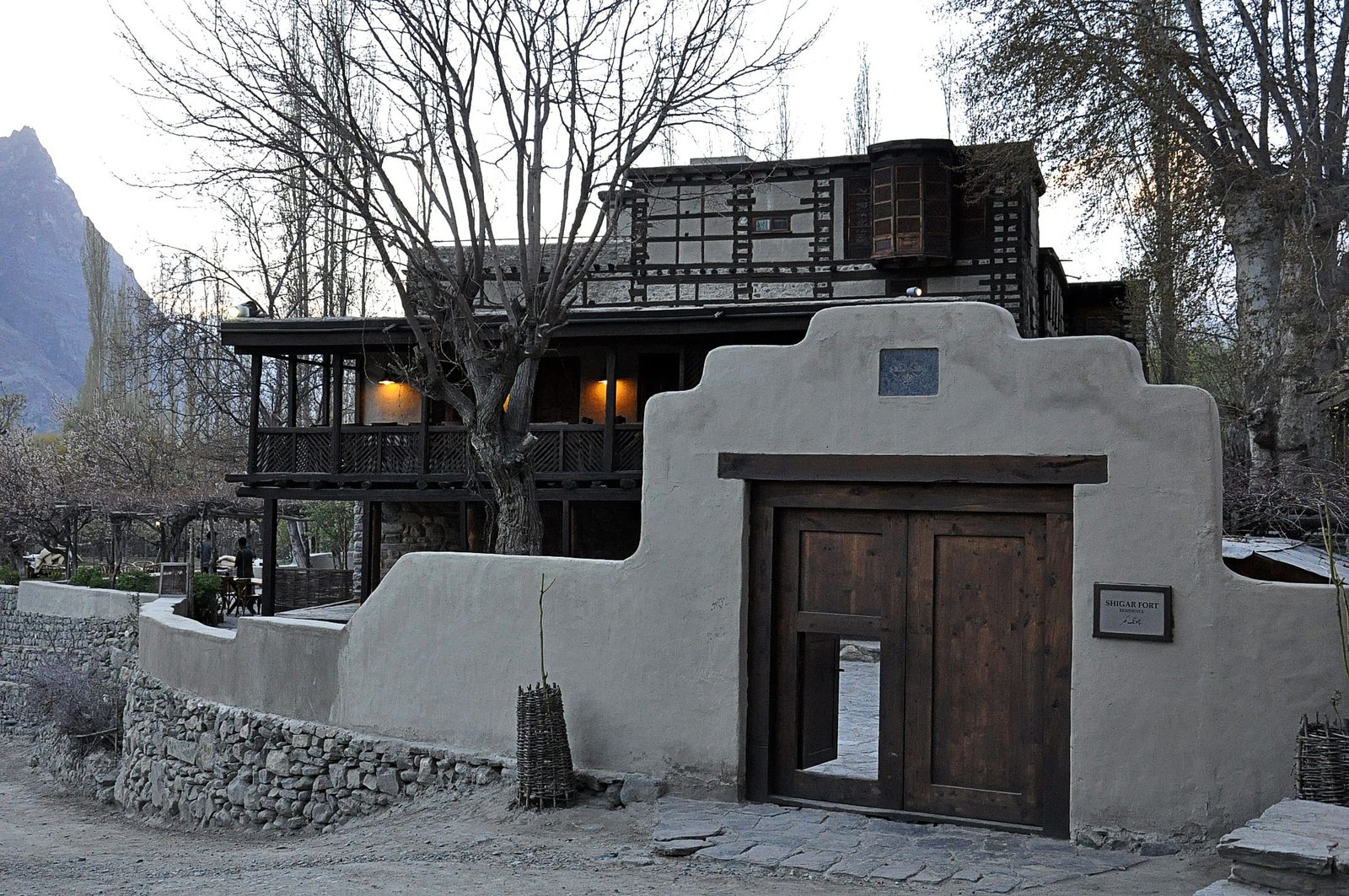
The fort you visit today is properly called Fong Khar — “Palace on the Rock” in Balti — because it is built against a huge boulder at the edge of the village. The current palace was raised in the early 17th century by the 20th raja of the Amacha dynasty, the ruling family of Shigar. (An older fort, Khar-i-Dong, stood here from the 11th century before Mughal raids destroyed it.) It is a three-storey structure of stone, timber and carved wood — Kashmiri craftsmanship grafted onto Balti building tradition.
By the late 1990s the palace was close to ruin. The Aga Khan Cultural Service Pakistan restored it between 1999 and 2004 at a cost of roughly US 1.4 million, and the building reopened as a heritage museum and a small Serena hotel. In 2006 the project won the UNESCO Asia-Pacific Heritage Award for cultural conservation — the region’s flagship restoration. You can walk the museum rooms, see the old royal woodwork, and — if you want — sleep in the palace itself. For another Baltistan palace in the same family of restorations, see our Khaplu Palace heritage guide.
The Amburiq Mosque and Shigar’s older soul
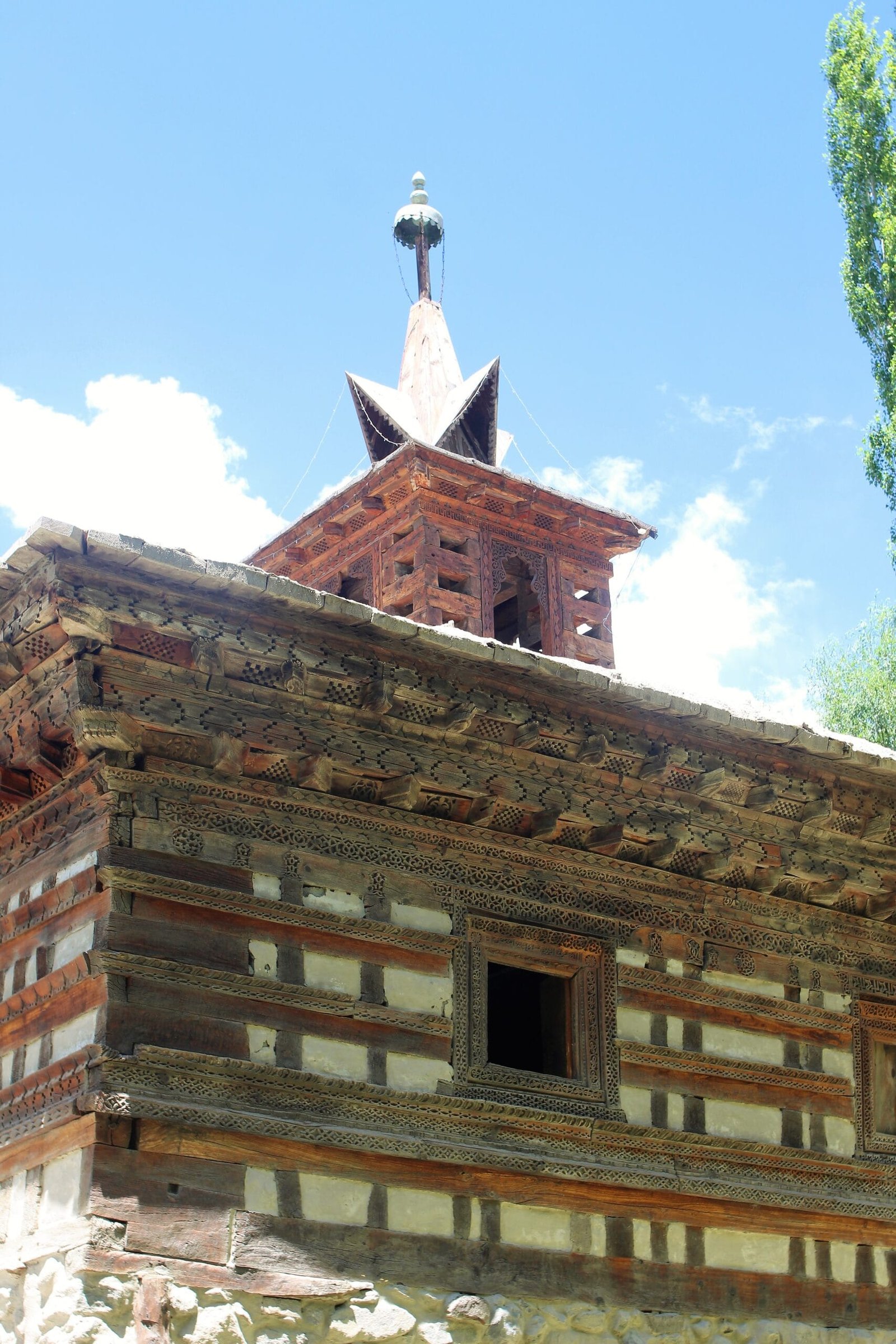
A short distance from the fort stands the Amburiq Mosque, the oldest in the valley and one of the oldest in all Baltistan. It dates to the 14th century and is tied to the Kashmiri preacher Syed Ali Hamadani, whose Iranian craftsmen are credited with building it as Islam first reached these valleys. The mosque is small, dark and wooden. Its traditional timber-and-stone “cribbage” technique lets these structures flex through earthquakes. It too was restored by the Aga Khan programme (around 1998–2000) and won a UNESCO Asia-Pacific Award of Merit in 2005. Stand inside it and you are standing in roughly seven centuries of Balti history.
When to go
Shigar is one of the few places in our region that genuinely rewards a visit in three seasons. Here is the honest breakdown:
| Months | Conditions | Verdict |
|---|---|---|
| Mar–May | Apricot, cherry and plum blossom; cool, clear days; snow still on the high walls. | Best for blossom — the valley at its most photogenic. |
| Jun–Aug | Warm, green, fully open; the expedition season — jeeps streaming up to Askole. | Best for access — busy but the gateway is wide open. |
| Sep–Oct | Golden poplars and orchards, crisp air, thinning crowds. | Best for colour — our quiet favourite. |
| Nov–Feb | Cold, short days, snow; fort open but the valley is dormant. | Quiet and atmospheric, but limited. |
How hard is it?
Honestly, it is not hard at all — and we won’t pretend otherwise to sell it. Shigar Fort and the Amburiq Mosque are a low-altitude, road-accessible day out. No trekking fitness is required, the altitude (~2,250 m) is barely higher than Skardu, and you can do the whole thing in comfortable shoes. That is exactly why it works so well as an acclimatisation day before a big trek, or as a soft-adventure stop for families and travellers who want the Karakoram without the suffering. If you want the suffering, it is up the road — see our best treks in Pakistan.
Getting there & what it costs
Getting to Shigar is the easy part: fly or drive to Skardu (see how to get to Skardu), then it is a short jeep transfer up the valley. We can run it as a half-day add-on, a full day with the cold desert and a riverside lunch, or fold it into a longer Baltistan itinerary alongside the Sarfaranga cold desert and Skardu’s own sights.
On price, we keep it personal rather than posting a number that goes stale — it depends on your group size, whether you stay overnight at the fort, and what else you bundle in. You get a fair price with a local Balti team, and no corners cut on the things that matter. Message us with your dates and group and we’ll give you a straight quote.
Shigar is also a doorway. Khosar Gang (6,401 m) rises directly above the valley, and our 10-day Khosar Gang Expedition drives through Shigar’s fort and orchards on the way to base camp — the right first 6,000er, from $2,200 per person with skills taught on the mountain. Fitness required, climbing CV not.
Frequently asked questions
Where is Shigar Valley and how do I get there?
Shigar Valley is in Shigar District, Gilgit-Baltistan, about 30 km (19 miles) north of Skardu — roughly 40 minutes to an hour by jeep. You first reach Skardu by air from Islamabad or by road, then transfer up the Skardu–Shigar road.
What is Shigar Fort and can you stay there?
Shigar Fort (Fong Khar, “Palace on the Rock”) is a 17th-century Amacha-dynasty palace restored by the Aga Khan programme between 1999 and 2004. It is now a museum and a small Serena heritage hotel, so yes — you can tour it or stay overnight in the palace.
How old is the Amburiq Mosque?
It dates to the 14th century and is one of the oldest mosques in Baltistan, linked to the preacher Syed Ali Hamadani. It was restored around 1998–2000 and won a UNESCO Asia-Pacific Award of Merit in 2005.
When is the best time to visit Shigar?
Spring (March–May) for apricot and cherry blossom, and autumn (mid-September onward) for golden poplars. Summer is warm, green and busy — it is the expedition season when jeeps run up to Askole.
Is Shigar worth it if I’m heading to K2 Base Camp?
Very much. Shigar is on the road to Askole, the K2 trail-head, so it is a natural and rewarding first stop — a low, easy day that doubles as gentle acclimatisation before the Baltoro.
Plan your Shigar & Baltistan trip with a local Balti team
WhatsApp +92 312 9921574 · email info@karakoramventure.com
We’re a local Balti team in Skardu, not a broker — local hands, real safety, fair price.
Sources & attribution: facts drawn from Wikipedia (Shigar Palace, Shigar Valley, Amburiq Mosque), Dawn, the Aga Khan Development Network and UNESCO. Images via Wikimedia Commons: Shigar Valley by Jamil-ud-din Akhtar (CC BY-SA 4.0); Shigar Fort facade by Furqanlw (CC BY-SA 4.0); Amburiq Mosque by Syedmuhammadmonir (CC BY-SA 4.0); featured Shigar Fort in spring by Sana Nemat (CC BY-SA 3.0). Altitudes and dates are approximate where sources vary.