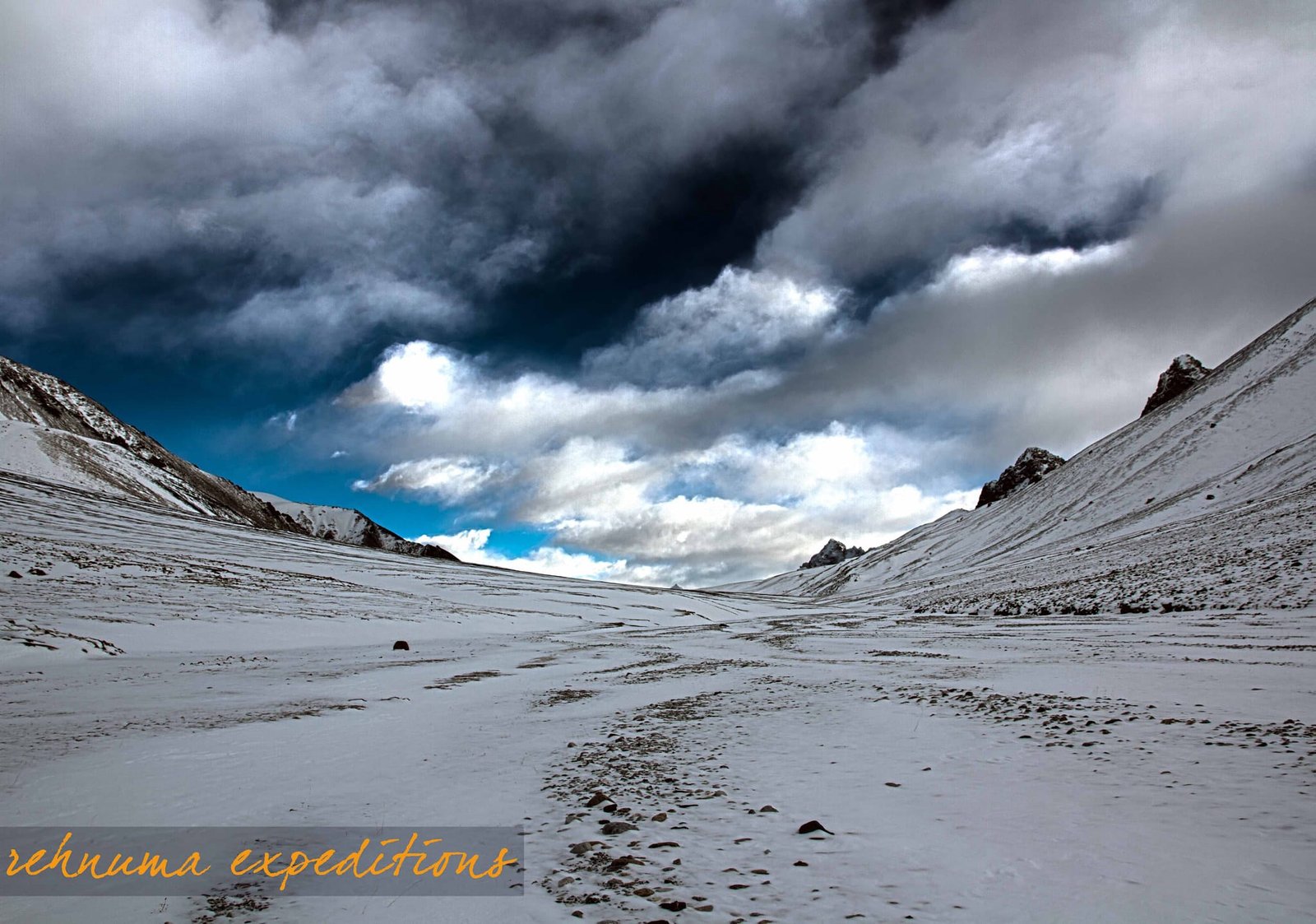
Shimshal Pass sits at roughly 4,735 m in the far north of Gilgit-Baltistan. You reach it on foot from Shimshal village, at about 3,113 m. That is the highest permanent settlement in the old Hunza district. The walk to the pass and its summer Pamir pastures takes about three to four days out from the village. We run it as a 7-day round trip on the trail. All in from Islamabad, with travel and acclimatisation, it is a 14–20 day trip. The season is short: roughly June to September, with the high meadows greening only once the snow goes. It is a remote, high, committing trek. Not the hardest in the Karakoram, but a long way from any help. And it ends in one of the most extraordinary grazing landscapes on earth. We run it with our own Balti team.
We run Shimshal out of the Gojal end of Hunza, off the Karakoram Highway at Passu. Our porters, cook and guides come from the valley itself. And we’ll be straight with you. This is not a roadside day out. Shimshal is one of the most isolated inhabited valleys in Pakistan, and the road in is a famous cliff-cut track. Once you start walking there is no phone signal, no clinic and no quick way down. That isolation is exactly why it is worth doing. Here is the honest picture.
Shimshal Pass: key takeaways
- Where: Shimshal Valley, Gojal Tehsil, Hunza District, Gilgit-Baltistan — reached from the Karakoram Highway at Passu by a jeep road built only in October 2003.
- The numbers: Shimshal village ~3,113 m (the highest settlement in the district); Shimshal Pass ~4,735 m; the optional Minglik Sar peak ~6,050 m. Figures are approximate and vary by source.
- The trek: about 3–4 days on foot from the village to the pass. That is a roughly 7-day round trip on the trail. A full trip from Islamabad, with transport and acclimatisation, runs about 14–20 days.
- Difficulty: a serious, non-technical high-altitude trek — long days, real altitude and deep remoteness rather than ropes and ice. For fit, acclimatised walkers.
- Season: roughly June to September, when the snow has cleared the pass and the Pamir pastures are in use. The valley is locked in by winter the rest of the year.
- Why it matters: Shimshal is Pakistan’s most famous mountaineering village, home of climbers like Rajab Shah and Samina Baig. The pass leads to summer pastures grazed for generations.
Where Shimshal is, and why it matters
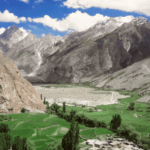
Shimshal lies in the Gojal end of Hunza, in the far north of Gilgit-Baltistan, where the Karakoram leans up against the Pamir. The village sits at about 3,113 m, which makes it the highest permanent settlement in the old Hunza district. It is strung along the Shimshal River, where the water has carved a deep valley out of the high mountains. Until October 2003 there was no road at all: everything in and out went on foot or on yak, a three-day walk to the Karakoram Highway. Then the community helped cut a jeep track down the gorge from Passu. It is a narrow, exposed cliff road, around 50-odd kilometres of it. That drive is an experience in its own right, before the trek even begins.
What makes Shimshal more than just remote is its people. For its size, this single village has produced more of Pakistan’s leading high-altitude climbers than anywhere else in the country. Among them is Rajab Shah, the first Pakistani to climb all five of the country’s 8,000 m peaks. Another is Samina Baig, the first Pakistani woman to summit Everest. A mountaineering school in the village has trained generation after generation. When you walk into the Pamir behind Shimshal, you are walking the same ground these climbers grew up on. Your guides and porters are part of that story. That is what we mean when we say local hands.
The route to the pass, step by step
The trek climbs from the village up through gorges and old shepherd camps. It reaches the broad high pastures the Shimshalis call the Pamir, and then the pass itself. The stages and altitudes below are approximate and shift year to year with the snow line and the state of the trail.
- Karakoram Highway to Shimshal village (1 day): a 4×4 jeep off the KKH at Passu, then down the famous Shimshal gorge road to the village (~3,113 m). It is a few hours of dramatic, exposed driving.
- Acclimatise at Shimshal (1 day): rest, walk the village and side valleys, and let your body catch up before going higher. This day matters.
- Up toward the pastures (~3,800–4,000 m): climb out of the valley on the old herding trail, through camps such as Wuch Furzeen and Shujerav. The trail gains height steadily toward the Pamir.
Into the Pamir and over the pass
- Into the Shimshal Pamir and the pass (~4,735 m): reach the summer settlements of the high pastures, Shuwert and the grazing grounds. Then the pass itself, with its huge open meadows, lakes and grazing yaks.
- Optional: Minglik Sar (~6,050 m): strong, well-acclimatised parties can attempt this straightforward trekking peak above the pastures. It is a real 6,000 m summit, weather and conditions permitting.
- The return: retrace the route down to the village and the jeep out, making the whole walk roughly a 7-day round trip on the trail.
The Pamir — pastures, peaks and yaks
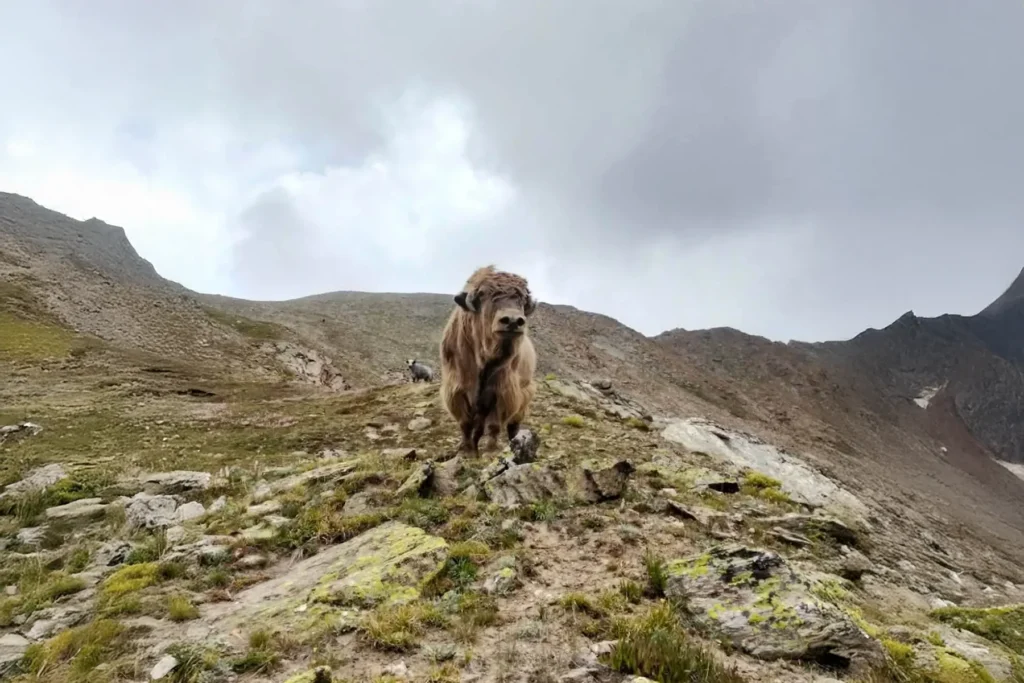
The reward for the climb is the Shimshal Pamir. It is a vast, rolling high plateau of summer grazing, used by the people of Shimshal for generations. They drive yaks, sheep and goats up to the pass for roughly half the year. In the season you will find the herders’ stone-and-turf summer settlements at Shuwert. There is smoke from the fires and lakes catching the light. The animals are scattered across grass that runs out to a horizon of snow peaks. It is one of the few places in the Karakoram where you walk into a living high-altitude culture rather than an empty wilderness.
The peaks above the pastures
Above the pastures rise the peaks that draw climbers. The most accessible is Minglik Sar, at around 6,050 m. It is a non-technical trekking peak, and strong, acclimatised parties sometimes add it for the rare chance of an honest 6,000 m summit. If the remote-and-glaciated end of the Karakoram is what pulls you, this valley sits in the same world as the great ice traverses; our guides to the Snow Lake and Biafo–Hispar traverse and the high alpine of Rush Lake cover that company of trips.
Safety, said plainly
Shimshal’s defining risk is its isolation. Once you leave the village there is no road, no clinic, no phone signal, and the nearest real help is days away on foot. The trek itself is non-technical. However, you are sleeping above 4,000 m. There, weather, a bad stomach or a twisted ankle becomes serious simply because of where you are. We carry a satellite phone on the trek, and hold established helicopter-rescue contacts for the region. We also build the itinerary around proper acclimatisation and honest turn-arounds, rather than pushing tired clients over the pass. The jeep road in is its own hazard — a high cliff track best driven by people who know it. Out here, the rescue plan has to be real before you start walking.
When to go
Shimshal runs on a short Karakoram summer calendar, and the pass in particular only opens once the high snow has gone. Here is an honest month-by-month read.
| Window | Conditions | Verdict |
|---|---|---|
| April – May | Valley accessible lower down, but the pass and pastures still hold snow; cold, and herders not yet up. | Too early for the pass |
| June – August | Snow clears the pass, the Pamir greens, herders move up with the animals, and the weather is at its most settled. | Best — go now |
| September | Crisp, clear and quiet, with the first autumn cold; the pass is still crossable until the snow returns. | Excellent, going colder |
| October – March | Winter shuts the high ground; deep cold and snow, the pass closed and the road often hard. | Closed for the trek |
Right now, in June, the season is opening and the herders are heading up. If you are weighing Shimshal against the other big walks, our roundup of the best treks in Pakistan puts it in context, and spring travellers can pair it with the Hunza Valley blossom season lower down.
How hard is it, honestly
Shimshal is a serious trek, but its difficulty is about altitude and remoteness rather than technical climbing. There are no ropes, no crampons and no glacier crossings on the standard route to the pass. Instead there are long days on rough mountain trail, big height gain, and nights spent above 4,000 m far from anywhere. That combination is what makes it demanding. You need genuine hill fitness, the patience to acclimatise properly, and the temperament for true isolation. If you have done a high-altitude trek before and enjoyed it, Shimshal is a logical next step up in commitment; if it would be your first, build the fitness and read our acclimatisation guide first, and pack for real cold using the Karakoram packing list.
Adding Minglik Sar (~6,050 m) raises the bar. It is still a trekking peak rather than a technical climb. Even so, a 6,000 m summit demands more acclimatisation, a longer trip and good conditions. We will tell you honestly whether your fitness and schedule make it realistic, rather than selling it as a guaranteed tick. That candour is the point — on a valley this remote, overselling difficulty is how people get hurt.
Permits, getting there and cost
Permits & visa — read this early
Shimshal Pass sits in an open trekking zone. So the trek to the pass and the Pamir needs the normal trekking arrangements, rather than a climbing royalty. That means a registered guide, local logistics and the usual area paperwork. Adding a peak such as Minglik Sar can bring it into mountaineering-permit territory, and the exact requirement depends on the objective and the rules in force. Either way you need the right visa: trekkers and climbers should travel on a Trekking & Mountaineering visa, which is distinct from a plain tourist visa. We handle the permits and paperwork end to end — just don’t arrive on the wrong visa expecting to head up the valley. Our Pakistan visa guide walks through it.
Shimshal is reached from the Karakoram Highway, not from Skardu. Most visitors travel up the KKH through Hunza to Passu. Some fly or drive to Gilgit and continue north; others come overland on the highway, with buffer days for weather. Then they take the jeep down the Shimshal gorge to the village. We are a Skardu-based team but run trips across Gilgit-Baltistan, and our guides to the wider region and to flights and road from Islamabad explain the travel options either way.
On cost, we keep pricing personal rather than posting a number that goes stale the moment fuel or permit fees change. What we promise is a fair price, with no corners cut on guides, food or safety. Tell us whether you want the pass trek, the full Pamir circuit, or the Minglik Sar option. Then send your dates and group size, and we’ll give you a straight quote. Shimshal is one of the proudest mountaineering valleys in Pakistan; book the people who are from it.
Frequently asked questions
Where is Shimshal Pass and how do you get there?
Shimshal Pass is in the Shimshal Valley, Gojal Tehsil, Hunza District, Gilgit-Baltistan, Pakistan, near where the Karakoram meets the Pamir. You reach it from the Karakoram Highway at Passu, by a jeep road built in 2003 down to Shimshal village (~3,113 m). From there you trek about three to four days on foot to the pass, at roughly 4,735 m.
How long is the Shimshal Pass trek and how hard is it?
From the village it is about a 7-day round trip on the trail, or roughly 14 to 20 days as a full trip from Islamabad with travel and acclimatisation. It is a serious but non-technical high-altitude trek: the challenge is altitude, long days and deep remoteness rather than ropes or ice, so it suits fit, well-acclimatised walkers.
How high is Shimshal village and Shimshal Pass?
Shimshal village sits at about 3,113 m and is the highest permanent settlement in the old Hunza district. Shimshal Pass is at roughly 4,735 m. The optional Minglik Sar peak above the pastures is about 6,050 m. All figures are approximate and vary slightly by source.
When is the best time to trek Shimshal Pass?
June to September, with July and August the most settled and September often crisp and quiet. The pass only opens once the high snow clears and the herders move up to the Pamir; from roughly October to May the high ground is snowbound and the trek does not run.
Why is Shimshal famous for mountaineers?
For its size, Shimshal has produced more of Pakistan’s leading high-altitude climbers than anywhere else — including Rajab Shah, the first Pakistani to climb all five of the country’s 8,000 m peaks, and Samina Baig, the first Pakistani woman to summit Everest. A village mountaineering school has trained generations of guides and climbers.
Want to trek to the Shimshal Pamir in 2027?
Planning the pass trek, the full Pamir circuit, or adding Minglik Sar? WhatsApp us on +92 312 9921574 or email info@karakoramventure.com — you’ll be talking to a local Balti team who guide these valleys ourselves, not a broker. Tell us your fitness, plans and dates, and we’ll give you an honest read — plus current permit details and fixed departures.
Want to walk it? Our 14-day Shimshal Pass & Pamir Trek runs this exact route — the cliff road in from Passu, three walking days through Wuch Furzeen and Shujerav to the 4,735 m pass, and a full day in the Pamir. Guides, cook and porters from Shimshal itself, sat phone in camp, from $1,850 per person.
Sources & further reading: Shimshal village altitude (~3,113 m, highest settlement in the district) and the 2003 jeep road from Passu — Wikipedia and Gilgit-Baltistan references. Shimshal Pass altitude (~4,735 m), the Pamir pastures, and Minglik Sar (~6,050 m) — standard trekking references. Shimshal mountaineers Rajab Shah and Samina Baig — Dawn, Pamir Times and Wikipedia. Altitudes, distances and trek durations are approximate and vary by source and season.