Yes — if you’re trekking or climbing above roughly 4,500-5,500 metres in Pakistan’s Karakoram, your ordinary travel insurance almost certainly stops covering you, and most Karakoram itineraries cross that line on day one. You need two separate things: a standard medical/trip policy, and a dedicated high-altitude evacuation membership (the kind that covers helicopter rescue above 4,600 m / 15,000 ft). Concordia sits at 4,691 m, K2 Base Camp at roughly 5,150 m, and Gondogoro La at 5,585 m — all of them past the point where a normal policy’s fine print quietly walks away. Buy the right cover before you fly, because it cannot be arranged once you’re on the glacier.
We’ve had clients turn up in Skardu assuming their annual travel policy “covers everything,” only to find the altitude exclusion clause the hard way — usually while reading it aloud to us on a sat phone. We’re not an insurance broker and we don’t sell policies. But we run trips into terrain where a bad knee or a mild case of altitude sickness can turn into a five-figure helicopter bill, and we’d rather you knew that going in than found out on the Baltoro.
Key takeaways
- Most standard travel insurance excludes trekking and climbing above about 4,500-5,500 m — a threshold that Concordia, K2 Base Camp, and Gondogoro La all sit above.
- You need two layers of cover: a conventional medical/trip-cancellation policy, plus a specialist high-altitude rescue membership (e.g. Global Rescue’s High-Altitude package) that explicitly covers helicopter evacuation.
- Pakistan’s only mountain helicopter rescue operator, Askari Aviation, requires a security deposit before they will fly — reported figures vary by source and season, roughly $5,000-$12,000 — and a single evacuation can run into the tens of thousands of dollars.
- Peaks and passes above 6,500 m require a permit from the Gilgit-Baltistan Council, and that permit process itself asks for proof of expedition and porter insurance.
- Weather, not paperwork, is usually what actually stops a rescue — helicopters can’t fly in poor visibility or high wind, insurance or not.
- Sort your cover before you leave home. Claims paperwork and underwriter sign-off take time, and there’s no 4G office on the Baltoro Glacier to sort it out mid-trek.
Why your regular travel insurance quietly stops working here
Most standard travel insurance — the kind bundled with a credit card or bought in five minutes online — is written for airport delays, lost luggage, and a hospital visit at sea level. Buried in the policy wording is almost always an altitude exclusion, typically somewhere between 4,500 m and 5,500 m, sometimes lower. Above that line, the policy simply doesn’t apply, regardless of what happened.
The problem in the Karakoram is that this isn’t a fringe scenario reserved for summit attempts. It’s the default. Skardu itself sits at about 2,228 m, but the moment you leave Askole (roughly 3,040 m) and walk onto the Baltoro Glacier, you’re climbing toward camps and passes that sit well past most policies’ cut-off — often within a few days, long before anyone touches an 8,000 m peak. A “trek,” in insurance terms, can be every bit as excluded as a full expedition.
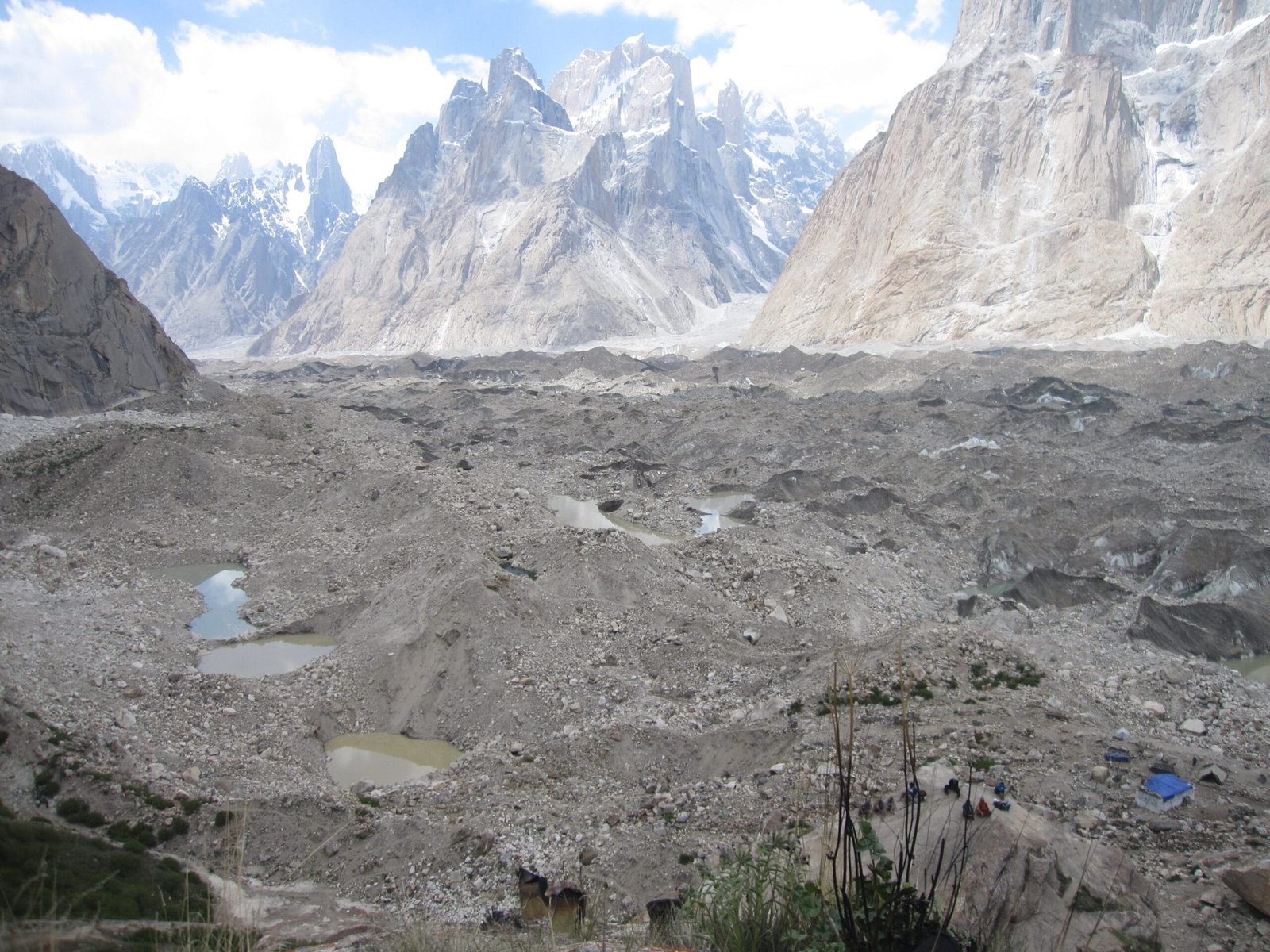
Where the standard-cover line actually falls
The chart below plots the altitude of common waypoints on a Karakoram itinerary against the rough band where general travel insurance typically drops out. It’s schematic — insurers vary — but the pattern holds across almost every mainstream policy we’ve seen clients bring with them.
What your cover actually needs to include
Rather than hunting for one perfect policy, plan on layering two things:
- A standard medical and trip policy — covers routine illness, trip cancellation, delayed flights, lost gear, and low-altitude medical care in Skardu or Islamabad.
- A dedicated high-altitude evacuation membership — the specialist product (Global Rescue’s High-Altitude Evacuation package is the one most climbers and trekkers end up using) that explicitly covers members travelling above about 4,600 m / 15,000 ft, and — critically — will actually organise and pay for a helicopter or ground evacuation rather than just reimbursing you afterwards.
- Search-and-rescue and repatriation cover — check the policy pays for the rescue itself (the helicopter, the ground team, the deposit) and not only the hospital bill that follows it.
- Gear and trip-curtailment cover — useful but secondary; don’t let it distract you from the two points above, which are the ones that actually matter at altitude.
- Written proof you can produce on request — a printed or downloaded copy of your policy and the 24-hour emergency assistance number, because Baltoro camps have patchy signal and you may need to read it to us or a liaison officer over a sat phone.
Matching cover to your itinerary
| Itinerary type | Typical maximum altitude | Insurance verdict |
|---|---|---|
| Skardu, Shigar, Khaplu heritage & lake tours | Under 2,800 m | Standard travel insurance is usually fine — confirm with your insurer anyway. |
| Deosai, Rush Lake, Naltar, Astore-Rama circuits | ~3,700-4,700 m | Check your policy’s exact altitude cap; many mainstream policies still hold here, some don’t. |
| K2 Base Camp trek, Concordia, Gondogoro La, Snow Lake | ~4,700-5,600 m | Assume standard cover is void. Add a high-altitude rescue membership. |
| Trekking peaks & expeditions (Spantik, Laila Peak, Broad Peak, K2, Gasherbrums) | 6,000-8,611 m | Specialist mountaineering/expedition insurance is mandatory in practice, and proof of it is part of the GB Council permit process. |
How rescue actually works in the Karakoram — the honest version
Pakistan has one operator doing high-altitude helicopter rescue in the Karakoram and Himalaya regions: Askari Aviation, run through the Pakistan Army. Before they’ll scramble a helicopter for you, they typically require a security deposit lodged up front — figures reported by different operators and climbers range roughly from $5,000 to $12,000, refunded (minus a service charge) if you never use it. Actual flight costs vary with distance, weather, and how many sorties it takes to reach a high camp; estimates for a full evacuation commonly run from the low tens of thousands of dollars upward. None of this is small change, and none of it is optional if something goes wrong above Concordia.
This is exactly the gap a high-altitude rescue membership is built to close — it’s designed to cover or arrange that deposit and the flight itself, not just reimburse you weeks later. But even with perfect paperwork, a helicopter still can’t fly through a whiteout or high wind. Insurance buys you the resource; it doesn’t buy you the weather.
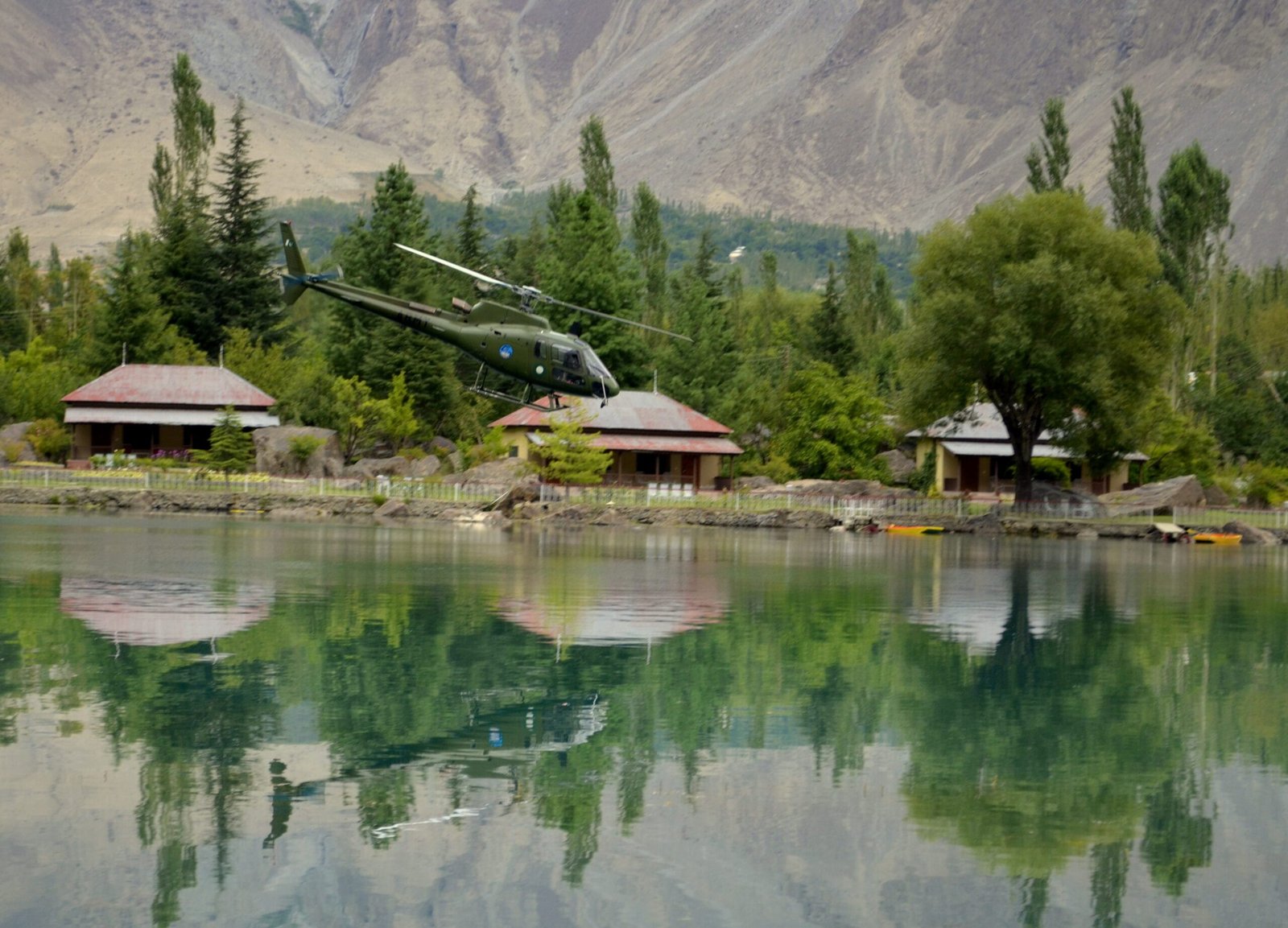
The real risk: altitude sickness, and a rescue that isn’t instant
The single biggest reason for evacuation on Karakoram treks isn’t a fall — it’s acute mountain sickness turning into HAPE or HACE because someone pushed on instead of descending. We build our itineraries with acclimatisation days for exactly this reason, we carry a satellite phone on every trip, and our guides carry an actual evacuation plan with named contacts, not a phone number scribbled on a permit. But we’re honest about the limits: a helicopter can be grounded by weather for a day or more, and the nearest real hospital care is hours away even when the flight goes ahead. The right insurance shortens the financial and logistical delay — it doesn’t make the mountain smaller.
Where this fits your visa and permit paperwork
Visa and permits
Trekking in Gilgit-Baltistan’s open zone up to 6,500 m needs no separate trekking permit, but you should still apply for Pakistan’s Mountaineering & Trekking e-visa category rather than an ordinary tourist visa — see our Pakistan visa guide for trekkers for the current process. Anything above 6,500 m needs a mountaineering permit from the Gilgit-Baltistan Council, and that application explicitly asks for proof of expedition insurance, plus insurance for your liaison officer and high-altitude porters — one more reason to have this sorted before you land, not after.
Getting the paperwork right without overpaying
We keep our pricing personal rather than posting a number that goes stale — trip cost, group size, and the season all move the figure, and we’d rather quote you straight than print something we’d have to walk back. The same honesty applies to insurance: we don’t sell policies or take a commission on them, so when we tell you to get a specialist high-altitude rescue membership on top of your regular policy, it’s because we’ve seen what happens when clients don’t, not because it pads an invoice. Fair price, no corners cut — on the trip or on the safety net around it.
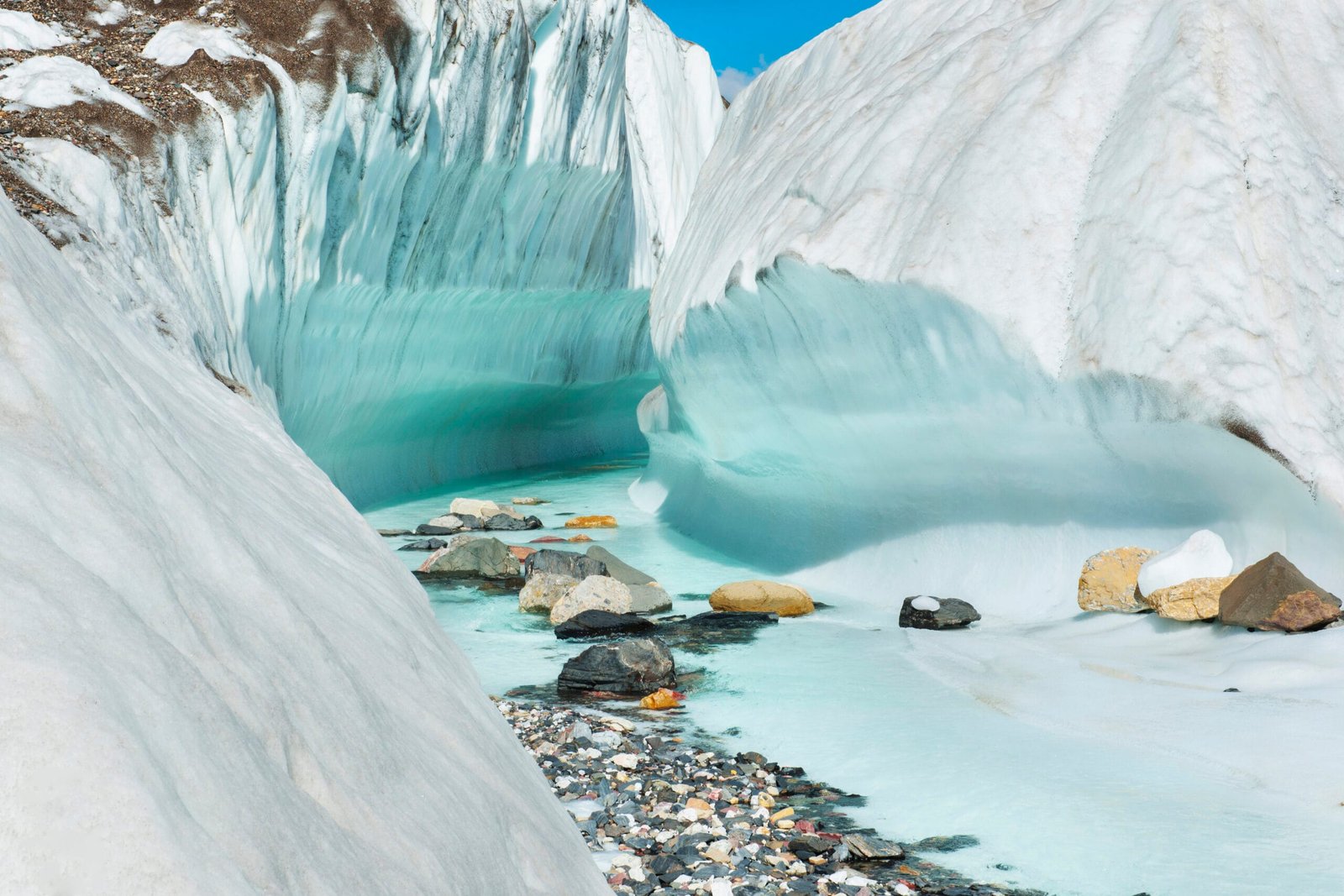
A simple coverage map for your trip
This schematic follows a typical K2 Base Camp itinerary from Askole to Concordia, plotting altitude against distance, with the standard-insurance exclusion band shaded in. It’s the same shape as the bar chart above, but it shows exactly where on the trail — not just at what height — you cross from “probably covered” into “definitely need the extra layer.”
Frequently asked questions
Does my regular travel insurance cover trekking in Pakistan?
Usually only up to a certain altitude, commonly somewhere between 4,500 m and 5,500 m depending on the insurer. Most Karakoram treks — including K2 Base Camp and Concordia — cross that line, so check your policy’s specific altitude cap rather than assuming “trekking cover” means all altitudes.
What altitude actually triggers the need for special coverage?
There’s no single legal threshold — it depends on your insurer’s wording. As a practical rule, anything above about 4,500 m should prompt you to add a high-altitude rescue membership, since that’s where mainstream policies commonly start excluding cover.
Do I need separate helicopter rescue insurance for K2 Base Camp?
We strongly recommend it. K2 Base Camp sits around 5,150 m, well past most standard exclusions, and Pakistan’s only helicopter rescue operator requires a security deposit before flying — a specialist high-altitude membership is built to cover exactly that gap.
Is travel insurance required for the Pakistan trekking visa or GB Council permit?
For open-zone trekking up to 6,500 m, no permit is required and insurance isn’t formally checked at the visa stage, though we still recommend it. For peaks and routes above 6,500 m, the Gilgit-Baltistan Council permit process requires proof of expedition insurance, along with cover for your liaison officer and porters.
What should I do if my insurer doesn’t offer Karakoram-specific coverage?
Pair your existing medical/trip policy with a dedicated high-altitude evacuation membership rather than searching for one insurer that does everything. Confirm in writing that the membership covers the specific rescue mechanism used in Pakistan — helicopter evacuation arranged through Askari Aviation — not just reimbursement after the fact.
Plan it with a local team, not a broker
We’re a Balti-run operator based in Skardu — we don’t sell insurance, but we’ll tell you plainly what cover our clients actually need before they land, and we carry a satellite phone and a real evacuation plan on every trip we run. Local hands, real safety, fair price.
WhatsApp +92 312 9921574 or email info@karakoramventure.com — tell us your route and dates, and we’ll tell you honestly what to insure against.
Related reading: K2 Base Camp trek — cost, route & difficulty · Acclimatisation guide for high-altitude trekking · Karakoram trek packing list · Climbing season on the Baltoro · Gondogoro La trek · K2 expedition guide · How to get to Skardu · Pakistan visa guide for trekkers.
Sources & attribution: altitude and route figures cross-checked against Wikipedia (Concordia, Baltoro Glacier, K2), the Alpine Club of Pakistan, and reporting from Global Rescue, Explorersweb and UKClimbing on Askari Aviation’s rescue deposit and costs; figures vary by source and are given as approximate ranges. Photos: Shikari7 (CC BY-SA 3.0), Awais Munawar (CC BY-SA 3.0), and mtzendo (CC BY-SA 4.0), all via Wikimedia Commons.