Six peaks above 7,000 m, run from Skardu by our own Balti team. Permits, oxygen, insured high-altitude porters and a turnaround policy that is actually enforced.
Six peaks above 7,000 m, run from Skardu by our own Balti team. Permits, oxygen, insured high-altitude porters and a turnaround policy that is actually enforced.
Trekking in Pakistan: How to Prepare, What to Pack and What It Really Takes
HomeTrekking in Pakistan: How to Prepare, What to Pack and What It Really Takes
Trekking in Pakistan is less technical than people fear and more serious than the brochures admit. The walking is rarely hard in itself. Instead, what makes it demanding is altitude, moraine, distance from help, and days that start at 5:30 in the cold. We are a Skardu company, and our guides walk these routes every season. Therefore this page is the honest version. It covers how we grade a trek, and why an itinerary is as long as it is. Then it sets out what to carry and what paperwork you need. Finally, it says which route suits which walker.
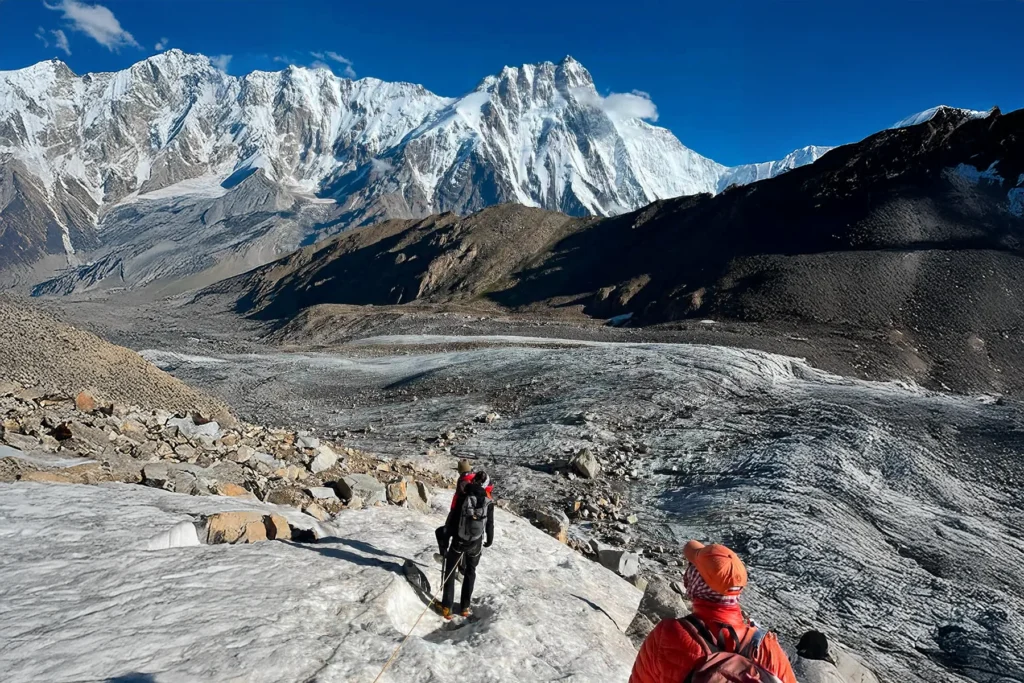
One of our rope teams on the ice.
Trekking in Pakistan at a glance
Season
June to September for the glacier routes and the high passes. May and October work lower down. The Deosai road and Khunjerab open roughly June to October
Grades we use
Easy to moderate, moderate, moderate to demanding, demanding, strenuous, expedition. Most of our catalogue is easy to moderate; the Baltoro routes are demanding or strenuous
Acclimatisation rule
No more than 300 to 400 vertical metres of sleeping altitude a day above 3,000 m. This is why our K2 Base Camp trek is 21 days, not the compressed 14-day version
Mandatory rest days
Paiju 3,420 m and Concordia 4,500 m on the Baltoro; Baintha Meadows 3,990 m on the Snow Lake route
Sleeping bag
Rated to minus 15 degrees as a minimum for K2 Base Camp and beyond, minus 20 for Gondogoro La or Snow Lake. Nights at Concordia drop below minus 10 even in July
Boots
At least 50 km of walking in them before you fly. New boots on a Karakoram trek are the most common avoidable injury we see
Paperwork
Restricted zones need the Trekking and Mountaineering visa, a route permit and a No Objection Certificate, plus insurance that covers helicopter evacuation. Open zones need only the tourist e-visa
Water
Three to four litres a day on trek. Dehydration at altitude is mistaken for altitude sickness more often than anything else
What trekking in Pakistan actually asks of you
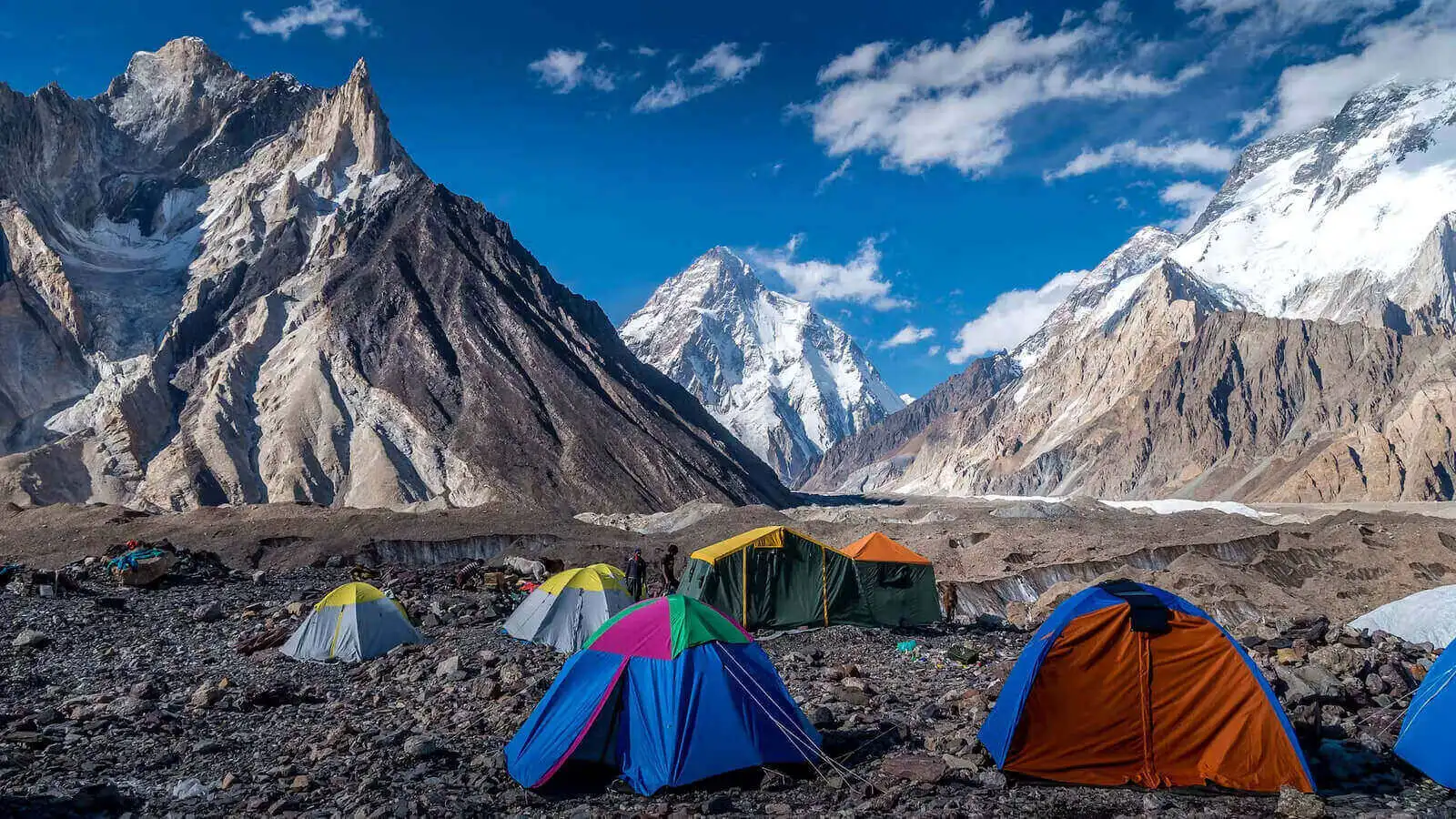
Take the K2 Base Camp trek as the benchmark, because it is the route most people are measuring themselves against. It is roughly 90 kilometres each way in stages of five to eight hours, half of them on glacier moraine. Moreover, there is a full week above 4,000 metres, a camp at Concordia near 4,600 and a high point of 5,150 at Base Camp. None of that is climbing. Instead, all of it is endurance. In fact, consecutive-day fatigue predicts how comfortable you will be better than any single fitness test. Our honest answer on difficulty breaks the trek down day by day.
How we grade a trek, and what each grade means
Easy to moderate means short walks mixed with drives, and families manage it. Moderate means full days on good trails with nothing technical. Moderate to demanding adds long, rough days. Meanwhile, demanding means real altitude, remote camps and a need to arrive trained. Strenuous means glacier moraine, long stages and high camps. Finally, expedition means fixed lines, crampons and load carries above camp. There, previous high-altitude experience is required rather than preferred. We publish the grade on every trip page. Indeed, we would rather lose a booking than put someone on the wrong grade.
Acclimatisation: the rule that sets the length of an itinerary
Above 2,500 metres each breath carries less oxygen, and the standard guideline above 3,000 is to gain no more than 300 to 400 vertical metres of sleeping altitude a day. That arithmetic, not marketing, is why our itineraries look longer than some. We build mandatory rest days at Paiju and Concordia, and we use them actively: the rest day at Concordia includes the walk up to K2 Base Camp at 5,150 metres and back down to sleep lower. The acclimatisation guide sets out all of it, including where Diamox fits.
What to carry
Layers, a real down jacket of at least 600 fill, two base layers, two mid layers, a sleeping bag rated to minus 15 or colder, a liner that buys another three to five degrees, and boots you have already walked 50 kilometres in. The sun at 5,000 metres is punishing and the wind above the treeline does not stop. Our complete Karakoram gear list is the version our own clients pack from, and the K2 packing list is the route-specific cut of it.
Permits, visas and insurance for trekking in Pakistan
This is where unprepared trips come apart. Open areas such as Hunza, Skardu town, Shigar, Khaplu, Fairy Meadows and Deosai need nothing beyond the tourist e-visa. Restricted zones, which includes the Baltoro, need the Trekking and Mountaineering visa, a permit naming your route and group, and a No Objection Certificate, and all of it needs lead time. Every restricted-zone trek we run includes the permit and the NOC, and we send a letter of invitation for the visa. You still need your own insurance, and it must cover helicopter evacuation. Read the permits and NOC guide and the insurance guide before you book anything.
The best season for trekking in Pakistan
June to September is the window for the glacier routes and the high passes. Meanwhile, July and August are the warmest and busiest. September is the quiet favourite: settled weather, cooler nights, clearer air. Moreover, May and October work for the lower valleys, the forts and the lakes. The season-by-season guide to Gilgit-Baltistan compares the whole region month by month.
Training for trekking in Pakistan
Twelve weeks is enough for most people who already walk. First, build to long hikes of five to six hours carrying six to eight kilograms. Then do back-to-back weekend days, because the second day tired is what the Baltoro actually tests. In addition, add stairs or a stepper, and keep some strength work. Finally, do one interval session a week for the passes. The full plan sits inside our difficulty guide.
Choosing a route
If you want the famous one, it is the Baltoro to Concordia and K2 Base Camp. For a pass crossing, add Gondogoro La. Meanwhile, those who want wilderness with almost nobody on it should look at Snow Lake. There the Biafo and Hispar glaciers meet to form a hundred-kilometre ice highway. If you have a week rather than three, Fairy Meadows, Rakaposhi Base Camp or Rush Lake all deliver a big mountain without a long commitment. Our best treks in Pakistan guide ranks them. In addition, the twelve best treks in the world puts them in international company.
Treks we run
Every route below is operated by our own Balti team, with a satellite phone in camp and a rescue plan that exists on paper and on the phone.
The country is calmer than its reputation, and the real risks on a trek here are altitude, weather, moraine and the distance to a helicopter. We carry a satellite phone in camp, hold established helicopter-rescue contacts for the Baltoro, and build rest days in rather than selling compressed itineraries.
Do I need a permit to trek in Pakistan?
Only for restricted zones, which includes the Baltoro and K2 Base Camp. Those need the Trekking and Mountaineering visa, a route permit and a No Objection Certificate. Hunza, Skardu town, Shigar, Khaplu, Fairy Meadows and Deosai need only the tourist e-visa.
How fit do I need to be for the K2 Base Camp trek?
Fit enough for five to eight hours of walking on rough ground, day after day, for about two weeks. Twelve weeks of training built around long hikes and back-to-back weekend days is enough for most people who already walk regularly.
When is the trekking season in Pakistan?
June to September for the glacier routes and high passes, with September the quiet favourite for settled weather and clear air. May and October work in the lower valleys. Deosai and Khunjerab are roughly June to October.
What sleeping bag do I need?
Rated to minus 15 degrees as a minimum for K2 Base Camp and beyond, and minus 20 for Gondogoro La or Snow Lake. A liner adds another three to five degrees. Nights at Concordia fall below minus 10 even in July.
Do I need to take Diamox?
Many trekkers use it preventatively from 24 hours before going above 2,500 metres, but it is a decision for you and your doctor, not for us. It does not replace a sensible ascent profile, which is why our itineraries are built around 300 to 400 metres of sleeping gain a day.
Do I need special insurance?
Yes. Every restricted-zone trek requires valid insurance for high-altitude trekking and helicopter evacuation. Check the helicopter clause specifically; it is the one that matters on the Baltoro and the one most policies quietly exclude.
Which trek should a first-timer choose?
Fairy Meadows, Rakaposhi Base Camp or Rush Lake if you have a week and want a big mountain without a long commitment. The Baltoro to K2 Base Camp if you have three weeks and have trained for it.
Tell us your fitness honestly and we will match the route
We would rather put you on the right trek than the famous one. Send us what you have walked before and how many days you have. Local hands, real safety, fair price. 2027 departures are open.
Contains information about the traffic source or campaign that directed user to the website. The cookie is set when the GA.js javascript is loaded and updated when data is sent to the Google Anaytics server
6 months after last activity
__utmv
Contains custom information set by the web developer via the _setCustomVar method in Google Analytics. This cookie is updated every time new data is sent to the Google Analytics server.
2 years after last activity
__utmx
Used to determine whether a user is included in an A / B or Multivariate test.
18 months
_ga
ID used to identify users
2 years
_gali
Used by Google Analytics to determine which links on a page are being clicked
30 seconds
_ga_
ID used to identify users
2 years
_gid
ID used to identify users for 24 hours after last activity
24 hours
_gat
Used to monitor number of Google Analytics server requests when using Google Tag Manager
1 minute
_gac_
Contains information related to marketing campaigns of the user. These are shared with Google AdWords / Google Ads when the Google Ads and Google Analytics accounts are linked together.
90 days
__utma
ID used to identify users and sessions
2 years after last activity
__utmt
Used to monitor number of Google Analytics server requests
10 minutes
__utmb
Used to distinguish new sessions and visits. This cookie is set when the GA.js javascript library is loaded and there is no existing __utmb cookie. The cookie is updated every time data is sent to the Google Analytics server.
30 minutes after last activity
__utmc
Used only with old Urchin versions of Google Analytics and not with GA.js. Was used to distinguish between new sessions and visits at the end of a session.
End of session (browser)
Marketing cookies are used to follow visitors to websites. The intention is to show ads that are relevant and engaging to the individual user.
Facebook Pixel is a web analytics service that tracks and reports website traffic.