The best time to visit Gilgit-Baltistan overall is June to September, when Deosai National Park, Khunjerab Pass and every high trekking route are open and the weather is at its most settled. Mid-September to late October is our own pick for most travellers — clearer air, autumn colour, and far fewer people on the road. Late March to April brings cherry and apricot blossom to Hunza and Skardu, but the high routes are still shut. From November to May the region’s passes and Deosai close under snow and only the lower towns — Skardu, Gilgit, central Hunza — stay reachable by air and by road.
We run departures out of Skardu with our own Balti team, and the date on the calendar is the first real decision in planning a trip north — before the itinerary, before the gear list. So we’ll be straight with you about it: this isn’t one season with a couple of good weeks either side. It’s four genuinely different windows, each suited to a different kind of trip, and getting the month wrong can mean a closed road, a snowed-in pass, or a trek that was never on the table to begin with.
- Peak season for expeditions, high trekking and Deosai jeep safaris: June–September, when passes and glacier routes are workable.
- Our pick for most travellers: mid-September to late October — clear skies, autumn colour, thinning crowds, though nights turn cold fast at altitude.
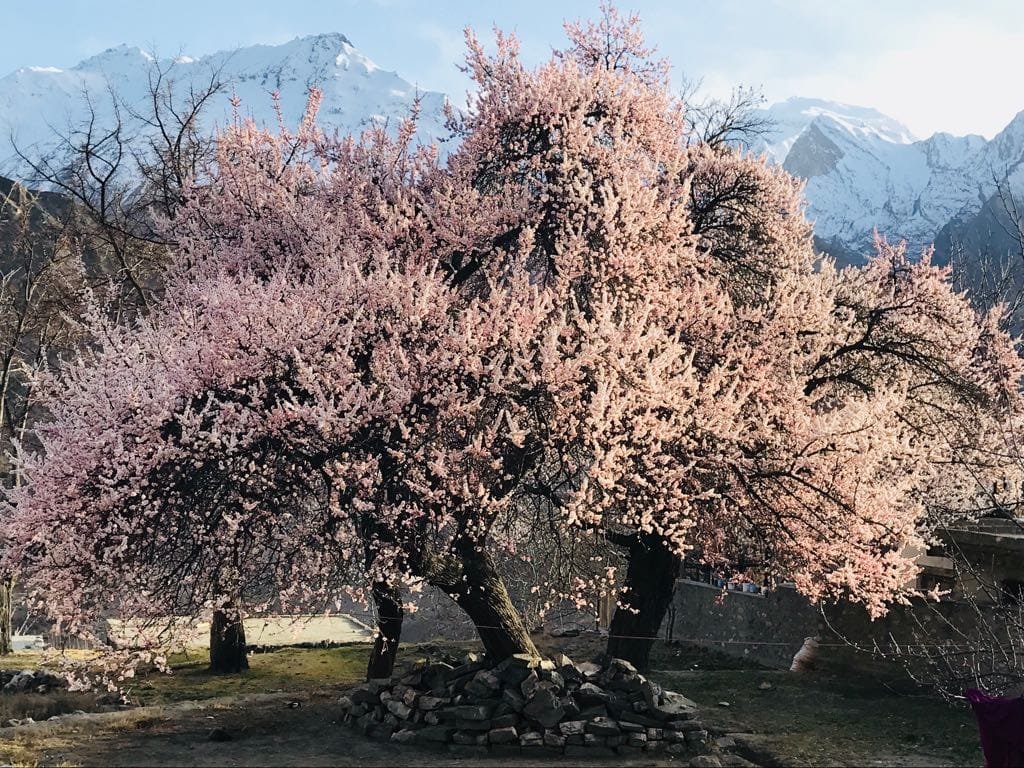
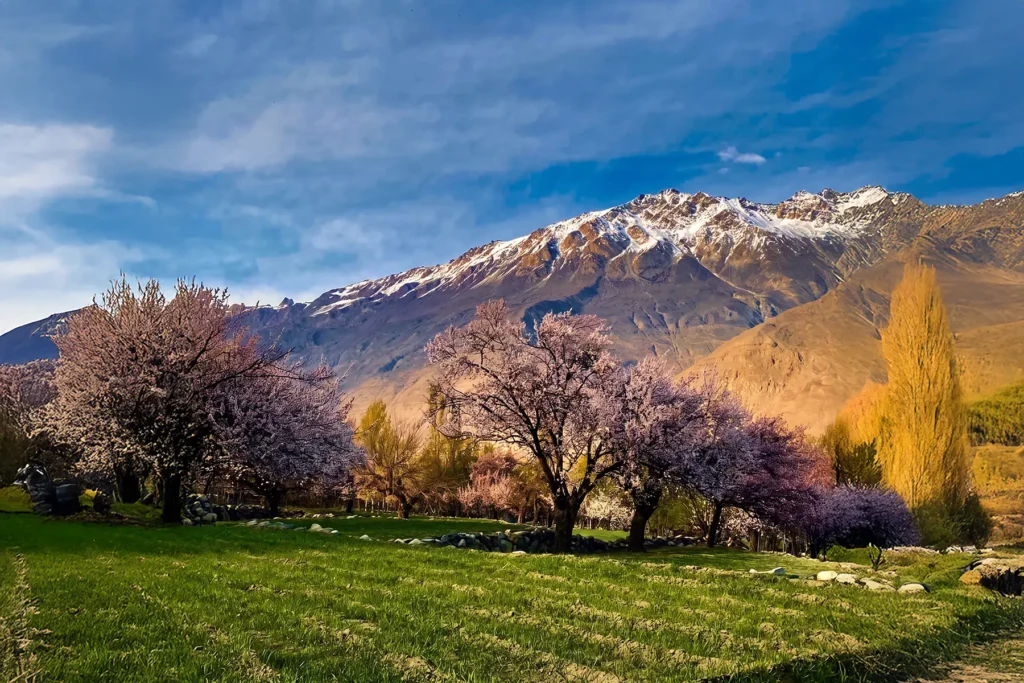
- Cherry and apricot blossom in Hunza and Skardu runs roughly late March into April; high routes are still snowbound then.
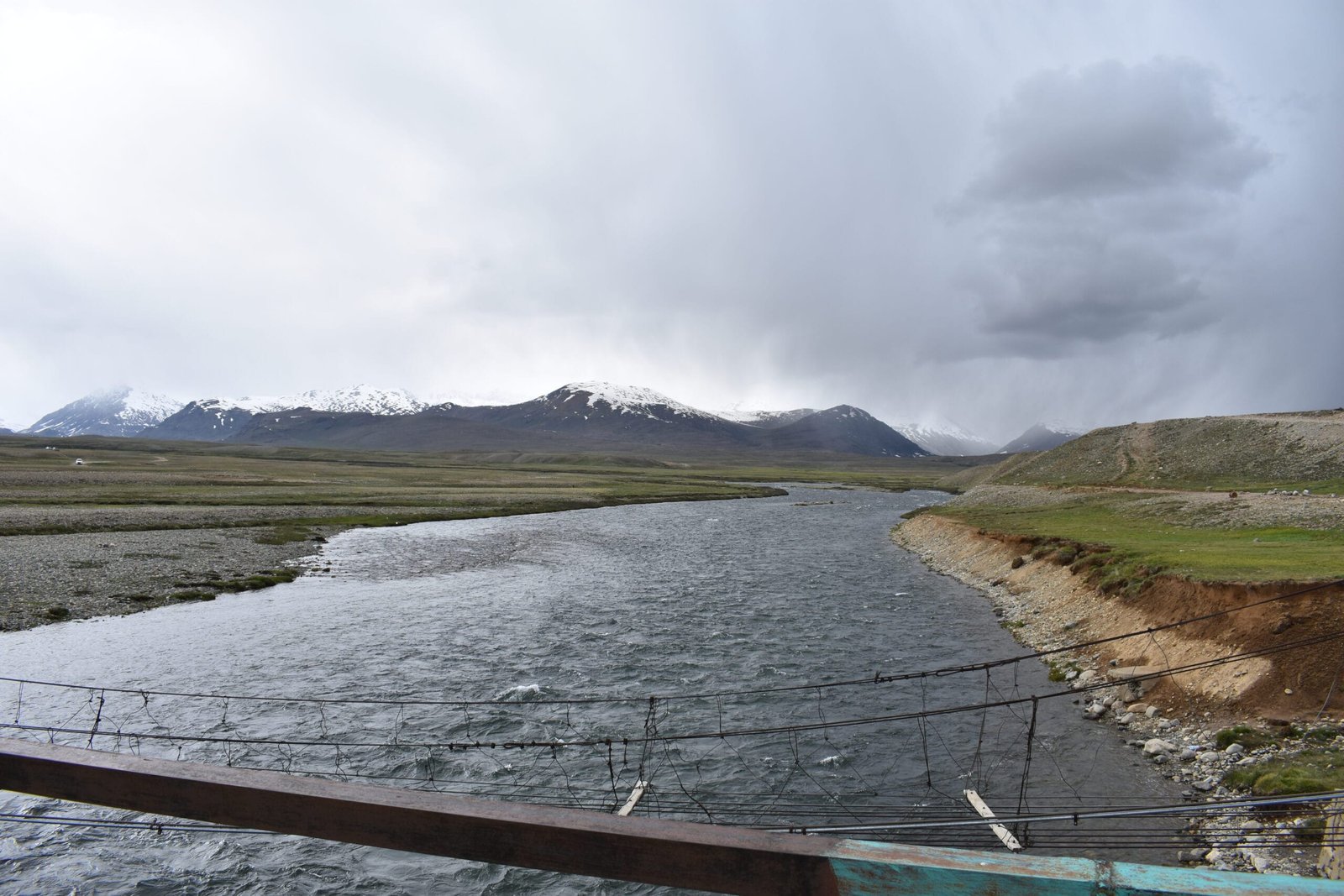
- Deosai National Park is open only from around early June to late October, snow-dependent, and closed the rest of the year.
- Khunjerab Pass (4,693 m) is generally open May/June–October and closed November–April; Babusar Pass follows a similar late-May-to-October window.
- Winter (November–April) still works for Skardu, Gilgit and central Hunza — just not for Deosai, the high passes, or trekking.
Why timing matters more here than in most places
Gilgit-Baltistan sits in the rain shadow of the Karakoram and western Himalaya, so the main valleys — Skardu, Hunza, Gilgit — stay largely dry even during Pakistan’s summer monsoon, which rarely reaches this far north. Most of the region’s precipitation falls as snow, not rain, and it’s that snow — not rainfall — that decides whether a road, a pass or a trekking route is open. Deosai, sitting higher and facing more of the monsoon-affected outer ranges, gets more of its share of snow and stays under it longer than the valleys below. That’s the whole logic of this guide: watch the snowline, not the calendar month, and you’ll understand why a pass can be open in one June and still blocked in the next.
Season by season
Spring (March–May): blossom low, snow high
This is when Hunza and Skardu earn their postcard reputation — apricot and cherry blossom through late March and April, daytime temperatures climbing from single digits into the high teens (Celsius) by May, and noticeably fewer visitors than summer. It’s a genuinely good window for valley touring, heritage sites and our Hunza cherry blossom trips. What it isn’t good for: anything above about 3,500–4,000 m. Deosai, Khunjerab Pass and the approach roads to our high-altitude treks are still snowbound or only just starting to clear, and conditions change fast enough that we won’t commit a client to a high route on a spring date.
Summer (June–August): the working season
This is when everything is open. Deosai’s plateau greens up and its jeep tracks clear, Khunjerab and Babusar passes are running, and the Baltoro’s climbing season — covered in more depth in our Baltoro climbing season guide — is in full swing for K2, Broad Peak and the Gasherbrums. Daytime highs in Skardu run from roughly 20°C in June to the low 20s in July and August; up at altitude on any of our treks, expect cold nights regardless of the season down in town. It’s also, unsurprisingly, the busiest and most booked-out window — if you want fixed summer dates, we’d rather you ask early than find out in May that the slot you wanted is gone.
The route to golden weather: our shoulder-season pick
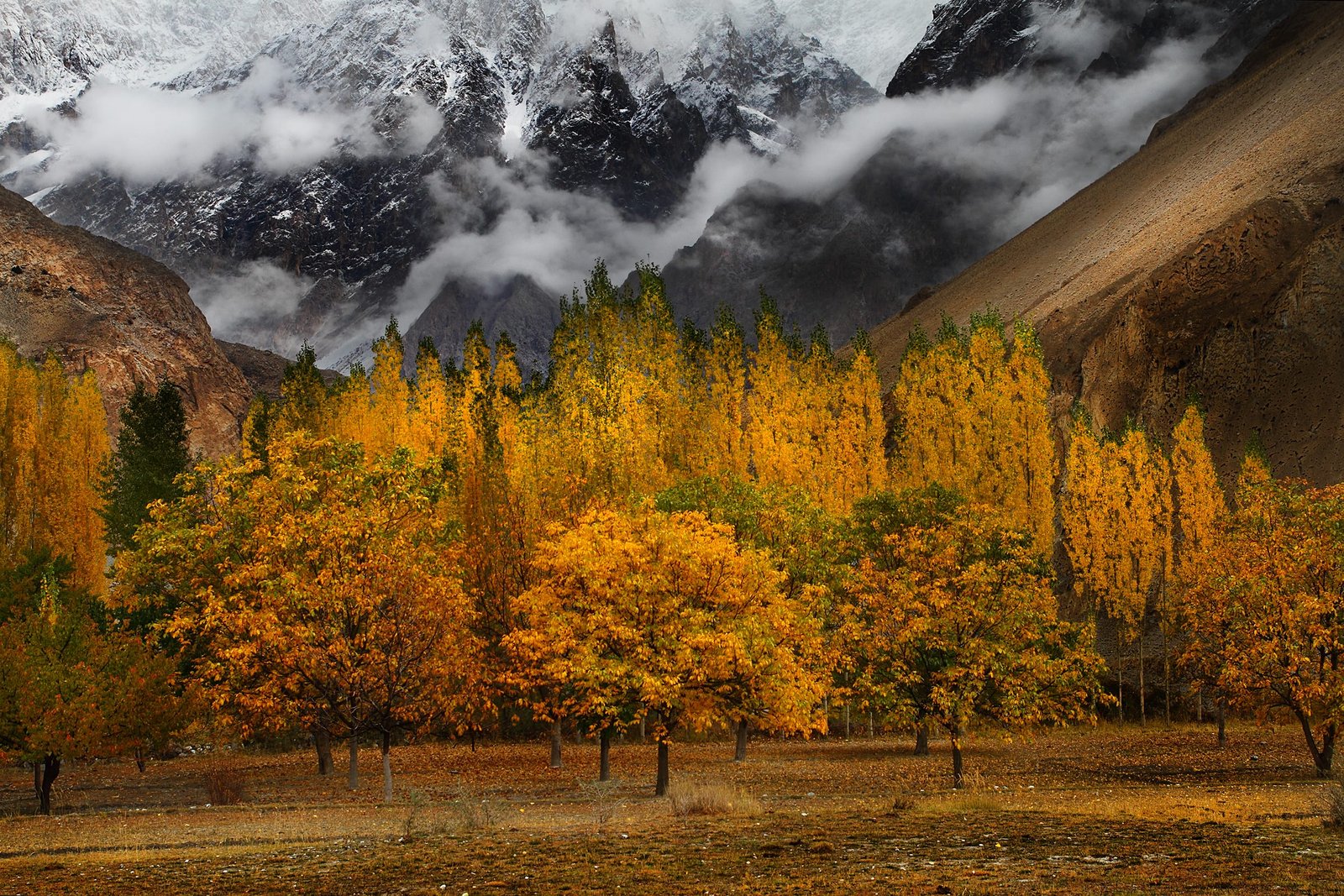
Mid-September through late October is, in our own experience running trips here, the best-kept secret on this calendar. The monsoon (what little of it reaches this far north) is long gone, the air is at its clearest for photography and mountain views, days are still mild, and the crowds of July and August have thinned to almost nothing. Poplar and apricot trees turn gold through the valleys — it’s the same autumn colour you’ll see in our Hunza guide‘s spring counterpart, just at the other end of the growing season. The catch: this window is closing, not open-ended. Deosai and the high passes typically shut by late October, first snow can arrive at altitude without much warning, and nights get properly cold well before the valleys feel wintry. Book late-season dates with some flexibility built in.
Winter (November–April/May): closed at altitude, open in the valleys
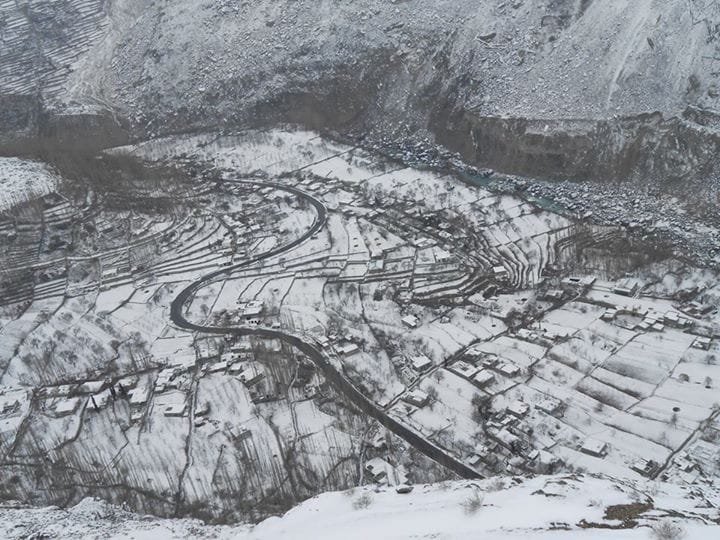
Winter here is real winter — Skardu’s daytime highs sit around freezing in December and January, with recorded lows well below –10°C, and snowfall closes Deosai, Khunjerab Pass, Babusar Pass and essentially every trekking route above the valley floor. What doesn’t close: flights and the Karakoram Highway into Skardu, Gilgit and central Hunza continue to run (weather-dependent, as always up here), and the valleys themselves — snow-dusted forts, frozen side-streams, quiet bazaars — have their own stark appeal if that’s genuinely what you’re after. We’ll book winter valley trips honestly as exactly that: cultural and scenic travel in the towns, not trekking or expedition season, and not Deosai.
Month-by-month at a glance
| Months | Conditions | Verdict |
|---|---|---|
| Dec–Feb | Deep winter; Deosai, Khunjerab and Babusar passes closed; Skardu/Gilgit/Hunza towns cold but reachable by air and the KKH | Valley & snow scenery only — not for trekking |
| Mar–Apr | Snowmelt begins; cherry & apricot blossom in lower Hunza and Skardu; high routes still closed | Good for blossom and valley touring, not high treks |
| May | Passes reopening (Babusar late May, Khunjerab May/June); some lower treks becoming possible | Transitional — confirm road status before booking |
| Jun–Aug | Deosai open, all high passes running, Baltoro/K2 BC/Gondogoro La trekking window, warm valley days | Best for expeditions, high trekking and Deosai safaris |
| Sep–early Oct | Clear skies, autumn colour starting, cooler air, thinner crowds | Prime shoulder season — our pick |
| Late Oct–Nov | Deosai and the high passes closing; first snow at altitude; valleys still golden | Good for cultural/valley trips only — high routes closing fast |
When the roads and parks actually open and close
Fixed calendar dates don’t really exist up here — every pass and park reopens and closes according to that year’s snow, not a schedule — but the pattern repeats closely enough to plan around.
How the season changes the difficulty, honestly
None of this is only about comfort. Booking a high-altitude trek or an expedition outside the June–September window isn’t just unpleasant — the route may genuinely not be passable, and we won’t guide a client onto Gondogoro La or the Baltoro on a date where the risk of getting stuck or turned back by snow is real. Even inside the summer window, altitude means cold nights and fast-changing weather regardless of what the valley floor feels like; see our Deosai guide and our acclimatisation notes for what that actually means day to day. Shoulder-season trips (spring blossom, autumn colour) are gentler on the body but come with their own honesty check: shorter daylight, colder nights, and less margin if weather turns early.
Getting there & what it costs
Flights and road access follow the same seasonal logic as everything else — see our notes on how to get to Skardu, by air or by road, and our Karakoram Highway road-trip guide if you’re driving up through Hunza and past the Khunjerab Pass. Flights are more weather-dependent in winter; the road stays the reliable fallback most of the year.
We keep pricing personal rather than posting a number that goes stale the moment fuel or permit costs shift — message us with your dates and what you want to do, and we’ll quote a fair price, no corners cut, with our own Balti team running the trip rather than a subcontracted broker.
Frequently asked questions
What is the single best month to visit Gilgit-Baltistan?
September, arguably — clear skies, autumn colour starting, cooler air, and the crowds of peak summer have thinned. If cherry and apricot blossom is the priority instead, late March into April in Hunza and Skardu is the better call.
Can I visit Gilgit-Baltistan in winter?
Yes, with real limits. Skardu, Gilgit and central Hunza stay reachable by air and by the Karakoram Highway through most of the winter, but Deosai, Khunjerab Pass, Babusar Pass and virtually every high trekking route close under snow from roughly November to April or May.
When does Deosai National Park open?
Roughly from early June to late October, snow-dependent and shifting year to year — it’s closed the rest of the year. See our full Deosai National Park guide for details.
Is Gilgit-Baltistan affected by Pakistan’s monsoon?
Not much. The Karakoram range creates a rain shadow, so Skardu, Hunza and Gilgit stay largely dry through the summer monsoon that soaks the rest of the country. Most precipitation here falls as winter snow rather than monsoon rain.
When should I book an expedition versus a cultural or lake tour?
Expeditions and high-altitude trekking need the June–September window, when passes and glacier routes are workable. Cultural, heritage and lake trips — forts, valleys, jeep safaris — run comfortably from April through October, and blossom-season and autumn-colour trips have their own narrower sweet spots within that.
Tell us what you want to do and roughly when, and we’ll tell you honestly whether the season works — with our own Balti team running the trip, not a broker. WhatsApp us at +92 312 9921574 or email info@karakoramventure.com.
Sources & attribution: Skardu and Gilgit-Baltistan climate data (climate-data.org, weather2travel); Deosai National Park, Khunjerab Pass and Babusar Pass opening/closing reporting (Wikipedia; Rozefs Tourism; Pakistan Today/DAWN 2026 reporting). Photos: cherry blossom in Hunza by TehrimK (CC BY-SA 4.0); Deosai Plains (Bara Pani) by Syedmuradali22 (CC BY-SA 4.0); autumn in Hunza Valley by Awais Ali Sheikh (CC BY-SA 4.0); winter in Hunza (Murtazabad) by Hajat Chand Hunzai (CC BY-SA 3.0) — all via Wikimedia Commons.