Shispare Sar rises to 7,611 m above Passu and Hunza in the Batura Muztagh, the westernmost sub-range of the Karakoram. It is one of Pakistan’s great rarely-climbed giants: first summited in July 1974, with only a handful of ascents recorded since. A full expedition runs roughly 30–40 days from Islamabad, base camp sits on the Passu Glacier side, and the climbing window is June to August. This is a serious, technical, high-commitment mountain — not a first 7,000er.
We run this out of Skardu and Hunza with our own Balti and Wakhi team, and we will be straight with you: Shispare turns most parties around. One of the strongest alpinists of his generation needed four attempts before the north-east face went. If you came here looking for a peak to tick, look elsewhere. If you came because this mountain has been in your head for years, read on.
Key takeaways
- Height: 7,611 m, with 1,241 m of prominence — a Karakoram “ultra”.
- Where: Batura Muztagh, above Passu in Upper Hunza (Gojal), Gilgit-Baltistan.
- First ascent: 21 July 1974, Polish-German Academic Expedition led by Janusz Kurczab — 35 days on the mountain.
- Relief: 5,550 m of rise above Karimabad in only 13 km horizontal distance.
- Season: June to August; the access road is open far longer than the mountain is.
- Difficulty: Technical mixed and ice climbing with high objective danger. Prior 7,000 m experience required.
Where Shispare is, and why it matters
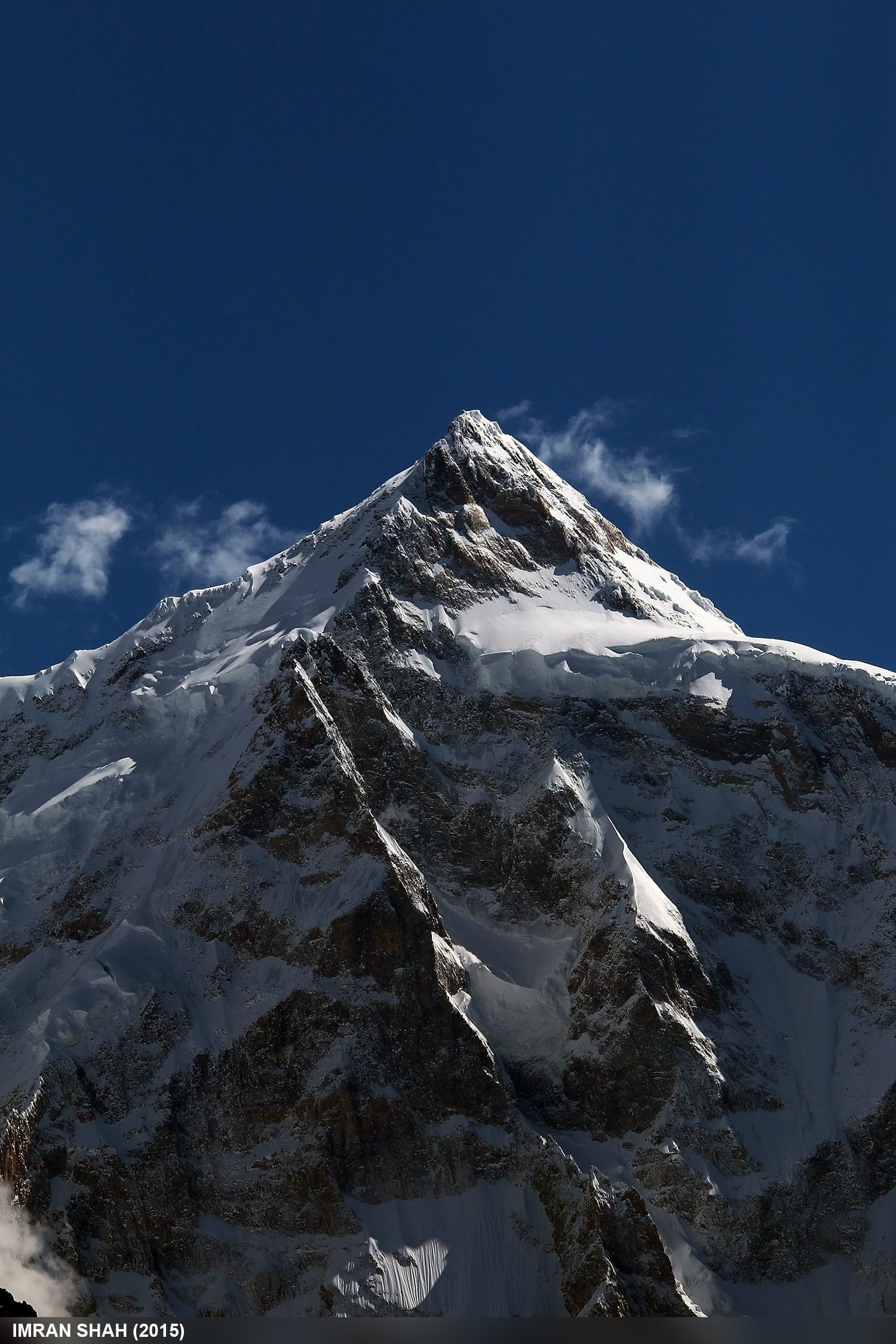
Drive north from Gilgit on the Karakoram Highway and, somewhere past Attabad, a white wall starts filling the west side of the valley. That is the south-eastern end of the Batura Muztagh, and Shispare is its sharpest statement. In the Wakhi spoken in these villages the mountain also carries the name Tegh Sar — sharp head. Stand in Passu at breakfast and the summit is five kilometres above you.
The numbers explain the feeling. Karimabad sits at 2,060 m. Shispare tops out at 7,611 m. Between them, 5,550 m of vertical relief packed into 13 km of map. There are very few places on earth where a mountain leans over an inhabited valley like this. Its neighbours are the same calibre: Batura Sar along the wall to the north-west, and Ultar Sar, Bojohagur Duanasir and Ladyfinger crowding the ridge above Karimabad.
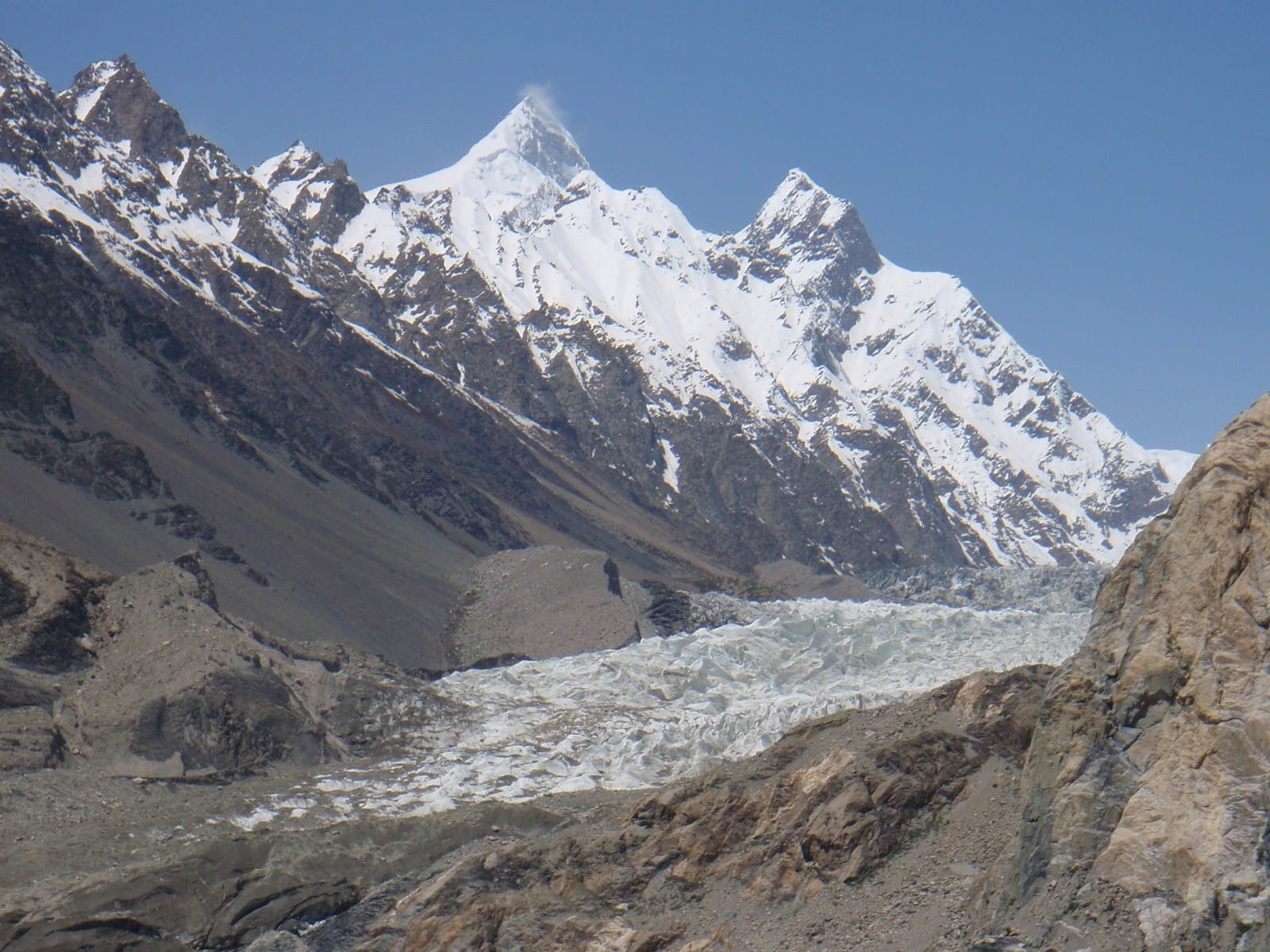
The Hunza River curves around the whole massif — south-east, east, north-east — which is why Shispare drops hard on three sides. It also means the approach is short by Karakoram standards. You are not walking eight days up the Baltoro to reach it. You are on the Karakoram Highway one morning and on glacier a couple of days later.
The route, step by step
The 1974 first-ascent line followed the Passu Glacier onto the long east ridge, and it remains the reference route. It is not a walk-up with a summit day bolted on the end; it is a fixed-rope, load-carrying objective on a ridge that punishes hesitation. Our standard expedition plan looks like this.
- Days 1–2 — Islamabad. Arrival, permit and briefing formalities, gear check. Nothing gets skipped here.
- Days 3–4 — Islamabad to Gilgit to Passu. By air to Gilgit if the weather plays, otherwise overland on the Karakoram Highway. Buffer days are built in, not optional.
- Days 5–6 — Passu. Local logistics, porters, load-splitting. Short acclimatisation walks above the village.
- Days 7–9 — Approach and base camp. Onto the Passu Glacier system and establish base camp. Porters return; from here it is the team.
- Days 10–14 — Acclimatisation rotations. Carry, sleep high, come back down. Repeat. This is where the summit is actually earned.
- Days 15–28 — Fixing and high camps. Work the ridge, place camps, wait out weather. Expect to sit still more than you climb.
- Days 29–34 — Summit window. One good weather slot, taken decisively, or not taken at all.
- Days 35–38 — Clear the mountain and return. Strip camps, walk out, back down the highway.
Read that itinerary honestly: it contains more waiting than climbing. That is what a real Karakoram expedition is. If your plan depends on summiting, you have the wrong plan.
A short, hard climbing history
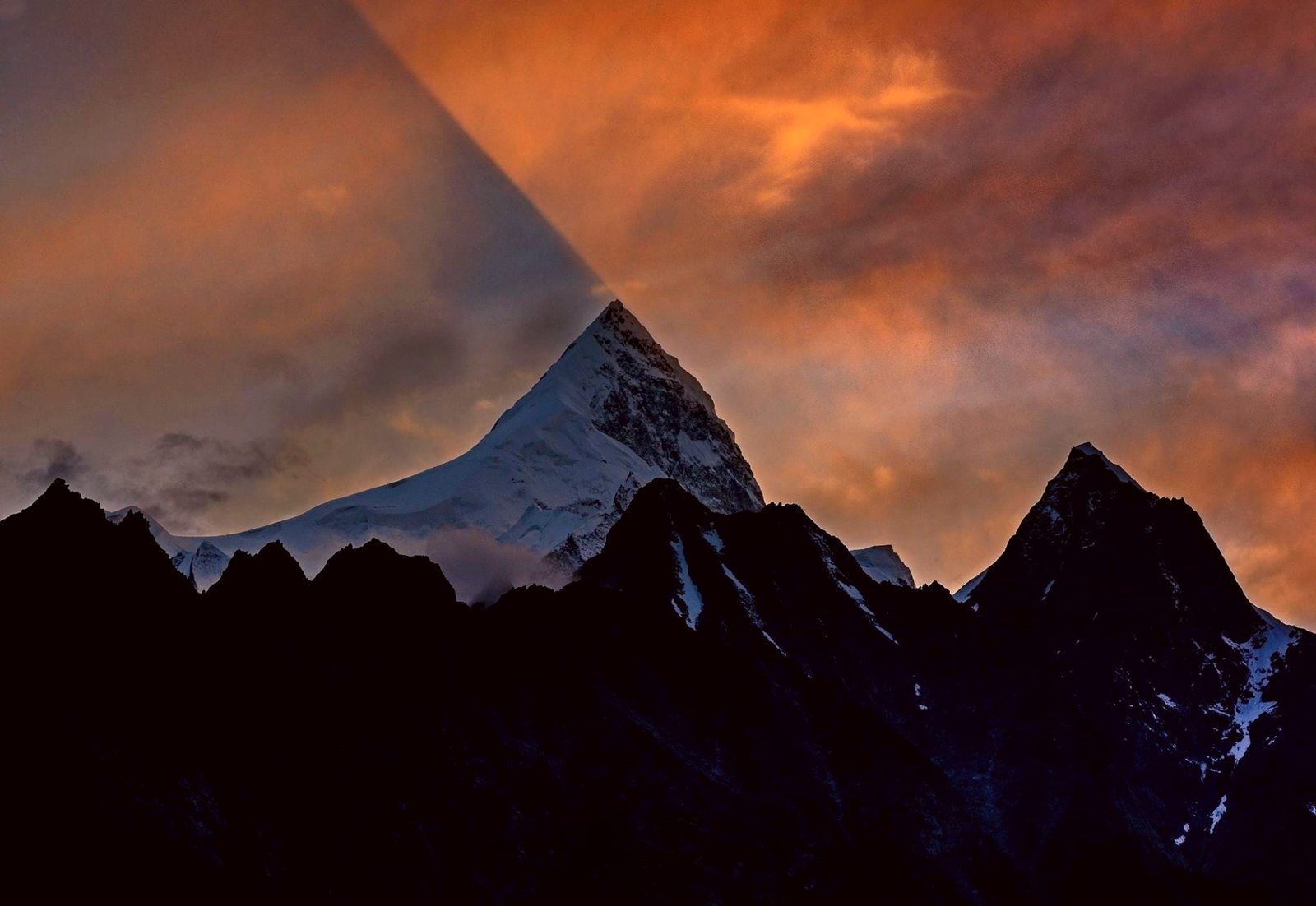
Climbing came late to the Batura Muztagh, and Shispare was the range’s first major summit. On 21 July 1974 a Polish-German Academic Expedition led by Janusz Kurczab put seven climbers on top — H. Bleicher, L. Cichy, M. Grochowski, J. Holnicki-Szulc, A. Mlynarczyk, H. Oberhofer and J. Poreba. It took 35 days and roughly 1,500 m of fixed rope simply to gain the ridge. While a second summit team was preparing, expedition member Heinz Borchers was killed in an avalanche. The mountain’s record starts with a death, and that is worth sitting with.
Then, silence. In 1989 a Ryukoku University team led by Masato Okamoto spent nearly two months on the peak and reached about 7,200 m before turning back. The second ascent did not come until 1994, when Yukiteru Masui’s Komono Alpine Club party — Masui, Kokubu and Ozawa — summited on 20 July by essentially the 1974 line and in essentially the 1974 style.
The modern chapter belongs to Kazuya Hiraide and Kenro Nakajima. Hiraide had wanted the north-east face since 2002 and attempted the mountain repeatedly — the north-east face in 2007, then twice from the south-west, stopped by weather at 5,350 m in 2012 and by a dangerous serac at 5,700 m in 2013 with Kei Taniguchi. On 22 August 2017 the pair finally climbed the 2,700 m north-east face in alpine style, with difficulties to M6 and WI5, and named the route Shukriya — “thank you” in Urdu. It won the Piolets d’Or in 2018.
Four serious efforts before that face went. Remember the number when someone offers you Shispare as a straightforward objective.
When to go
The Karakoram climbing window is short and the Batura Muztagh is no exception. The road to Passu is open far longer than the mountain is, which tempts people into the shoulder seasons. Don’t.
| Months | Conditions | Verdict |
|---|---|---|
| March–May | Deep snow high up, unsettled weather, blossom in the valleys below | Good for trekking and photography in Hunza, not for the peak |
| June | Season opening; cold and snowy, first settled spells | Viable — good for establishing camps and rotations |
| July | The core window. Warmest, longest settled spells | Best. The 1974 and 1994 ascents both fall here |
| August | Still climbable; more melt-out, more serac and rockfall activity | Viable — the 2017 north-east face ascent was late August |
| September–October | Cold returns, days shorten, weather turns quickly | Not recommended for a summit attempt |
| November–February | Full winter. Valley access possible, mountain effectively closed | No |
If you want the wider seasonal picture for the whole region, we set it out in our season-by-season guide to Gilgit-Baltistan.
How hard is it, really
Harder than the height suggests, and much harder than a first 7,000er should be.
Technically: the reference route is a long, corniced ice ridge with sustained exposure, and the first ascensionists fixed some 1,500 m of rope just to reach it. The modern north-east face line involves mixed climbing to M6 and ice to WI5 at altitude. Either way you need to be genuinely competent on steep snow, ice and mixed ground while tired, cold and hypoxic.
Objectively: avalanche and serac danger are real and have already killed on this mountain. The 2013 attempt was abandoned because of a serac that could not be safely passed. Good judgement here means being willing to walk away from a face you have travelled across the world to climb.
Physically: plan for six weeks of load-carrying, waiting, altitude and cold. Your acclimatisation strategy matters more than your fitness ceiling — read our acclimatisation guide before you build your plan.
Who should be on this mountain: climbers with prior 7,000 m experience and solid alpine technique. If Shispare would be your first big peak, it is the wrong first big peak. Start on Spantik, then come back.
Safety: the real risk on Shispare
Avalanche and serac collapse. Not altitude sickness, not the cold — falling ice and loaded slopes. That is what killed Heinz Borchers in 1974 and what stopped strong parties in 1989 and 2013. We carry a satellite phone on every expedition, run established helicopter-rescue contacts for Gilgit-Baltistan, and require proof of high-altitude evacuation insurance before you fly. Our guides have standing authority to call a retreat. We would rather lose a summit than a client, and we will say no on the mountain if the mountain says no.
Permits and visa
Shispare is well above 6,000 m, so this is a mountaineering expedition, not an open-zone trek — it requires a formal climbing permit with a liaison officer and royalty payable to the authorities, arranged well in advance. You will also need a Mountaineering / Trekking visa for Pakistan, which is a different category from a tourist visa and takes longer. Start both processes months out. Our Pakistan visa guide for trekkers walks through the paperwork; we handle the permit side from Skardu.
Getting there, and what it costs
Fly Islamabad to Gilgit when the weather allows — it is quick, and it is the best commercial flight in Pakistan. When it does not allow, and it often does not, you drive the Karakoram Highway. Either way you build in buffer days; anyone who tells you otherwise has not run enough expeditions here. From Gilgit it is a straightforward road day north to Passu through Upper Hunza, past the Passu Cones and the Batura Glacier.
On price: we keep pricing personal rather than posting a number that goes stale. An expedition like this depends on team size, permit and royalty structure, how much high-altitude staff and fixed rope you want, and how long you are prepared to wait for weather. Tell us those things and we will give you a real figure — fair price, no corners cut on guides, food, rope or safety kit. That is where budget operators save money, and it is exactly where we do not.
Frequently asked questions
How high is Shispare?
Shispare Sar is 7,611 m (24,970 ft), with 1,241 m of prominence, which makes it a Karakoram ultra. It sits in the Batura Muztagh above Passu in Upper Hunza, Gilgit-Baltistan.
When was Shispare first climbed?
On 21 July 1974, by a Polish-German Academic Expedition led by Janusz Kurczab. Seven climbers reached the summit after 35 days on the mountain. Expedition member Heinz Borchers was killed in an avalanche while a second summit team was preparing.
How many people have climbed Shispare?
Very few. After the 1974 first ascent, the second ascent came in 1994 by a Japanese Komono Alpine Club team, and in 2017 Kazuya Hiraide and Kenro Nakajima made the first alpine-style ascent via the north-east face, winning the 2018 Piolets d Or. The Himalayan Index lists no other ascents.
Is Shispare a good first 7,000 m peak?
No. It is technical, objectively dangerous and rarely climbed. For a first 7,000er in the Karakoram, Spantik (Golden Peak) is the sensible choice. Come to Shispare with that experience already behind you.
What is the best month to climb Shispare?
July is the core window, with June viable for establishing camps and rotations, and August still climbable though with more melt-out and serac activity. Outside June to August we do not recommend a summit attempt.
Talk to the team that lives here
If Shispare is on your list, start the conversation early — permits and royalty take months, not weeks. You will be talking to a local Balti and Wakhi team in Gilgit-Baltistan, not a broker in another country who hands you off once you have paid.
WhatsApp: +92 312 9921574 | Email: info@karakoramventure.com
Local hands, real safety, fair price.
Sources & attribution: elevation, prominence and climbing history from Wikipedia’s Shispare entry and the American Alpine Journal (Kurczab 1975; Okamoto 1990; Seko 1995; Hiraide & Nakajima 2018), and the Piolets d’Or 2018 citation. Images: Imran Shah (CC BY-SA 2.0), Raki_Man (CC BY 3.0) and Faisal.aashiq9 (CC BY-SA 4.0), all via Wikimedia Commons. Itinerary and camp altitudes are our own operational plan and are approximate.