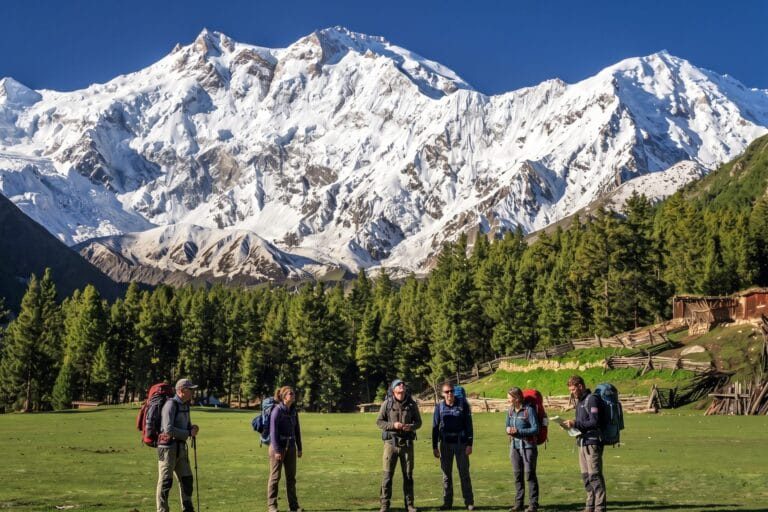
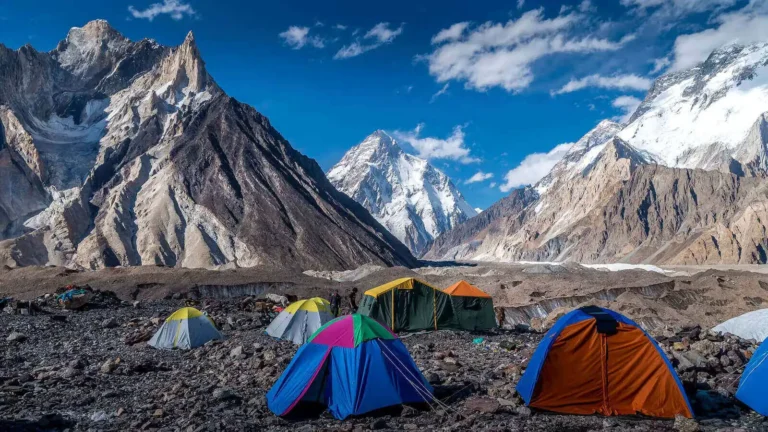
Six peaks above 7,000 m, run from Skardu by our own Balti team. Permits, oxygen, insured high-altitude porters and a turnaround policy that is actually enforced.
Six peaks above 7,000 m, run from Skardu by our own Balti team. Permits, oxygen, insured high-altitude porters and a turnaround policy that is actually enforced.
Travelling to Pakistan in 2027: Visa, Safety, Permits and Insurance
HomeTravelling to Pakistan in 2027: Visa, Safety, Permits and Insurance
Most visitors get their Pakistan visa online in a week or two. Moreover, the mountain valleys they come for are among the safest places we know. Finally, the paperwork for the big treks is handled by the operator. That is the short version. A Pakistan visa, honest expectations and the right insurance cover most of it. In other words, the Pakistan visa is the easy part. The long version is below, written by a Skardu team that has briefed foreign trekkers for twenty years. It explains how the e-visa works, and when you need the Trekking and Mountaineering visa and a permit. Then it covers what the advisories actually say about Gilgit-Baltistan. In addition, it sets out the insurance that is not optional. Finally, it shows how to get from Islamabad to the mountains.
The paperwork. A trekking and mountaineering visa is a different application from the tourist one.
Travelling to Pakistan at a glance
Visa
Tourist e-visa online for most nationalities at visa.nadra.gov.pk; usually seven to ten working days; fee set by nationality, roughly $20 to 75
Letter of Invitation
Issued by us within two business days of your deposit, included in every package
Restricted zones
Baltoro, Gondogoro La, Snow Lake and the border valleys: Trekking and Mountaineering visa plus permit and NOC, arranged by us
Open zones
Hunza, Skardu, Shigar, Khaplu, Fairy Meadows, Deosai: tourist e-visa only
Safety
Gilgit-Baltistan’s tourist corridor has hosted trekkers for fifty years; read advisories region by region, not country by country
Insurance
Required on every trek: high-altitude cover plus helicopter evacuation
Entry
Islamabad, then Skardu by a weather-dependent flight or by road; Gilgit for Hunza
Money and phones
Rupees in cash beyond the cities; no signal beyond the roadheads, a satellite phone on every expedition
Is Pakistan safe to visit?
For the mountain corridor travellers come for, yes. That answer rests on fifty years of trekking tourism and two decades of our own incident logs. Advisory maps, read honestly, agree with us. However, it is not risk-free. The real risks here are altitude, weather, roads and rivers. Moreover, we manage them the way a mountain operator should. The border districts that make the headlines are not where the treks are. Besides that, there are places we do not take clients, because honesty is the policy. Our honest answer to whether Pakistan is safe goes through the advisories one by one. It also maps the country region by region, and explains how we brief every group. Meanwhile, German readers have the same guide in German.
The Pakistan visa
Citizens of most countries apply for a tourist e-visa online and never visit a consulate. That includes the United States, the United Kingdom, Canada, Australia, the EU states, Japan and South Korea. You upload a passport scan with six months’ validity, a photo and your flights. In addition, you supply either a hotel booking or our Letter of Invitation. Then you pay the fee for your nationality. Processing usually takes seven to ten working days. Therefore apply a month before you fly. Moreover, do not rely on a visa on arrival. That facility has been suspended for most travellers since January 2026. The Pakistan e-visa guide for trekkers walks through the portal. Meanwhile, Americans have a step-by-step guide for US citizens with the fee and timing. Finally, UK and EU passports follow the same process with their own fee.
Beyond the Pakistan visa: permits, the NOC and the Mountaineering visa
The line that matters is between open zones and restricted zones. Hunza, Skardu and its lakes, Shigar, Khaplu, Fairy Meadows and Deosai need nothing beyond the tourist e-visa. However, the Baltoro corridor to K2, Broad Peak and the Gasherbrums is restricted. So are the Gondogoro La and the Snow Lake route. There you apply in the Trekking and Mountaineering visa category. Then your operator files a trekking permit and a No Objection Certificate for the group. We do that for every restricted-zone trek, and the standard fees are inside the package. However, the one thing we cannot shorten is the clock. Therefore we ask for passport details ten to twelve weeks ahead. The permits, NOC and trekking visa guide has the full list of which routes fall on which side.
Insurance that actually covers you
Ordinary travel policies stop covering trekking somewhere between 4,500 and 5,500 metres. However, Concordia, K2 Base Camp and the Gondogoro La all sit above that line. Therefore you need two layers. First, a standard medical and cancellation policy. Second, dedicated high-altitude cover that pays for a helicopter. A rescue on the Baltoro can be arranged when conditions allow. However, the bill is yours, and it is settled through your insurer. That is why we will not take you up the glacier without the right cover. Read the insurance guide for high-altitude trekking in Pakistan before you buy.
Women, solo travellers and families
Independent solo travel is workable for experienced travellers with time to spare. However, most solo guests join our small groups. That is not out of fear, but because permits, checkpoints and jeeps are simply easier shared. Women trek, climb and tour here every season with our teams. Moreover, the respect you show is returned many times over: a scarf in the bazaar, asking before photographing. Families do well on the softer circuits. For example, there are the lakes around Skardu, the forts of Hunza and the Deosai plateau. Finally, the safety guide has a frank section on who this country suits.
Getting to the mountains
Everyone arrives through Islamabad. Skardu is a short, spectacular flight that only goes in clear weather. Alternatively, it is two days by road. Meanwhile, Hunza is reached via Gilgit’s flight or the Karakoram Highway. Build buffer days around the flight, because weather, not security, is what reshuffles itineraries here. Our guide to getting to Skardu compares the options day by day. In addition, the Karakoram Highway road trip guide covers the drive north.
Health, altitude and what to pack
No vaccination is required for entry. However, ask your doctor about the usual travel vaccines before you fly. Moreover, read our trekking medicine and altitude guide on what to carry. Altitude is the risk that matters most on the big treks. The acclimatisation guide explains why our itineraries climb slowly. Finally, the gear list for Pakistan is written for the Baltoro’s cold nights rather than copied from Nepal.
First trips that make sense
If this is your first time in Pakistan, the open zones are the natural start. Moreover, they need nothing beyond the tourist e-visa. The Baltoro is for your second visit. Alternatively, it can be your first, if you are a fit trekker with the paperwork started early.
Frequently asked questions about visiting Pakistan
Is Pakistan safe for tourists now?
For the mountain corridor of Gilgit-Baltistan, yes. It has hosted foreign trekkers for fifty years, and our own two decades of incident logs show the real risks are altitude, weather and roads rather than security. Read the advisories region by region: the districts they warn about are not where the treks are, and there are places we do not take clients.
Is Pakistan safe for American tourists?
Yes, with the same discipline any mountain trip needs. Register with the State Department's STEP program, book with a licensed operator so checkpoints are formalities, keep passport copies, and treat the mountains as the real risk. Americans trek the Karakoram with us every summer.
Is Pakistan safe for UK tourists?
Yes, in the Gilgit-Baltistan tourist corridor. Check the FCDO advice for the regional detail rather than the country headline, and follow the same practical rules: licensed operator, e-visa secured before flying, insurance with evacuation cover.
Do I need a Pakistan visa, and can I get it online?
Yes, almost everyone needs a visa, and most nationalities get a tourist e-visa online at visa.nadra.gov.pk without visiting a consulate. Processing usually takes five to fifteen working days and the fee depends on your nationality.
Do I need a different Pakistan visa for trekking?
Only for restricted zones. The Baltoro, the Gondogoro La and the Snow Lake route need the Trekking and Mountaineering visa plus a permit and a No Objection Certificate, which we arrange. Hunza, Skardu, Fairy Meadows and Deosai need only the tourist e-visa.
What insurance do I need for trekking in Pakistan?
Two layers: a normal medical and cancellation policy, and dedicated high-altitude cover that pays for helicopter evacuation. Most ordinary policies exclude trekking above about 4,500 metres, and Concordia, K2 Base Camp and the Gondogoro La are all higher than that.
Is Pakistan safe for solo female travellers?
Women travel and trek here with our teams every season. Independent solo travel is workable for experienced travellers with time; most solo guests join small groups because permits, checkpoints and jeeps are easier shared. Dress modestly in towns, ask before photographing people, and expect hospitality in return.
How do I get from Islamabad to the mountains?
By air to Skardu or Gilgit on short, weather-dependent flights, or by road up the Karakoram Highway over two days. Build buffer days around the flight, because weather is what changes itineraries here.
Tell us your route, we will tell you the paperwork
Visa category, Letter of Invitation, permits and NOC, and insurance that is actually valid at 5,000 metres. Indeed, we have briefed foreign trekkers on all of it for twenty years. Local hands, real safety, fair price. 2027 dates are open.
Contains information about the traffic source or campaign that directed user to the website. The cookie is set when the GA.js javascript is loaded and updated when data is sent to the Google Anaytics server
6 months after last activity
__utmv
Contains custom information set by the web developer via the _setCustomVar method in Google Analytics. This cookie is updated every time new data is sent to the Google Analytics server.
2 years after last activity
__utmx
Used to determine whether a user is included in an A / B or Multivariate test.
18 months
_ga
ID used to identify users
2 years
_gali
Used by Google Analytics to determine which links on a page are being clicked
30 seconds
_ga_
ID used to identify users
2 years
_gid
ID used to identify users for 24 hours after last activity
24 hours
_gat
Used to monitor number of Google Analytics server requests when using Google Tag Manager
1 minute
_gac_
Contains information related to marketing campaigns of the user. These are shared with Google AdWords / Google Ads when the Google Ads and Google Analytics accounts are linked together.
90 days
__utma
ID used to identify users and sessions
2 years after last activity
__utmt
Used to monitor number of Google Analytics server requests
10 minutes
__utmb
Used to distinguish new sessions and visits. This cookie is set when the GA.js javascript library is loaded and there is no existing __utmb cookie. The cookie is updated every time data is sent to the Google Analytics server.
30 minutes after last activity
__utmc
Used only with old Urchin versions of Google Analytics and not with GA.js. Was used to distinguish between new sessions and visits at the end of a session.
End of session (browser)
Marketing cookies are used to follow visitors to websites. The intention is to show ads that are relevant and engaging to the individual user.
Facebook Pixel is a web analytics service that tracks and reports website traffic.