
 EN
 العربية
 Deutsch
 Español
 Français
 Italiano
 Polski
 Русский
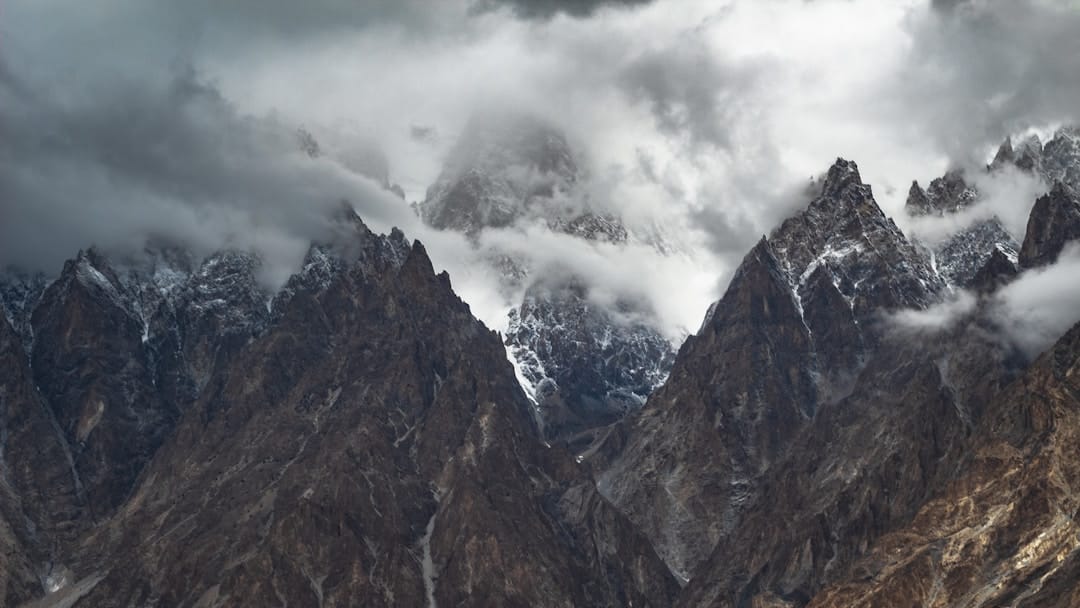
You do not have to climb an eight-thousander to stand beneath one. Pakistan has five peaks above 8,000 m, and for four of them you can walk to a base camp on a trek that needs no ropes and no climbing skills. This guide compares those walks side by side: K2, Broad Peak, the Gasherbrum group and Nanga Parbat. It covers how long each takes, how hard it is, where it starts, what you see and what we charge for it in 2027.
This is a different question from the one in our guide to Pakistan's five eight-thousanders, which ranks the mountains by height, first ascent and the cost of climbing them, and from our cost of climbing K2 and the 8,000ers breakdown. Here nobody goes above base camp. The decision is which walk suits you.
Which four 8,000 m base camps can you walk to in Pakistan?
K2, Broad Peak, Gasherbrum I and II, and Nanga Parbat. The first four sit within a day or two of each other on the Baltoro Glacier in the Karakoram, and Nanga Parbat stands alone on the western edge of the Himalaya. Gasherbrum I and II are separate mountains but share one approach, which is why they count as a single "Gasherbrum" base camp on a trek.
Heights, from the English Wikipedia articles read through the MediaWiki API on 2026-11-10:
| Peak | Height | Range | Where |
|---|---|---|---|
| K2 | 8,611 m | Karakoram | Gilgit-Baltistan / Xinjiang border |
| Gasherbrum I | 8,080 m | Karakoram | Gilgit-Baltistan / Xinjiang border |
| Broad Peak | 8,051 m | Karakoram | Gilgit-Baltistan / Xinjiang border |
| Gasherbrum II | 8,035 m | Karakoram | Gilgit-Baltistan / Xinjiang border |
| Nanga Parbat | 8,126 m | Himalaya | Diamer / Astore districts, Gilgit-Baltistan |
How do the four walks compare?
Everything in this table comes from our own tour files for 2027, apart from the peak heights above.
| K2 Base Camp Trek Classic | Four 8,000 m Base Camp Trek | Broad Peak Base Camp Trek | Nanga Parbat & Rakaposhi Base Camp Trek | |
|---|---|---|---|---|
| Peaks reached | K2 (and Broad Peak BC on day 12) | K2, Broad Peak, Gasherbrum I and II | Broad Peak, with K2 behind | Nanga Parbat (plus Rakaposhi, 7,788 m) |
| Duration | 21 days | 24 days | 18 days | 12 days |
| Start point | Skardu, then jeep to Askole | Skardu, then jeep to Askole | Skardu, then jeep to Askole | Islamabad by road to Chilas, then Raikot Bridge |
| Highest point | K2 Base Camp, 5,150 m | 5,150 m (K2 BC and, as listed, Gasherbrum BC) | Broad Peak BC, about 4,850 m | Nanga Parbat BC, about 4,200 m |
| Grade | Demanding, non-technical | Demanding, non-technical | Strenuous, non-technical | Moderate |
| Walking days | 12-14 | 13-15 | 6-7 each way | 4-5 |
| Season | June to September | June to September | June to September | May to October |
| Group price (7-10 people) | $2,300 per person | $3,200 per person | $2,150 per person (7-12) | $1,300 per person (9-20) |
| Solo (1 person) | $5,060 | $6,800 | $4,700 | $3,000 |
Prices are per person on a group departure of the size shown, and include permits, guides, porters, meals on the trek and transport as listed on each page. International flights, Pakistan visa fees, personal insurance, personal gear and tips are not included. The deposit is 10% of the trip price, minimum $50; the balance is due two weeks before arrival, or on arrival in Islamabad.
What is it like to walk to Nanga Parbat Base Camp?
This is the easiest of the four and the only one outside the Karakoram, which is why it makes the best first 8,000 m walk.
The route climbs from Raikot Bridge on the Karakoram Highway to Fairy Meadows at about 3,300 m. Wikipedia describes the approach as a 15 km jeepable track to the village of Tattu, followed by a three-to-four-hour hike of about five kilometres to the meadows, and notes that the track is open only to locals who carry visitors. Fairy Meadows lies at about 3,300 m, and the point commonly mistaken for the summit from there is actually the North Peak (7,816 m); the true summit (8,126 m) hides behind it. From the meadow our 12-day trip continues past Beyal to Nanga Parbat Base Camp, around 4,200 m, in a day and returns the same afternoon.
The mountain itself is formidable on paper. Wikipedia calls Nanga Parbat the ninth-highest mountain on Earth, describes the Rupal Face as "often referred to as the highest mountain face in the world" at 4,600 m above its base, and notes its nickname, "Killer Mountain", for its number of climber fatalities. You do none of that. You walk through forest and meadow, sleep in wooden huts, and look up. The trip is graded moderate, with about 2,800 m of total ascent split across two treks, no glacier crossings and nothing technical. The minimum age is 12.
The 12-day package pairs it with a second walk, to Tagaphari (about 3,300 m), the base camp beneath Rakaposhi's 7,788 m wall, with Hunza's forts, Passu and Attabad Lake in between. If you only want Nanga Parbat, our 9-day Fairy Meadows and Nanga Parbat Base Camp Trek is $975 per person in a group of 7-10 and is graded moderate with a high point of 4,000 m on its itinerary. Our Nanga Parbat base camp guide also covers the wilder Rupal side, which sits under the Rupal Face.
Season: our 2027 fixed departures for the 12-day trip run in May and October, with June to September the prime window for meadows and clear mornings. The 9-day trek has departures in June, July, August and September 2027.
No special permit or NOC is normally needed for this one, because Fairy Meadows and the Rakaposhi side are open trekking zones; you do need a tourist visa.
What is it like to walk to K2 Base Camp?
This is the big one. Three weeks, a glacier that never ends and a view that justifies it.
All three Baltoro treks share the same first week. You fly from Islamabad to Skardu and take a 4x4 to Askole at about 3,000 m, then walk through Jhola and Paiju, step onto the glacier at Khoburtse, climb to Urdukas, cross to Goro II, and reach Concordia at 4,691 m. Concordia is the confluence of the Baltoro and Godwin-Austen glaciers. Wikipedia gives its elevation as 4,691 m and notes that it is used as a base camp for mountaineering expeditions on K2 and other nearby peaks and is a popular destination for trekkers. Our Classic page says that from Concordia you are surrounded by K2, Broad Peak, and Gasherbrum I and II. Our Concordia guide tells that story in full.
On day 12 you walk a full day to K2 Base Camp at 5,150 m, then return to Concordia for two more nights. The Classic is the original out-and-back route, graded demanding. The page says it asks for endurance more than skill: long days on moraine, altitude to 5,150 m, cold camps and remote ground. Prior trekking experience above 3,500 m is required.
If three weeks is too many, the Light version covers the same route in 15 days for $1,800 per person in a group of 7-10, at the cost of most of the spare days. Because the K2 trek crosses a restricted zone, it needs a Trekking and Mountaineering visa, a permit and an NOC, all of which we arrange. Our permits guide covers the timing, which is ten to twelve weeks.
What is it like to walk to Broad Peak Base Camp?
Broad Peak is the shortest and lowest of the three Baltoro walks, and in some ways the best value. The mountain is 8,051 m and, in Wikipedia's words, "approximately eight kilometres" from K2, with a summit crest more than 1.5 km long that gives it its name.
Our 18-day trek shares the whole approach to Concordia, but on day 10 it goes from Goro II to Concordia and on day 11 turns up the Godwin-Austen Glacier to Broad Peak Base Camp, at roughly 4,850 m, with a full day there before heading back. The page says K2 "fills the head of the valley behind you". It is graded strenuous, with six to seven walking days each way, mostly on moving glacier and moraine, and about a week sleeping above 4,000 m. The minimum age is 18, and the page says you should be able to walk six to eight hours on rough ground on consecutive days with a daypack.
Our own FAQ spells out how it differs from the K2 trek. The approach is identical as far as Concordia; this trip then turns up the Godwin-Austen to Broad Peak, which is "a little shorter, a little lower", and puts you directly under the 8,051 m wall. It is the trek, not the climb: you do not go above base camp. Climbing Broad Peak is a separate 8,000 m expedition with its own permit, team, timeline and pricing.
Season is June to September, with July and August prime, and 2027 departures run on 12 June, 3 July, 24 July and 14 August. The Baltoro permits, a licensed guide and accident insurance apply here too.
What about Gasherbrum Base Camp?
Gasherbrum is not sold as a standalone trek. The only walk in our catalogue that takes you to a Gasherbrum base camp is the Four 8,000 m Base Camp Trek, which we also call the Karakoram Grand Slam. It is a 24-day itinerary that follows the Baltoro to Concordia, continues to K2 Base Camp on day 12, goes to Broad Peak Base Camp on day 13 and to Gasherbrum Base Camp on day 14, with a rest day at Gasherbrum on day 15.
Wikipedia gives the context. Gasherbrum I, also known as Hidden Peak (originally surveyed as K5), is the 11th highest mountain at 8,080 m, and the name comes from Balti words meaning "beautiful mountain", not the "Shining Wall" often claimed. Gasherbrum II (K4) is the 13th highest and the third-highest of the massif. The Four 8,000 m page notes that standing at Concordia you see all four eight-thousanders at once. Our Broad Peak page lists what you will see from there: K2, Broad Peak, Gasherbrum I and II, plus Mitre Peak, Muztagh Tower and the Gasherbrum wall.
Is the extra week worth it? That depends on what you want. If the picture in your head is Concordia, the Classic or Broad Peak gives it to you. If you want to say you stood at the foot of each mountain, and you are willing to pay $3,200 per person in a group of 7-10 (or $6,800 solo) for 24 days, the Grand Slam is the only trek that does it.
2027 departures start on 1 June and run roughly every two to three weeks until 15 August.
How do the views differ?
Each walk gives a different relationship with its mountain.
- Nanga Parbat is a wall seen from a meadow. You look up from about 3,300 m to a face that Wikipedia describes as rising far above its surroundings; Nanga Parbat has the second-highest prominence among the 100 tallest mountains, after Everest. The foreground is pine forest and wooden huts, and the experience is of scale and surprise.
- K2 is a pyramid seen across ice. You see it from Concordia at 4,691 m and reach its base camp at 5,150 m. Wikipedia calls it the second-highest mountain on Earth, after Everest. The foreground is glacier.
- Broad Peak is a long ridge seen from a quieter spot, with K2 behind you.
- Gasherbrum is the head of the Baltoro, reached only on the longest trek.
Which base camp trek suits you?
A short decision tree, based only on what each page says.
- Your first 8,000 m walk, or you have under two weeks: Nanga Parbat. It is graded moderate, 12 days, no glaciers, from $1,300 per person in a group of 9-20 or $975 on the 9-day trek.
- Fit, experienced, with 15 to 21 days and one mountain in mind: K2 Classic (21 days) or Light (15 days, with prior experience above 3,500 m essential).
- Fit and wanting the Concordia amphitheatre with the least time and cost: Broad Peak, 18 days, from $2,150 per person.
- Time, fitness and budget for the whole set: the Four 8,000 m trek, 24 days.
- Not sure you will like altitude: do Nanga Parbat or Rakaposhi first.
Two honest notes. First, "non-technical" describes the climbing, not the effort. The Baltoro treks are long, cold and remote, and all three need prior high-altitude trekking experience. Second, insurance is not optional: travel insurance covering high-altitude trekking and helicopter evacuation is mandatory on the Four 8,000 m trek and required on the others. Our insurance guide explains what to look for.
What is the difference between trekking to base camp and climbing?
Everything above stops at base camp. If you want the summit, that is an expedition of 42 to 55 days with its own permit, royalty and team. Our guide to Pakistan's eight-thousanders and our cost breakdown cover them. The base camp walk is also the best way to see an 8,000 m mountain before you decide whether you want to climb one.
To plan, start with the page for the walk you like: K2 Classic, Four 8,000 m Base Camps, Broad Peak or Nanga Parbat and Rakaposhi.
Frequently asked questions
Can you walk to Nanga Parbat base camp?
Yes. On our 12-day trip you climb from Raikot Bridge to Fairy Meadows at about 3,300 m and continue to Nanga Parbat Base Camp at around 4,200 m. It is graded moderate with no glacier crossings or technical ground.
Which 8,000 m base camp trek is easiest?
Nanga Parbat, by our grading: moderate, against demanding for the K2 and Four 8,000 m treks and strenuous for Broad Peak.
How long is the trek to K2 Base Camp?
21 days on the Classic and 15 days on the Light, both reaching K2 Base Camp at 5,150 m.
Can you see all four eight-thousanders from one place?
Our pages say you can at Concordia (4,691 m): K2, Broad Peak, and Gasherbrum I and II.
Do I need a special visa for these treks?
For the Baltoro treks (K2, Broad Peak, Four 8,000 m), yes: the Trekking and Mountaineering visa, plus a permit and an NOC. For Nanga Parbat a tourist visa is enough.
What is the best month for a base camp trek in 2027?
The Baltoro season is June to September, with July and August prime. Nanga Parbat runs May to October, with June to September prime.
Written by Zulfiqar Ali, founder of Karakoram Venture. Prices and dates are our 2027 published rates as read in November 2026; peak data from Wikipedia, read on 10 November 2026.