
 EN
 العربية
 Deutsch
 Español
 Français
 Italiano
 Polski
 Русский
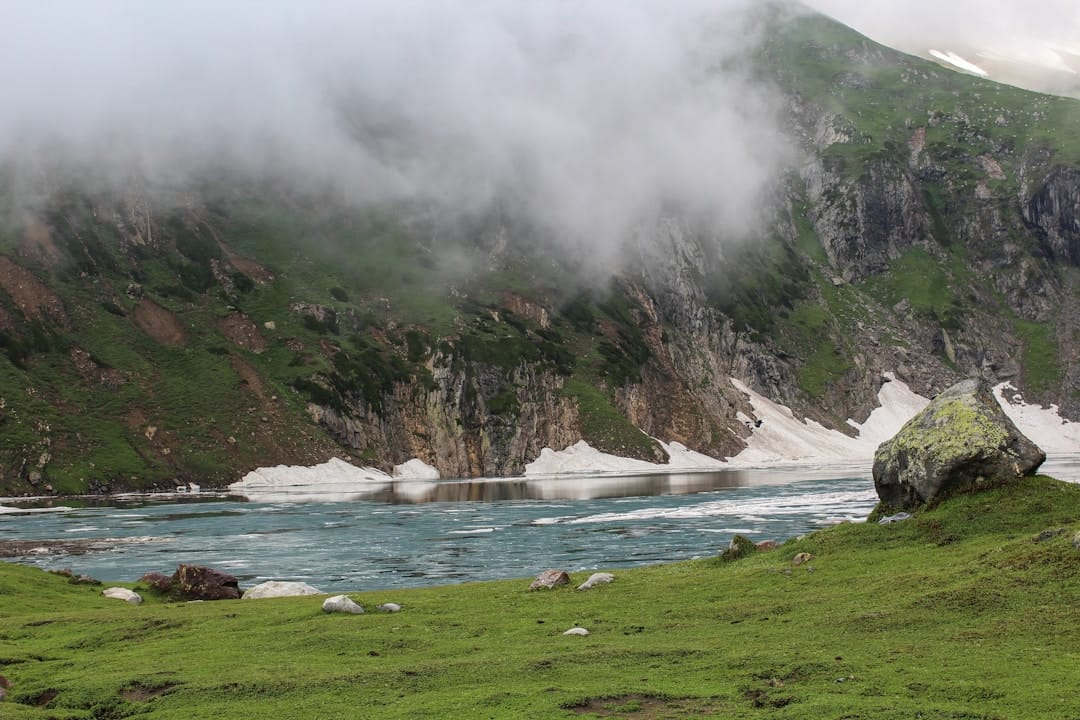
The best 14-day Pakistan itinerary for first-time visitors flies into Skardu, crosses Deosai, drives the Karakoram Highway to Hunza, and ends with a slow week-end in Passu and a flight home from Gilgit. The route below has no new ground in it. Every day is lifted from an itinerary we already run, and we say so against each one. Where we had to join two of our trips together and the join is ours rather than a published page, we mark it for the operations team to confirm.
We are based in Skardu and our guides are Balti, so we will tell you plainly where this plan is generous and where it is tight. It is generous in Baltistan, with a full Deosai day and a Khaplu day. It is tight in one place only: the final two days depend on a mountain flight, and mountain flights get cancelled. We build a buffer for that and explain it below.
What does a two-week Pakistan trip actually cover?
Fourteen days is enough to join the two best-known valleys in the north, Skardu and Hunza, with the Karakoram Highway between them. It is not enough for the Baltoro or for K2, and it does not try to be. Think of it as three blocks:
- Days 1 to 5: Islamabad and Baltistan. Skardu's fort and lakes, the cold desert, the Deosai plateau and Khaplu.
- Days 6 to 11: the highway and Hunza. The drive to Karimabad, the two forts, Nagar, Attabad Lake, Passu and the Khunjerab Pass.
- Days 12 to 14: the way home. Down to Gilgit, a flight to Islamabad, a departure day.
The first nine days follow the order of our 10-day North Pakistan Tour. The Passu, Khunjerab and Gilgit days at the end come from our 12-day Karakoram Highway Tour. If you only have seven days, our Skardu & Hunza Tour does the same two valleys in a week, and our Hunza vs Skardu guide helps if you can pick only one.
When should you go for two weeks in Pakistan?
For this route, May to October, and for the full version, late June to the end of September. The reason is Deosai. Our best-time guide says Deosai National Park is open only from about early June to late October, snow-dependent, and the Khunjerab Pass is generally open May or June to October. Our 2027 scheduled departures of the 10-day North Pakistan Tour start on 20 June, 11 July, 1 August, 22 August and 3 October, which is the same logic.
If you are going in April or early May for the blossom, use the spring variant further down. The same guide says the high routes are still snowbound then, so we swap Deosai for lower-altitude days.
Day 1: Arrive in Islamabad
You land at Islamabad International Airport and we meet you. Our North Pakistan Tour spends day 1 on a city tour of the Faisal Mosque and the Pakistan Monument, then the hotel. The only job on day 1 is to arrive rested and to eat dinner. If you arrive at night, there is nothing to see anyway.
Day 2: Fly to Skardu
The flight to Skardu takes about an hour and, on a clear day, goes close to Nanga Parbat (8,126 m). Skardu sits at about 2,500 m where the Indus and Shigar rivers meet. The afternoon is Kharpocho Fort, the sixteenth-century "King of Forts" above the confluence.
The honest part about this flight. Our how-to-get-to-Skardu guide says flights operate only in clear conditions, that cancellations and delays are common, and that you should never book a flight to Skardu on the same day as a tight onward connection. The road is the fallback: roughly 16 to 20 hours over about 600 km, almost always split over two days with an overnight stop, commonly at Chilas. That is why we do not put a hard international departure on day 2 or day 14 without a buffer day.
Day 3: Skardu sights - Shigar, the cold desert and Satpara Lake
North Pakistan Tour day 3 is Shigar Fort, Satpara Lake and the Katpana cold desert. Shigar Fort, Fong Khar or "Palace on the Rock", is a seventeenth-century palace about 30 km from Skardu, restored in 1999 to 2004 and now a heritage hotel and museum. Satpara Lake lies at about 2,600 m and supplies Skardu's water. Katpana is a high dune field at 2,226 m that Wikipedia calls one of the highest deserts in the world. It is an easy day with short walks. Our Skardu travel guide has more on each stop.
Day 4: Deosai National Park
The big high day. Deosai is a plateau averaging about 4,114 m between the Skardu and Astore districts. Our itinerary says Sheosar Lake, wildflowers and brown-bear country. It is the one day on this trip where altitude matters. The tour page tells guests to take the Deosai day slowly and drink water, because the altitude can cause mild headaches. You return to Skardu to sleep low. Read the Deosai guide for what the plateau is like.
Day 5: Khaplu Valley
East along the Shyok to Khaplu: the Khaplu Palace, the Chaqchan Mosque and a drive along the Hushe River. Khaplu is about 103 km east of Skardu. Our Khaplu guide has the history. This is a full day, so expect to get back to Skardu in the evening.
Day 6: Skardu to Hunza via Gilgit
The long road day. North Pakistan Tour day 6 is a scenic drive to Hunza via Gilgit on the Karakoram Highway, and the Skardu & Hunza Tour adds a Rakaposhi viewpoint stop. Our Hunza-versus-Skardu guide gives the distance as about 290 km and the time as five to six hours by road with stops. You sleep in Karimabad at about 2,440 m.

Day 7: Hunza forts
Eagle's Nest sunrise, then Baltit and Altit forts. Baltit Fort is on the UNESCO World Heritage Tentative list, and conservation work indicated core structures date to the eighth century CE. Altit is the quieter one, with a tower our Karakoram Highway Tour dates at around 1,100 years. See our Baltit and Altit guide. If you want to choose your village for the nights, read where to stay in Hunza.
Day 8: Nagar, Rakaposhi and Hopar Glacier
Across the river into Nagar for the Rakaposhi viewpoint and a walk to Hopar Glacier (also spelled Hopper). This is a re-ordering. The North Pakistan Tour does Nagar on its day 9, after the Khunjerab drive. For a 14-day plan we move it forward to day 8 so that the second half runs one way up the valley, from Karimabad to Passu, without doubling back.
Day 9: Karimabad to Passu via Attabad Lake
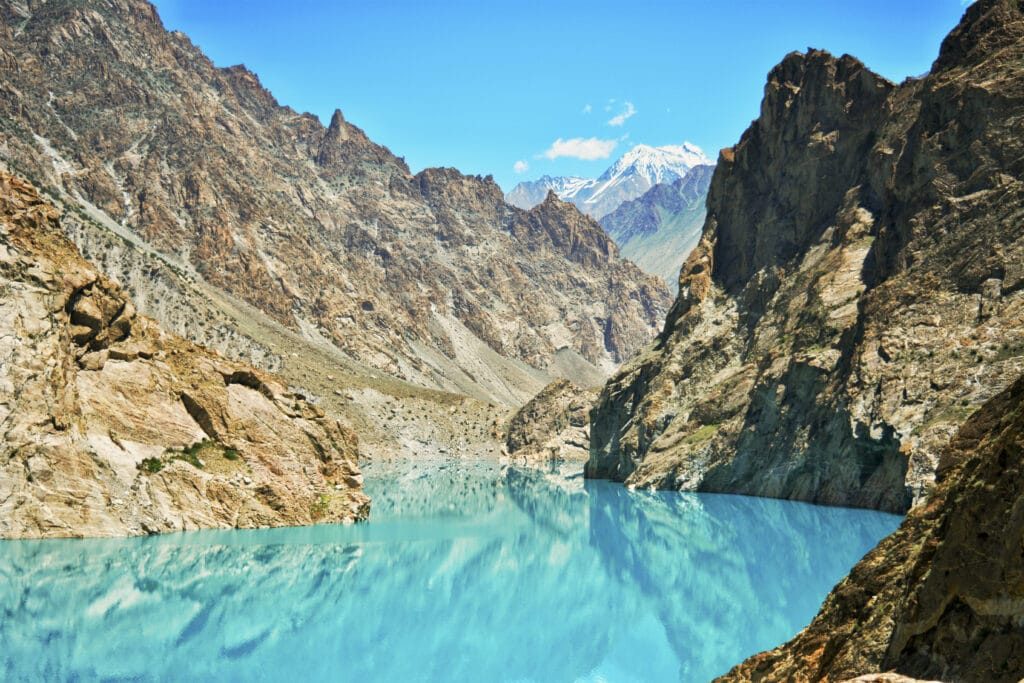
Through the five Friendship Tunnels built after the 2010 landslide, with Attabad Lake below, a stop at Gulmit, the Hussaini suspension bridge for those who want it, and the Passu Cones ahead. You sleep in Passu. Attabad Lake formed in January 2010 when a landslide dammed the Hunza River at Attabad village, and the slide killed twenty people. It is a beautiful place and a disaster site, and our Attabad Lake guide tells the whole story. The Passu Cones guide covers the skyline you will see ahead.
Day 10: Khunjerab Pass
The big day of the highway. North through Sost into Khunjerab National Park, climbing to the pass and the China border at 4,693 m, then back down to Passu. Wikipedia gives the pass as 4,693 m on the Pakistan-China border. Our itinerary warns that the jump from Sost at about 2,800 m can bring on a headache and that it passes on the way down, with oxygen carried in the vehicle. Weather decides this day, and our Hunza package says we hold it flexible inside the week. Crossing into China is not part of any of these trips. See the Khunjerab guide.
Day 11: Passu - the slow day
Our Karakoram Highway Tour puts a slow day here on purpose, after the altitude: a walk to the Batura glacier snout above the highway and up to Borith Lake at about 2,600 m, or simply tea and the view. This is the day that makes a two-week trip feel like a holiday rather than a route march, and it is also your weather buffer for the Khunjerab day.
Day 12: Passu to Gilgit
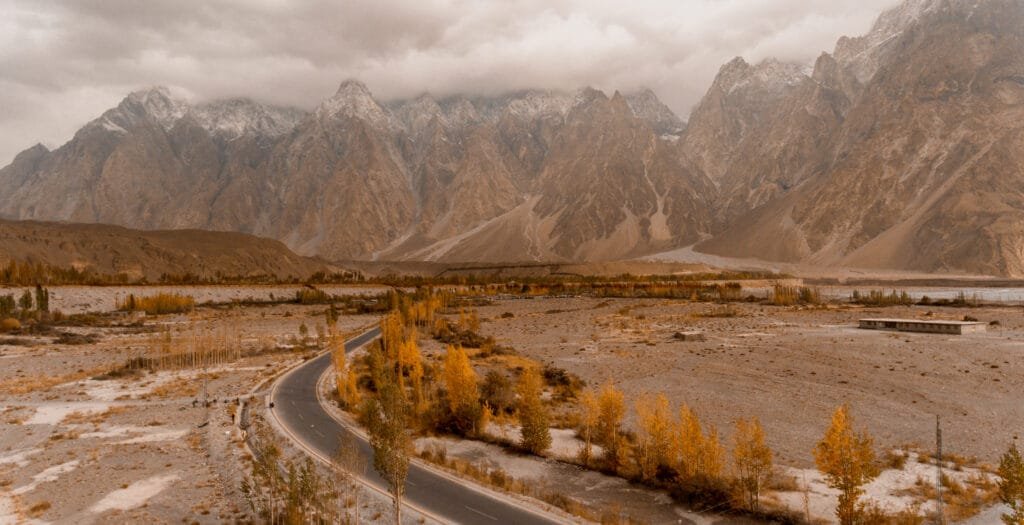
Back down the highway, about 160 km, stopping for the photos you missed on the way up. You sleep in Gilgit. Gilgit is the hinge between the two valleys, and our Hunza-versus-Skardu guide calls it the administrative hub.
Day 13: Fly Gilgit to Islamabad
The morning flight follows the Indus, with Nanga Parbat off the wing on a clear day. It is weather-dependent, and when it is cancelled we drive you south on the Karakoram Highway instead, which takes two days. You sleep in Islamabad.
If the flight is cancelled. Our Karakoram Highway Tour says that in that case you reach Islamabad on the evening of the following day and should book your flight home a day later if you can. We therefore recommend you book your international departure for day 14 or, better, day 15.
Day 14: Depart Islamabad
Transfer to the airport. Do not book a same-night flight on a day you may have driven for two days.
What is different in spring or autumn?
The plan above is the summer and early autumn version. Two things change outside the high season.
Spring (April to early May). Replace day 4 (Deosai) with a lower Skardu day. Our 6-day Skardu Tour Package spends a day on Shangrila, Upper Kachura and the ninth-century Manthal Buddha Rock, which works in any month the lakes are open. Spring is the blossom window in Hunza and Skardu, roughly late March to April, and high routes are still shut. Khunjerab may not be open yet. Plan the border day for the last week of the trip, or drop it.
Late September to October. Our best-time guide calls mid-September to late October its own pick for most travellers: clear air, autumn colour, fewer people. It also warns that Deosai and the high passes typically shut by late October and that first snow can arrive without much warning, so keep some flexibility. If you travel on the 3 October departure, ask us about Deosai before you commit.
What does a two-week Pakistan trip cost?
We do not have a published price for this exact 14-day plan, and we will not make one up by adding up pieces. What we can give you are the published prices of its two biggest blocks. The 10-day North Pakistan Tour is $1,250 per person in a group of seven to ten, $1,450 in a group of four to six, $1,750 for two or three, and $2,200 solo. The 12-day Karakoram Highway Tour is $1,750 per person in a group of seven to ten and $3,200 solo. A 14-day plan sits above both and needs a quote.
What those tours say they include: private vehicle, hotel nights, daily breakfast and dinner, local guides and the listed entry fees. They do not include international flights, lunches, visa fees, personal travel insurance or tips. For a wider budget, see our cost of a trip to Pakistan guide.
A booking needs a 10% deposit (minimum $50), and the balance is due two weeks before arrival or on arrival in Islamabad.
What do you need for the paperwork?
For this route, a standard Pakistan tourist visa. Our North Pakistan Tour page says no restricted-zone trekking permit is required, and we provide a Letter of Invitation on request. Our US e-visa guide explains the online process. We recommend travel and medical insurance.
What should you know before you book?
Three things we would want to know in your place.
The two flights are the weak points. Day 2 and day 13 both depend on mountain weather. The trip is built to cope: the Skardu days can be re-ordered if the first flight is grounded, and the road is the fallback both ways. Do not stack a connection on top of either flight.
Two of the days are long drives. Day 6 is about 290 km and five to six hours, and day 12 is about 160 km. Neither is technical, but both are long.
It is not a trek. The 10-day tour is graded easy to moderate and our pages describe short walks at forts and viewpoints. If you want a short walk added, our Fairy Meadows and Rakaposhi options are separate trips.
If you want a different shape, our 7-day Skardu & Hunza Tour and 12-day Karakoram Highway Tour are the two shorter and longer cousins, and our Karakoram Highway road-trip guide covers the highway on its own. Send us your dates on WhatsApp and we will tell you which version of the route fits them, and what it costs.
Frequently asked questions
How many days do you need in Pakistan?
For Skardu and Hunza together, seven days is the shortest trip we publish, ten days adds Deosai, Nagar and Khunjerab, and fourteen is the comfortable version with a slow day in Passu. If you can pick only one valley, our Hunza vs Skardu guide helps you choose.
What is the best time of year for a 14-day Pakistan itinerary?
Late June to September for the full route with Deosai, and mid-September to late October as our own pick for clear air and autumn colour. April brings blossom, but the high roads are shut.
Is a 14-day Pakistan itinerary suitable for families?
The 10-day tour it is based on is graded easy to moderate and our pages call it suitable for most travellers and families, with one high day on Deosai. The long drive days are the main thing to plan around with children.
How do you get to Skardu from Islamabad?
By the roughly one-hour flight, or by a 16-to-20-hour drive usually split over two days. Read our Islamabad to Skardu guide.
What happens if the Skardu or Gilgit flight is cancelled?
We switch to the road and re-shape the days. For the Gilgit-to-Islamabad leg, the drive takes two days, so keep your onward flight flexible.
Can I do this itinerary without a tour operator?
You can, and the roads and flights are public, but we are an operator and would rather you made an informed choice. What we can say is what our own trips include: private vehicle, hotels, meals, local guides and entry fees.
Written by Zulfiqar Ali, founder of Karakoram Venture. Tour days and prices are from our published 2027 pages as read in November 2026; place facts checked against Wikipedia on 11 November 2026.