
 EN
 العربية
 Deutsch
 Español
 Français
 Italiano
 Polski
 Русский
Read this first: on 11 November 2026 the UK Foreign Office advised against all but essential travel to Azad Jammu and Kashmir, and against all travel within 10 miles of the Line of Control. The Neelum Valley is in Azad Kashmir, and the Line of Control runs through it. We sell a Neelum Valley tour, and this guide is about the valley, but we are not going to soften that sentence or bury it.
The same page says your travel insurance could be invalidated if you travel against FCDO advice. Everything below is for readers who want to understand the valley, decide for themselves, and read the live advice from their own government before spending a rupee.
What does the UK Foreign Office say about Neelum Valley?
Plainly, three things, as of the page we read on 11 November 2026.
- It advises against all but essential travel to Azad Jammu and Kashmir.
- It advises against all travel to within 10 miles of the Line of Control.
- It describes demonstrations in parts of the region, says local authorities have advised visitors to avoid travel to the area, and says visitors already there have been encouraged to leave.
The page does not name the Neelum Valley or Muzaffarabad. We checked and neither appears. That does not make the valley safe by omission. Wikipedia says the Line of Control runs through the Neelum Valley, "either across the mountains to the south-east or in places right along the river", and that the Neelum River runs parallel to it for much of its length. Read together, those facts mean that stretches of the valley road run close to the line the FCDO tells you not to approach. We cannot draw the 10-mile line for you, and the FCDO page does not draw it either.
This is the same plain-warning pattern we use on our Kumrat guide: state the dated advice, say what it means for insurance, and tell you to read the live page. Our broader pieces on the subject are Is Pakistan safe to visit? and Pakistan travel advisories explained. The second one is about Gilgit-Baltistan, which is not on the UK list. Azad Kashmir is a different region with a different advisory, and the two should not be confused.
Where is the Neelum Valley, and what is it?
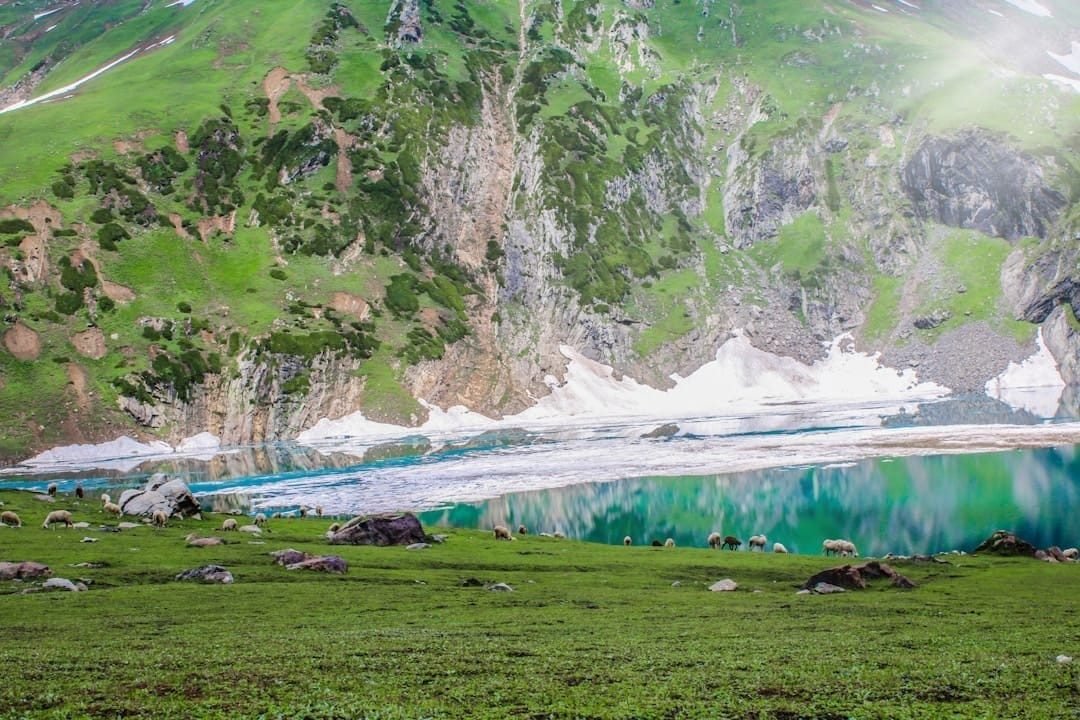
Neelum District is the northernmost and largest by area of the ten districts of Azad Kashmir, in the disputed Kashmir region, and it takes in most of the Neelum or Kishanganga Valley. The Neelum River rises in Indian-administered Kashmir, flows west through the valley, runs along the Line of Control for part of its course, and joins the Jhelum at Muzaffarabad. Wikipedia gives the valley length as 144 km in one place and about 200 km in another, so we use neither as a headline figure.

It is a wooded valley, with an elevation of roughly 1,200 m to 2,300 m, and peaks on either side reaching about 5,200 m. The 2005 Kashmir earthquake was among the worst to hit Pakistan, and Neelum District was one of the worst-hit areas. Tourism is described there as growing in importance in a poor, subsistence-agriculture region.
Two points of geography matter for anyone planning a visit. The valley was known before partition as Kishanganga, and the river was renamed Neelum in Pakistan in 1956. And there are two ways in: the Neelum Road from Muzaffarabad, and a route from Kaghan, the Jalkhad Road. The name you will see on maps and in news is the district one, so a search for "Neelum" and a search for "Kishanganga" return the same place.
Which stops matter: Keran, Sharda, Kel, Arang Kel and Ratti Gali?
The valley is a line of villages along one road, so distance from Muzaffarabad explains most of what you will read. Wikipedia's village pages give these anchors:
| Place | Altitude (Wikipedia) | Position |
|---|---|---|
| Keran | 1,524 m | 93 km from Muzaffarabad |
| Sharda | 1,981 m | 38 km beyond Keran |
| Kel | not stated | 54 km beyond Keran |
| Arang Kel | 2,554 m | Hilltop above Kel, 55 km beyond Keran |
| Ratti Gali Lake | 3,683 m | Reached from Dowarian |
Sharda: the ruined university
Sharda is a tehsil of Neelum District on the Neelum River at about 1,981 m. It is known for the ruins of Sharada Peeth, a temple dedicated to the goddess Sharada. Wikipedia says that between the sixth and twelfth centuries CE Sharada Peeth was among the most prominent temple universities in South Asia, known for its library, and that it helped popularise the Sharada script, which gave Kashmir the name "Sharada Desh". The temple was damaged in the 2005 earthquake, and Pakistan's Supreme Court has ordered the government to conserve it.
A note on our own wording. Our tour page says Sharada Peeth was visited by scholars "over 2,000 years ago". Wikipedia's dating is the sixth to twelfth centuries CE, and we are not repeating the older figure.
Kel and Arang Kel: the hillside village
Kel is a village on the Neelum with daily buses from Muzaffarabad, private hotels, a rest house run by the AJK Tourism and Archaeology Department, a bank branch and a hospital. Arang Kel sits on the hilltop above it, at 2,554 m. Our tour page says you reach it by a chairlift and a short walk from Kel, and describes a high green shelf of meadows and wooden houses. We give Wikipedia's 2,554 m, because our own page says 2,400 m.
Ratti Gali Lake: the alpine glacial lake
Ratti Gali Lake is an alpine glacial lake in the Neelum Valley at about 3,683 m, fed by melting glaciers from the surrounding peaks. Access, per Wikipedia, typically starts at the village of Dowarian, about 75 km from the district headquarters of Athmuqam, and the last 19 km can be done on foot or by jeep depending on the road and weather. Our tour page says the lake is "accessible by a 4-hour trek from Dowarian" in its description, while its own terms section lists a jeep excursion and a day hike.
Jeeps and safety. Wikipedia records that in July 2024 a tourist jeep fell into the river on the road to the lake, with fatalities and missing people, and that the government banned the jeeps pending fitness certificates and road repairs. We do not know the current status of that rule.
Which sub-valley is for which traveller?
If you were free to go, this is how we would match the places to people. We are describing the geography; we are not telling you to go.
- You want ruins and history: Sharda, for the Sharada Peeth site.
- You want an easy viewpoint and a village: Kel and Arang Kel, because the access is a chairlift and a short walk, according to our tour page.
- You want a lake and are fit and happy on rough tracks: Ratti Gali, because the last stretch is on foot or by jeep and the altitude is about 3,683 m.
- You want the river: Keran, the first major village past Muzaffarabad on the Neelum Road, at 1,524 m on the river bank.
What is our Neelum Valley Tour, and what does it say about permits?
The Neelum Valley Tour is a 6-day, 5-night trip. The itinerary is arrival in Muzaffarabad, a drive up the valley past Sharda and Keran, the chairlift to Arang Kel, Ratti Gali Lake at 3,700 m, a river drive with the Dowarian waterfall, and a drive back to Islamabad. It is priced from $250 per person in a group of seven to ten, $313 for four to six, $400 for two or three, and $550 solo. The package page lists April to November as the season.
On permits, our terms say, word for word: "parts of the Neelum Valley sit close to the Line of Control, so an AJK travel permit may be required for foreign visitors", that we arrange it, and that checkpoints along the Neelum road record visitor details. We do not know the issuing authority, the processing time or the fee, and the FCDO page does not mention a permit for Azad Kashmir.
Where this leaves our own tour. We list the Neelum Valley Tour at the price above. In the light of the FCDO's advice, we are not going to tell you to book it. If you hold a UK passport, or your insurer follows FCDO advice, travelling against that advice may invalidate your cover, and you should talk to your insurer first.
What is the best time to visit Neelum Valley?
Our package page says April to November. We have no sourced monthly weather or road-opening data for the valley, and we do not want to guess at snowfall on a route we do not run every year. The high lake is the constraint: at about 3,683 m, Ratti Gali is the part of the trip most likely to be affected by late snow or early closure.
For Gilgit-Baltistan we have a full guide, the best time to visit Gilgit-Baltistan, but it does not apply to Azad Kashmir.
How do you get to the Neelum Valley?
By road from Islamabad to Muzaffarabad, and from there up the Neelum Road. Our tour page says "These valleys are reached by road from Islamabad", and its itinerary starts at Muzaffarabad, at about 800 m. Wikipedia's Kel page says buses run daily between Muzaffarabad and Kel, and a bus service also runs from Rawalpindi to Kel. We have no sourced driving time for the Islamabad to Muzaffarabad leg and will not invent one.
There is no airport in the valley. We do not have a source for the nearest air connection and do not mention one.
Why did our "15 best places" guide leave Neelum off?
On purpose. Our 15 best places to visit in northern Pakistan deliberately omitted the Neelum Valley, saying that parts of the valley sit close to the Line of Control, that an AJK travel permit may be required for foreign visitors, and that there was no guide yet. This is that guide. It does not change the decision. The ranked list stays limited to Gilgit-Baltistan and the Naran and Kaghan valley. Neelum is described here for readers who want to understand it, not recommended for the list while the FCDO advice stands.
What are the alternatives in the same region?
If what you want is a green Himalayan valley with a lake, and you want to stay inside the advisory, look at the places the UK does not advise against. Our Naran Kaghan guide covers Lake Saif-ul-Malook, though it carries its own dated FCDO note for the highway between Mansehra and Chilas. In Gilgit-Baltistan, which is not on the FCDO's against-travel list as read on 8 November 2026, see our Pakistan tours hub. Our Naran Kaghan Tour is the closest in style to a Kashmir valley trip, but read its warning first.
What should you do before deciding?
- Read the live FCDO page (and your own government's) on the day you book, not ours from November.
- Ask your insurer in writing whether a trip to Azad Kashmir is covered. The FCDO warns that cover may be invalid if you travel against its advice.
- Ask us what we know. Message us on WhatsApp with your nationality and dates, and we will tell you what we can confirm about the permit and the roads, and what we cannot. Our Neelum Valley Tour page has the itinerary and terms. We would rather lose a booking than send you somewhere your insurer will not cover.
Frequently asked questions
Is the Neelum Valley safe for tourists?
On 11 November 2026 the UK Foreign Office advised against all but essential travel to Azad Jammu and Kashmir and against all travel within 10 miles of the Line of Control. It also said local authorities had advised visitors to avoid travel to the area. Read the live page before you plan.
Do foreigners need a permit for the Neelum Valley?
Our own terms say an AJK travel permit may be required for foreign visitors because parts of the valley sit close to the Line of Control. We do not have an official source for the rule.
Where is Arang Kel?
On the hilltop above the village of Kel in the Neelum Valley, at 2,554 m according to Wikipedia. Our tour reaches it by chairlift and a short walk.
How high is Ratti Gali Lake?
About 3,683 m per Wikipedia, which our tour page rounds to 3,700 m. It is reached from the village of Dowarian.
What is Sharda known for?
The ruins of Sharada Peeth, which Wikipedia describes as one of the most prominent temple universities in South Asia between the sixth and twelfth centuries CE.
Will my travel insurance cover a trip to Azad Kashmir?
Possibly not. The FCDO page says travel insurance could be invalidated if you travel against its advice. Ask your insurer in writing.
Written by Zulfiqar Ali, founder of Karakoram Venture. Geography checked against Wikipedia on 11 November 2026; the UK Foreign Office page was read on 11 November 2026. Advisories change; check the live page before you travel.