
 EN
 العربية
 Deutsch
 Español
 Français
 Italiano
 Polski
 Русский
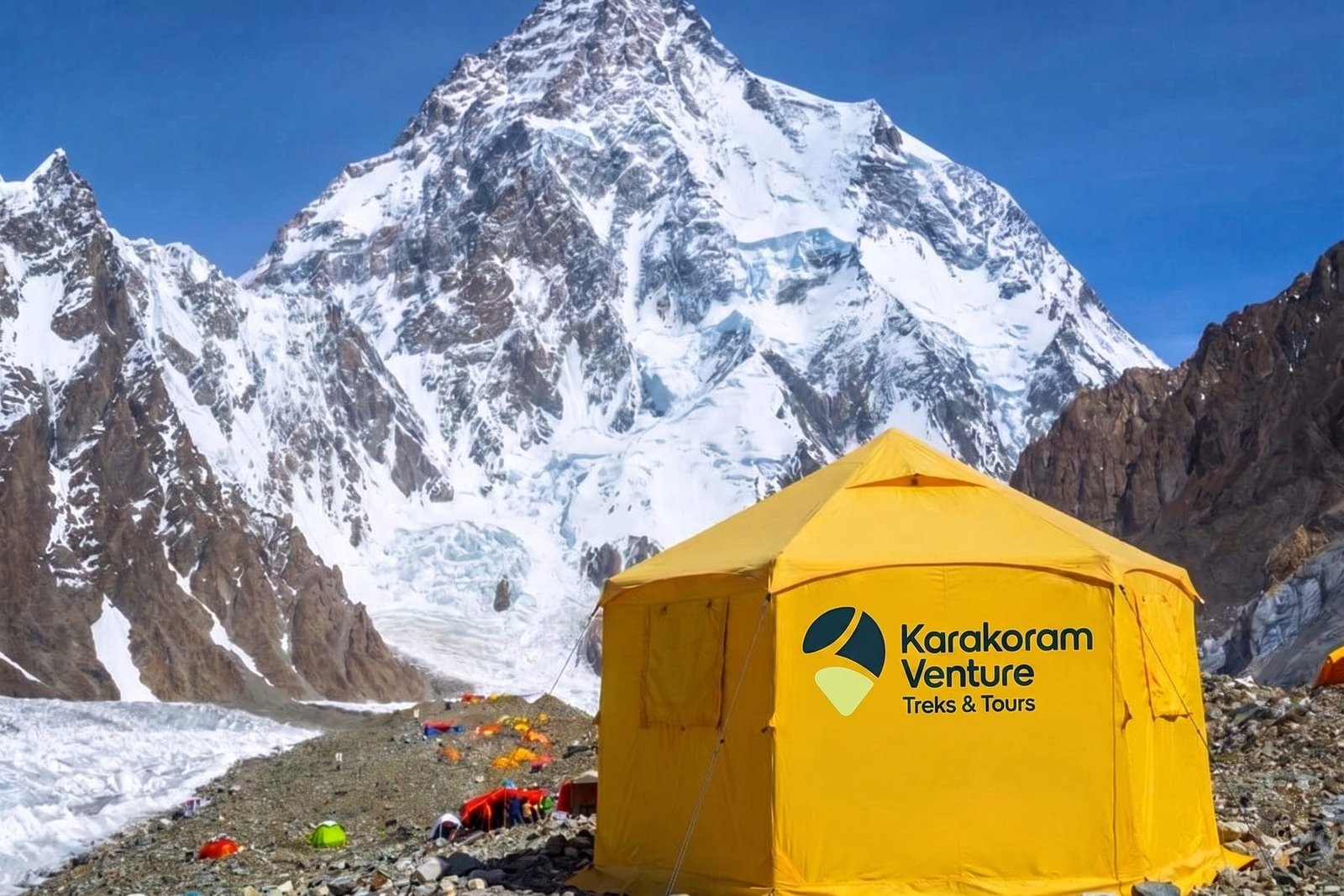
Picture the last stretch of summit day on an eight-thousander. This is an illustrative composite built from the physiology below, not an account of any real climber.
You take a step, then several breaths. At this height the air pressure is about a third of what it is at sea level: under 356 millibars, against 1,013.25. Your breathing is deep and fast, your heart is racing, and your body has quietly shut down jobs it can live without, including digesting food. You did not sleep the night before, because above 7,500 m sleeping becomes very difficult. Your fingers are clumsy and your thinking is slow, the way Edmund Hillary described himself after ten minutes on the summit of Everest without his oxygen set: "rather clumsy-fingered and slow-moving". Every decision you make from here, including the decision to turn around, is being made by a brain short of oxygen.
That is the death zone. The rest of this guide explains what is going on in your body, and what a well-run expedition does about it.
The death zone is the altitude above roughly 8,000 m, where the air holds too little oxygen for the human body to survive for long. Climbers also call it the lethal zone. Above that line the body cannot acclimatise: it burns through its oxygen reserves faster than it can replace them, so every hour spent there is borrowed time.
All 14 mountains that rise above 8,000 m, the eight-thousanders, stand in the Himalaya and Karakoram. Five of them are in Pakistan, and we run expeditions on K2 and Broad Peak from Skardu. This guide explains the science in plain language. It is not medical advice, and we say more about that at the end.
What exactly is the death zone?
It is a mountaineering term, not a precise physical boundary. The line is generally set at 8,000 m, where atmospheric pressure falls below about 356 millibars; standard sea-level pressure is 1,013.25 millibars. The idea was conceived in 1953 by Edouard Wyss-Dunant, a Swiss physician and alpinist, who called it the lethal zone.
Think of it as the point where the answer to "can my body adapt to this?" turns from "slowly, yes" to "no".
Why is there so little oxygen up there?
The share of oxygen in the air stays at 20.9% as you climb. What falls is the pressure, so each breath delivers fewer oxygen molecules.
Wikipedia gives the partial pressure of oxygen at about half its sea-level value at Everest Base Camp, and about a third at the summit of Everest. The article quotes slightly different base-camp altitudes in its two versions (5,000 m and 5,500 m), so we do not give a base-camp number.
What does the body do at altitude?
Below the death zone it adapts. Breathing gets deeper and faster, the heart beats faster, the body makes more red blood cells and non-essential functions are suppressed, including digestion. Full acclimatisation takes days or even weeks.
The International Society for Mountain Medicine recognises three bands: high altitude (1,500 to 3,500 m), very high altitude (3,500 to 5,500 m) and extreme altitude (above 5,500 m). Our acclimatisation guide covers the trekking part of that range. This article picks up where it stops.
Two benchmarks are useful. Humans have survived for two years at 5,950 m, which appears to be near the highest permanently tolerable altitude. Above 7,500 m, sleeping becomes very difficult, digesting food is near-impossible, and the risk of high-altitude pulmonary edema (HAPE) and cerebral edema (HACE) increases greatly.
What does altitude do to sleep and digestion?
Both go early. Wikipedia puts the threshold at about 7,500 m: above it, sleeping becomes very difficult and digesting food is near-impossible. The body treats digestion as non-essential and suppresses it in favour of its heart and lung reserves.
For a climber that means the high camps are for waiting, not resting. On our K2 itinerary the camp on the Shoulder, at about 7,900 m, is described as "a short sleepless night before the bid". That camp sits above the 7,500 m line, so the description fits the physiology. The nausea and headache that mark milder altitude illness at lower heights are part of the same picture.
What happens to a climber inside the death zone?
In the death zone no human body can acclimatise. An extended stay without supplementary oxygen leads to deterioration of bodily functions, loss of consciousness and ultimately death.
Much of the harm is indirect. Wikipedia notes that many deaths in high-altitude mountaineering come from the loss of vital functions, but also from poor decisions made under stress, such as not turning back in deteriorating conditions, or from physical weakening that leads to accidents such as falls. The same article says reduced oxygen impairs neuropsychological function, which has been implicated in mountaineering accidents.
That is why our expedition terms put the turnaround decision in the guide's hands. Our K2 and Broad Peak pages state that the guide's turnaround call is final.
Cold adds to the load. The article gives the average summer temperature on the summit of Everest as -19 °C and the winter average as -36 °C, with frostbite and hypothermia as risks. Everest is not in Pakistan, so treat these as an indication of scale and not as a forecast for K2.
How does low oxygen affect thinking and judgement?
The brain is the first organ to complain and the last to be believed. Wikipedia says physiological function at high altitude is not normal and that evidence shows impairment of neuropsychological function, implicated in mountaineering and aviation accidents. It also lists "wrong decisions made under stress" as an indirect cause of deaths in the death zone.
This is why the rules that protect a climber are set before the climb, in camp, with a clear head. A tired, hypoxic brain is poor at deciding that it is tired and hypoxic. We return to this under the turnaround rule below.
What are HAPE and HACE, in plain language?
These are the two altitude illnesses that kill. This section explains them. It does not diagnose or treat anything, and nobody should use it to manage a real illness on a mountain.
HAPE (high-altitude pulmonary edema) is fluid on the lungs. Wikipedia calls it a life-threatening condition that strikes otherwise healthy people. Symptoms include shortness of breath at rest, cough, weakness, chest tightness, crackling sounds when breathing and a bluish skin colour. Severe fatigue in someone who was previously fine is described as the most reliable sign. The same article says untreated HAPE carries a 50% risk of death and is the major cause of death related to high-altitude exposure.
HACE (high-altitude cerebral edema) is swelling of the brain with fluid. It generally appears in people who already have acute mountain sickness. Early signs include confusion, loss of coordination, lethargy and a severe headache, and the person may be unable to sit up. The article says untreated patients usually die within 48 hours and that HACE is rare, occurring in under one percent of people who ascend to 4,000 m. The risk rises with height, which is why the death zone is dangerous.
The one treatment that matters is descent. For HAPE, Wikipedia gives descent to a lower altitude as the recommended first-line treatment, with improvement seen after as little as 500 to 1,000 m. For HACE it says affected people must descend immediately, or coma and death can follow, and that supplemental oxygen and dexamethasone are usually given as well. On an eight-thousander descent is also the hardest thing to do, because the person is hours from base camp and is often impaired. That is our own observation, and it is the reason for the support systems described below.
Is the death zone a fixed line?
No, and a fair article should say so. Scientists at the High Altitude Pathology Institute in Bolivia dispute the existence of a death zone, citing extreme tolerance to hypoxia in patients with chronic mountain sickness and in normal fetuses in the womb. The term is a practical mountaineering shorthand. Individual tolerance varies, and so does the time you can spend up there.
Why are summit windows so short?
Because the weather at this height is the limiting factor, and good spells are brief. Wikipedia's K2 article says most ascents are made in July and August, and that K2's northern location makes inclement weather more common than on Everest. It reports that in 2023 about 112 climbers summited on what it calls the only viable weather window, 27 July.
On Everest, Wikipedia explains that the jet stream can sweep the summit with winds commonly reaching 160 km/h, and that climbers aim for a 7 to 10 day window when the monsoon is starting or ending. That explanation is specific to Everest. We have no sourced statement about the jet stream's role on K2 or Broad Peak, so we do not make one.
Our own pages describe the same discipline in practice. The K2 file gives the usual summit window as mid-June to August, usually late July, and Broad Peak's as usually July. Our FAQ notes that K2 gives fewer windows than the Gasherbrums and that they close faster. Weather models are reviewed daily at base camp, and the itinerary includes a waiting day and a contingency day for a second attempt or bad weather.
How does supplemental oxygen help?
It raises the oxygen available in each breath, which lowers the "effective altitude" your body feels. Wikipedia says the critical effect of any mitigation is raising the partial pressure of oxygen in the breathing gas.
Oxygen sets were tested on the 1922 and 1924 British Everest expeditions. In 1953 the party of Edmund Hillary and Tenzing Norgay used open-circuit sets. In 1978 Reinhold Messner and Peter Habeler made the first ascent of Everest without supplemental oxygen.
How does bottled oxygen actually work?
A climber breathes bottled oxygen through a mask connected to a regulator. Wikipedia describes two kinds: open-circuit sets, where exhaled gas is vented, used by the successful 1953 Everest party, and closed-circuit sets, used by the first assault party that year. The point is to raise the partial pressure of oxygen in what you breathe, which makes the mountain feel lower than it is.
How much oxygen a climber receives is set by a flow rate on the regulator. Doctors treating HAPE use flow rates high enough to keep blood oxygen saturation at or above 90%. Our files say oxygen is part of the Full-Board Guided and Premium tiers, that personal oxygen beyond the stated allocation is not included, and that oxygen is staged at base camp before the climb.
What does "climbing without oxygen" mean, historically?
It means climbing an eight-thousander using only the air that is there. In 1978 Reinhold Messner and Peter Habeler made the first ascent of Everest without supplemental oxygen, which Wikipedia says some doctors and mountaineers had thought impossible. Messner went on to become the first person to climb all 14 eight-thousanders, in 1986, without supplementary oxygen.
Pakistan has its own history here. The first ascent of Broad Peak in June 1957 was made without supplemental oxygen, high-altitude porters or base camp support. In 1975 Messner and Habeler made a new route on Gasherbrum I in what Wikipedia describes as pure alpine style, the first time on an eight-thousander. Those are feats by elite climbers. For most people, bottled oxygen is the sensible choice, and our FAQ says anyone who wants to try without it must tell us at booking.
On our own mountains, an oxygen allocation is included at the Full-Board Guided and Premium tiers of both expeditions. On K2 our FAQ says effectively every climber uses oxygen from the Shoulder upward. On Broad Peak it says most climbers use it from the high camp upward. If you plan to climb without oxygen, we ask you to tell us at booking, because it changes the plan, the high-altitude porter arrangement and the risk profile.
What is the "2 o'clock turnaround" rule?
It is a hard time limit on summit day. If you have not reached the summit by the agreed hour, you turn around, wherever you are, however close the top looks. The reason is the clock: you need the daylight and the strength left to get down.
Wikipedia's account of the 1996 Everest disaster describes one guide's team setting a turnaround time of 2:00 p.m. as "absolute law, beyond appeal", and notes that many climbers nevertheless reached the summit after 2:00 p.m., leaving too little time to descend before darkness. The lesson is not about one expedition. It is that a rule only works if it is enforced when everyone, including the person who paid for the trip, wants to ignore it.
Our K2 itinerary says the turnaround time "is not negotiable". Our Broad Peak itinerary says the turnaround time is set before leaving camp and is not negotiable. Both pages say the guide's call is final.
How do you prepare for the death zone?
By spending weeks lower down first. Rotations between base camp and higher camps are how climbers acclimatise before a summit push, and Wikipedia records that the physiologist Griffith Pugh recommended four weeks of acclimatisation and supplemental oxygen in the 1950s.
Our expeditions are built around that time. The K2 expedition is 55 days and the Broad Peak expedition 42 days, with roughly a week each way on the Baltoro approach and the remainder at and above base camp for acclimatisation rotations and waiting for a weather window. Our FAQ puts it bluntly: the waiting is the expedition.
Experience matters as much as time. K2 asks for prior experience above 8,000 m as strongly preferred, with 7,000 m as the absolute floor. Broad Peak requires prior experience above 7,000 m. A full medical, including a recent cardiac assessment, is required before we accept a booking.
How does our expedition support address each risk?
Everything below comes from the K2 and Broad Peak pages. We list what the files say, no more.
| Risk | What the page says |
|---|---|
| Too little oxygen | Oxygen allocation at Full-Board Guided and Premium tiers; oxygen staged at base camp; most climbers use it from the Shoulder on K2 and the high camp on Broad Peak |
| Poor acclimatisation | Three rotations to higher camps with rest days at base camp between them; K2 Camp 3 at about 7,350 m, Broad Peak Camp 3 at about 7,000 m |
| Altitude illness | Base-camp medical kit and a base-camp medic on the Full-Board tier; a medical baseline taken at set-up; full medical with a cardiac assessment before booking |
| Weather | Satellite phone and daily forecasting; a waiting day and a contingency day built in |
| Judgement | One high-altitude porter per climber above base camp (two on Premium), an expedition guide, and a turnaround rule that is not negotiable |
| Rescue | Helicopter-rescue coordination; insurance must cover helicopter evacuation; a priority evacuation arrangement on Premium |
None of this makes the death zone safe. Our terms say we do not sell a summit, and that weather, snow and your own condition decide the outcome.
What do you need to do before a high-altitude climb?
See a doctor first. This article is educational. It does not diagnose or treat anything, and it cannot tell you whether you are fit to go above 8,000 m. Talk to a qualified medical professional, ideally one with experience of high-altitude medicine, before any climb at altitude, and follow their advice about your heart, lungs and any medication.
Insurance also has to match the mountain. Our terms say your policy must cover mountaineering above 6,000 m and helicopter evacuation, and that standard travel insurance will not do it.
Which of our expeditions go into the death zone?
K2 (8,611 m) and Broad Peak (8,051 m) both put their summit days in it. For why K2 in particular is so unforgiving, read our guide to the K2 Bottleneck. For the other Pakistani giants, see Pakistan's five eight-thousanders.
Thinking about 2027? The K2 Expedition is 55 days. Full-Board Guided is $21,500 per person and covers royalty and permits, liaison officer, all transport, full base camp, one high-altitude porter per climber above base camp, oxygen, four high camps and fixed rope. The Broad Peak Expedition is 42 days, with Full-Board Guided at $15,900 per person on the same basis. Both are priced for a minimum team of four climbers, and neither sells a summit. A 10% deposit confirms your place, 50% is due 120 days before departure and the balance at 60 days. For the full range, see mountaineering in Pakistan.
Frequently asked questions
What is the death zone in mountaineering?
The altitude above about 8,000 m, where the air pressure is too low for the body to acclimatise and an extended stay without supplementary oxygen leads to loss of function and death.
What is the treatment for HAPE and HACE?
Descent to a lower altitude is the first-line treatment for both, usually with oxygen and sometimes medication. This is general information, not medical advice.
What is a turnaround time?
A fixed time on summit day by which you must start descending, wherever you are. Ours is set before leaving camp and is not negotiable.
Which mountains are in the death zone?
The 14 eight-thousanders, all in the Himalaya and Karakoram. In Pakistan: K2, Nanga Parbat, Gasherbrum I, Broad Peak and Gasherbrum II.
Can you survive in the death zone without oxygen?
For a limited time, yes. Reinhold Messner and Peter Habeler made the first ascent of Everest without supplemental oxygen in 1978. Extended stays without oxygen lead to deterioration and death. Whether to climb without oxygen is a decision for experienced climbers with expert advice.
Do you use bottled oxygen on your expeditions?
An oxygen allocation is included at the Full-Board Guided and Premium tiers. If you want to climb without it, tell us at booking.
Should I see a doctor before climbing high?
Yes. Speak to a qualified medical professional before any high-altitude climb. This article is educational and is not medical advice.
Written by Zulfiqar Ali, founder of Karakoram Venture.