
 EN
 العربية
 Deutsch
 Español
 Français
 Italiano
 Polski
 Русский
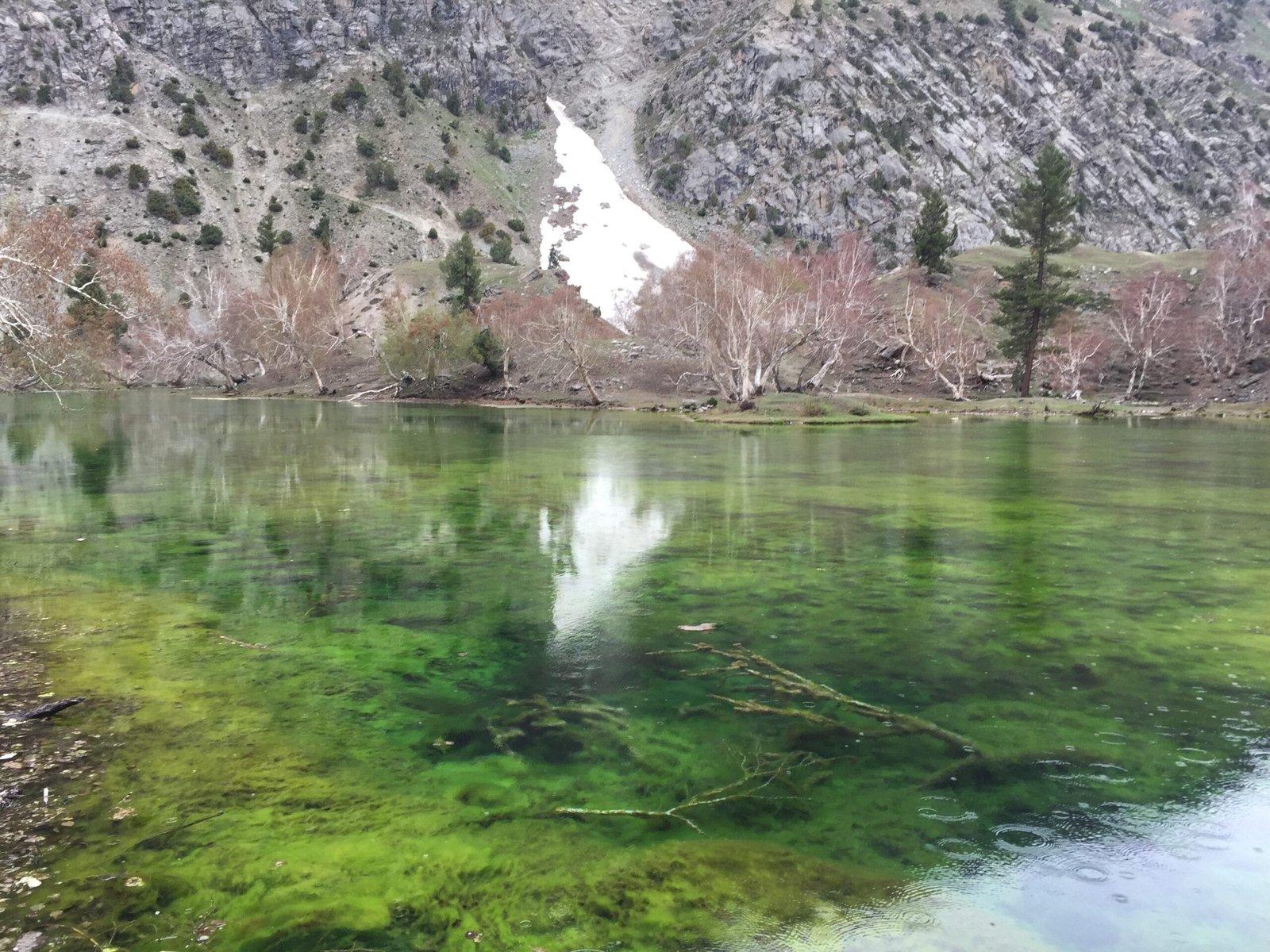
Autumn in northern Pakistan runs from roughly mid-September to early November, and our own pages place the colour at different points inside that stretch, because the season shifts with the year and with the altitude. Hunza's poplars and apricot trees turn gold in the Karimabad area and around Attabad Lake, Baltistan's turn in Shigar, Khaplu and around Skardu, and Naltar's pine valley sits higher and has its own season. This guide does not give a single "peak week", because none of our sources does. It sets out what each of our pages says, side by side, and then helps you choose a date with that spread in mind.
We run a Hunza Autumn Tour and a Skardu Autumn Tour, so we have a stake in the answer. Where a figure comes from one of our tour pages, we say so.
When does the colour peak?
There is no single date, and our own pages do not agree with each other to the week. Here is every timing statement we found, with its source.
| Source (our page) | What it says about autumn colour |
|---|---|
| Hunza Autumn Tour page | Season: "Autumn (Mid-September – November)". Text: "Every October and November, Hunza Valley transforms"; "Sunrise here in October is extraordinary". Seven days "in peak autumn colour" in October |
| Skardu Autumn Tour page | Season: "Autumn (October – November)". Text: "October and early November bring a transformation to the landscape" |
| Best time to visit Gilgit-Baltistan (guide) | Mid-September to late October is "our own pick for most travellers"; a Hunza autumn photo is captioned "late October" |
| Baltit and Altit forts guide | "October for autumn colour"; September–October described as clear air and golden poplars |
| Passu Cones guide | Autumn "from mid-September" is many photographers' favourite time |
| Skardu weather month by month | "Autumn colours: mid-October to early November" |
| Shangri-La and Kachura Lakes guide | Autumn gold in the poplars and orchards "from mid-September" |
| Shigar Valley guide | "Autumn (mid-September onward) for golden poplars" |
| Khaplu Valley guide | October: "Autumn gold, crisp and clear, fewer visitors" |
Reading across those rows: the earliest anyone writes is "from mid-September" (Passu, Shigar, Kachura), and the latest is "early November" (Skardu weather). October appears in almost every row. That is as precise as our sources let us be. What we will not do is invent a "peak week", because colour depends on that year's weather, and we have not published any record of year-to-year dates to build one from.
What about altitude?
It is natural to expect higher places to turn earlier, but none of our pages gives altitude-linked dates, so we do not either. What we can give you is where each place sits, from our pages, so you can ask us:
- Hunza (Karimabad area): our Hunza Autumn Tour page lists its highest point as 2,438 m, with a dawn visit to Eagle's Nest at Duikar (3,200 m).
- Skardu: about 2,500 m; Shigar Valley about 2,230 m; Khaplu about 2,600 m.
- Naltar: valley floor about 2,850–2,950 m, lakes at about 3,050–3,150 m, per our Naltar guide.
Where do you see autumn in Hunza?
Our Hunza Autumn Tour describes the scene as apricot orchards and poplar-lined irrigation channels turning gold, amber and rust-red against freshly snowed Karakoram peaks, below Rakaposhi (7,788 m) and Ultar Sar (7,388 m). It is a seven-day trip that moves through the places the page names:
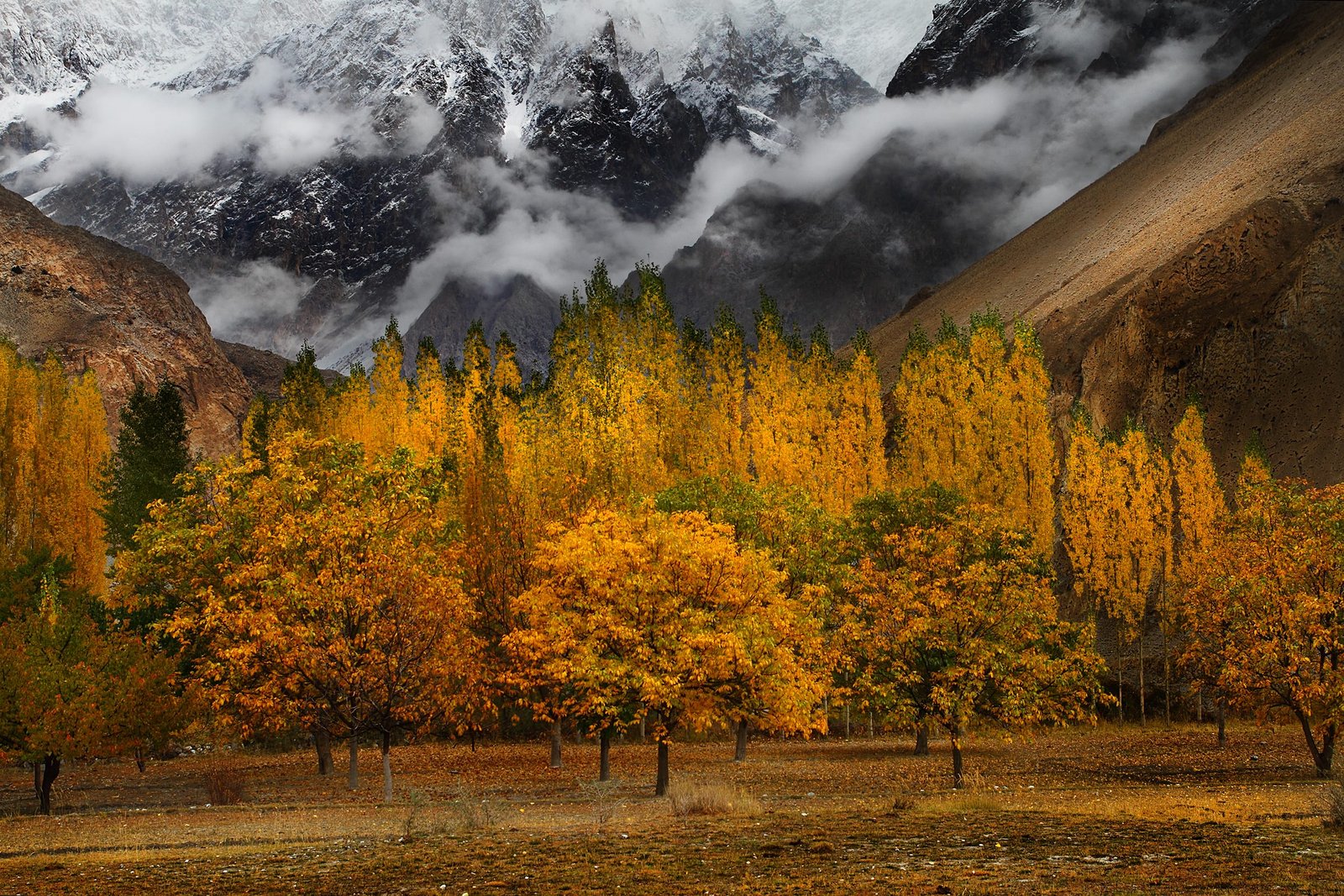
- Karimabad forts. Day 2: Baltit and Altit forts "above golden poplar terraces at peak colour".
- Attabad Lake and Passu. Day 3: Attabad Lake, the Passu Cones and Gulmit, "autumn reflections on turquoise water".
- Nagar Valley. Day 4: the Rakaposhi viewpoint "past red apricot orchards and harvest villages".
- Eagle's Nest sunrise. Days 1 and 5 at Duikar for "the full autumn sweep of the Hunza valley".
For the villages and forts, our Baltit and Altit guide is the deeper read, and the Hunza Valley page maps the wider area.
Where do you see autumn in Skardu and Baltistan?
The Skardu Autumn Tour is a six-day trip. Its page describes gold, amber and crimson in Baltistan's valleys, and names four places as highlights.

- Shigar Valley. Apricot orchards and poplar-lined water channels "at their most spectacular in autumn". Day 4 also includes Shigar Fort, Upper Kachura Lake and the Soq Valley, described as "golden".
- Kharpocho Fort. The 16th-century fortress above Skardu takes on "a particularly dramatic quality in the low autumn light"; day 6 begins with sunrise from it.
- Khaplu. The drive along the Shyok Valley is described as "one of Pakistan's great autumn drives", with red-leaved willows and poplars along a turquoise river.
- Deosai National Park. Day 3, where the page says the wildflowers are fading and the brown bears are fattening up for winter.
One timing note from our Skardu weather post: it says Deosai closes around October, with the first snow around the middle of the month. The Skardu Autumn Tour includes a Deosai day, so ask us which departure fits which part of that window.
Our guides to Shigar and Khaplu have the heritage side, and the Skardu weather month by month post explains the access dates.
What about Naltar?
Naltar is the valley we are least able to give dates for. Wikipedia describes it as a forested valley about 34 km from Gilgit with three alpine lakes (Satrangi, Blue and Bodlok), and says the Naltar Wildlife Sanctuary was established there on 22 November 1975. The same article lists montane coniferous forest higher up and mixed broadleaf and coniferous forest at lower elevations, including Populus, Salix and Betula among the broadleaf genera. It says nothing about when those trees colour, and nor do any of our pages, so we make no claim about Naltar's foliage dates.
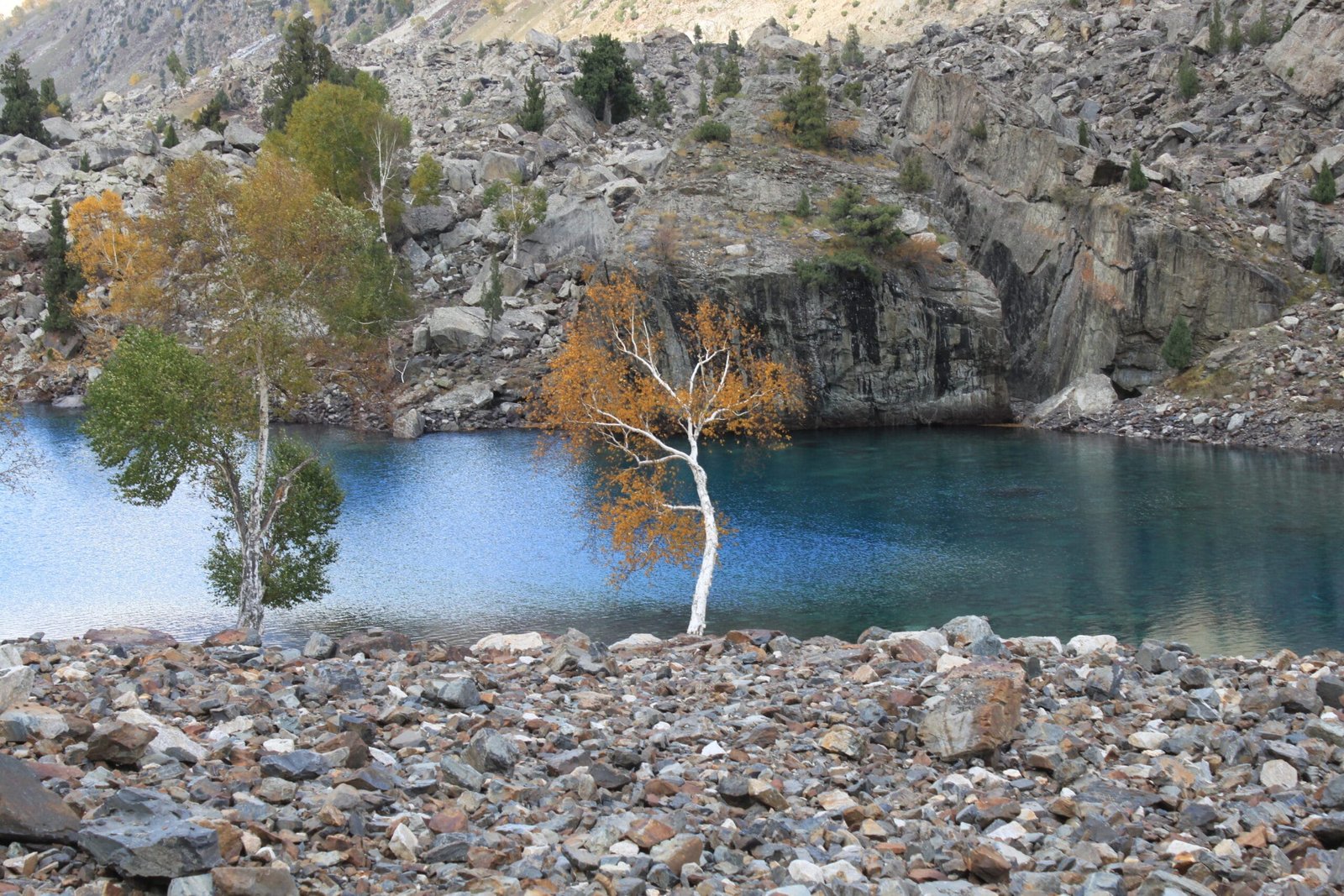
What we can say is about access. Our Naltar guide gives May–October as the best season for the lakes and says the track closes to vehicles in winter under 10–15 feet of snow, and our Naltar day tour page lists its season as May–October. Wikipedia says the road to the lakes is narrow and unmetalled, and almost impassable to vehicles in winter because of snow 10 to 15 feet high. So a late-October visit could meet closed or changing road conditions; check with us before you plan Naltar for the end of the season.
Read our Naltar Valley guide and look at the Naltar jeep day tour for the practical side.
Which autumn tour should you choose?
| Hunza Autumn Tour | Skardu Autumn Tour | |
|---|---|---|
| Length | 7 days, 6 nights | 6 days, 5 nights |
| Highlights | Karimabad forts, Attabad Lake and Passu, Nagar valley, Eagle's Nest sunrise | Deosai, Shigar, Khaplu, Kharpocho Fort |
| Price per person | $900 (7–10), $1,100 (4–6), $1,350 (2–3), $1,800 (solo) | $960 (7–10), $1,160 (4–6), $1,500 (2–3), $2,600 (solo) |
| 2027 departures | 1–7 Sep, 13–19 Oct, 3–9 Nov, 24–30 Nov | 1–6 Oct, 22–27 Oct, 12–17 Nov |
| Difficulty | Easy; sightseeing and short walks | Easy to moderate; high-altitude 4×4 |
| Deposit | 10% (minimum $50); balance two weeks before arrival, or on arrival in Islamabad | Same wording |
Both pages list the guide and driver as local Balti, our own team, never subcontracted. Tips are listed as appreciated, never expected on Hunza and "appreciated but optional" on Skardu; that is as much as the pages say.
If you want both valleys, our Hunza vs Skardu guide helps decide which comes first, and our two-week itinerary links them.
How do you plan around a season that varies?
Our editorial advice, which is ours and not from a source:
- Choose the middle of the window, not the edge. Mid-October is the date our own pages cluster around (Hunza: October; Skardu: mid-October to early November).
- Stay flexible. If your dates can move by a week, tell us.
- Pack for cold nights. Our best-time guide says nights turn cold fast at altitude, and our Passu guide describes late October as cold.
- Ask us before you travel. Our team lives in Skardu and Hunza and sees the trees before any article does.
Ready to see Pakistan turn gold?
See the Hunza Autumn Tour (from $900 per person in a group of seven to ten) or the Skardu Autumn Tour (from $960). A 10% deposit (minimum $50) confirms your seat, with the balance two weeks before arrival or on arrival in Islamabad. Message us on WhatsApp with your preferred dates and tell us whether Hunza or Baltistan is your priority.
Frequently asked questions
When is autumn in northern Pakistan?
Roughly mid-September to early November, according to our pages, with October named most often. Our pages do not agree on an exact peak.
When do the leaves turn in Hunza?
Our Hunza Autumn Tour page gives Autumn (Mid-September – November), and names October and November for the colour. Our best-time guide's Hunza photo is dated late October.
When is the best time for autumn in Skardu?
Our Skardu weather post says autumn colours run from mid-October to early November, and the Skardu Autumn Tour page gives October to November.
Can I see autumn colour in Naltar?
We have no source that gives Naltar's foliage dates, so we cannot say. The lakes' season on our pages is May–October.
Is the Hunza Autumn Tour hard?
No. Our page calls it easy: sightseeing and short walks, with a minimum age of 15 listed.
Is it cold in autumn?
Our guides say nights turn cold fast at altitude, so layers matter, though days can still be mild.
Written by Zulfiqar Ali, founder of Karakoram Venture. Naltar facts are read from Wikipedia on 13 November 2026; timing statements are quoted from our own 2027 pages, which give ranges, not exact dates.