 EN
 العربية
 Deutsch
 Español
 Français
 Italiano
 Polski
 Русский

The Baltis are a Tibetic ethnic group native to Baltistan, in Pakistan's Gilgit-Baltistan, and to parts of Ladakh in India. Their language, Balti, belongs to the Tibetan family of languages, and most Baltis today are Muslims whose ancestors were Bön and Buddhist. Those three facts are the short answer. This guide gives the longer one, in the words of the sources we read, and keeps clear of two habits we want to avoid: treating a living people as a curiosity, and writing as if we speak for them. If you arrived from a search for "balti", this page is about the people of Baltistan.
We are a Skardu tour operator, and our team is Balti. Where we speak from that experience, we say so; where we are summarising history and language, we cite Wikipedia and give the retrieval date. Everything here is a starting point, not a final word.
Who are the Baltis?
Wikipedia describes the Baltis as a Tibetic ethnic group native to Gilgit-Baltistan in Pakistan and to Ladakh in India, mostly in the Kargil district with smaller numbers in Leh. It adds that outside Kashmir, Baltis live across Pakistan, with the larger diaspora in Lahore, Karachi, Islamabad and Rawalpindi.
The origin of the name is unknown, Wikipedia says. The Baltis call their homeland Balti-yul, the "land of the Baltis", and the region's modern name, Baltistan, is the Persian rendering of it. The article's mention of Ptolemy, who it says refers to the region as Byaltae, is dated to the 2nd century BCE on that page and the 2nd century CE on the "Baltistan" page; we therefore give no date.
On numbers: Wikipedia gives the population of the Baltistan Division as about 582,619 as of 2023, and describes it as a blend of ethnic groups, predominantly Baltis. We have no census table of our own to add, and we do not quote a figure for the Balti population as a whole.
Where is Baltistan, and what is it called?
Baltistan, also known as Baltiyul or "Little Tibet", is a mountainous region in Pakistan-administered Gilgit-Baltistan, with an average altitude of over 3,350 m. It borders Gilgit and Diamer divisions to the west, Xinjiang to the north and Indian-administered Ladakh to the southeast. Its main towns are Skardu, Shigar and Khaplu; our Skardu travel guide covers the first, the other two have their own guides below.
One caution, from the same article: the wider Kashmir region has been disputed between India and Pakistan since 1947, and Wikipedia notes that Baltistan was part of the princely state of Jammu and Kashmir until 1947. We describe where people live and what they say, and we take no position on borders.
What language do the Baltis speak?
Balti is a Tibetic language. Wikipedia says it is natively spoken by Baltis in Baltistan and in Ladakh's Nubra Valley and Kargil district, and that it differs from Standard Tibetan because it keeps many sounds of Old Tibetan that Standard Tibetan lost. It describes the language as remaining highly archaic and conservative, closer to Classical Tibetan than other Tibetan languages. The article records different scholarly views on whether it is a dialect of Ladakhi or a sister language.
Some details we found interesting:
- Four dialects. Wikipedia lists eastern (Chorbat and Nubra), central (Khaplu), western (Skardu, Shigar and Rondu) and southern (Upper Kharmang and Kargil) varieties, which are mutually intelligible. For instance, "milk" is oma in the central Khaplu variety and ona in the western variety of Skardu, Shigar and Rondu.
- Two scripts. The article says Balti was written in a version of the Tibetan script from 727 AD until the last quarter of the 14th century, when the Baltis converted to Islam; the Perso-Arabic script then replaced it and is now the main script. It also notes recent efforts to revive the Tibetan-derived "Yige" alphabet.
- A changing vocabulary. Since 1948, Wikipedia says, Urdu words have entered Balti, and Urdu and English words are used for many new things. It also says Balti has kept many honorific words characteristic of Tibetan dialects.
- Words you already know. The name Gasherbrum, according to Wikipedia, comes from the Balti words rgasha ("beautiful") and brum ("mountain"). And Wikipedia's Baltistan article says the English word "polo" derives from the Balti word polo, meaning "the ball used in the game of polo".
If you travel with us, your guides and crew on these trips are local Baltis, as our tour pages describe; ask us about languages for your own trip.
What was Baltistan's religious past, and what is it now?
Wikipedia says Bön and Tibetan Buddhism were the dominant religions among the Baltis until Islam arrived around the 14th century, spread by Sufi missionaries such as Mir Sayyid Ali Hamadani. The Noorbakshia Sufi order further spread the faith, and most Baltis had converted by the end of the 17th century. The same article says Baltis still retain many cultural traits of pre-Islamic Bön and Tibetan Buddhist rituals.
Today the Balti community includes Shia Muslims, Noorbakhshia Sufi followers and Sunni Muslims. We give no percentages, because they are a sensitive subject and we have no source of our own.
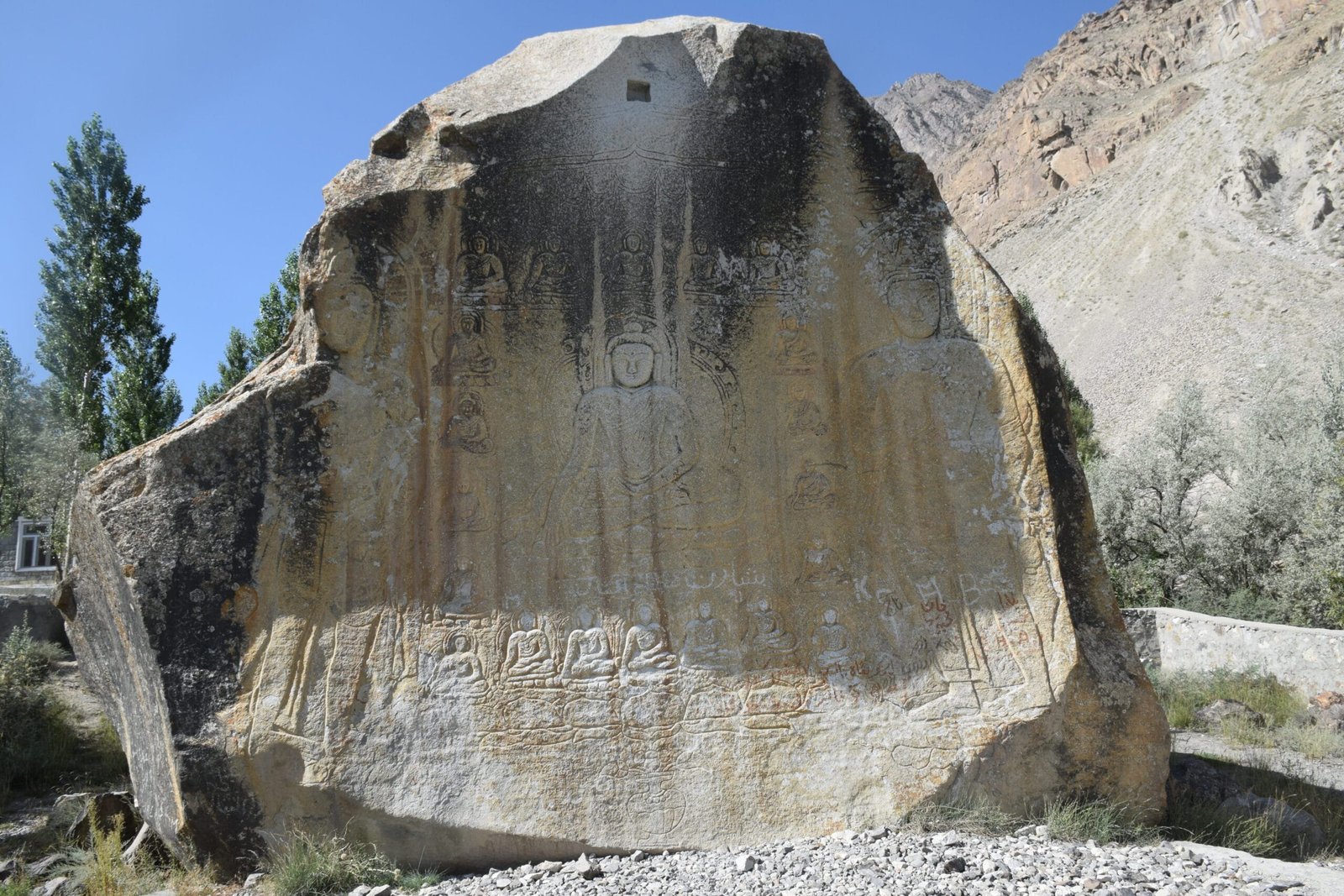
Evidence of the Buddhist past is still visible. Wikipedia mentions the Manthal Buddha Rock, a rock relief of the Buddha on the edge of Manthal village near Skardu, among the region's surviving Buddhist archaeological sites. Our Skardu day-tour guide covers a visit.
How did the region's history shape it?
In brief, and in Wikipedia's terms:
- Origins. The article describes Tibetan Khampa people entering Khaplu through the Chorbat Valley and Dardic groups coming from Gilgit through Rondu, who settled and gave rise to the Balti people. It says Baltistan was under a Tibetan king in 686 and that the Bön and animist Baltis then adopted Tibetan Buddhism, building gompas and stupas.
- Small kingdoms. For centuries the region was a set of small, independent valley states linked by the family ties of their rulers, trade, shared belief and cultural and linguistic bonds. Medieval Baltistan had three main kingdoms: Skardu, Shigar and Khaplu.
- The Maqpon dynasty. Traditionally founded in Skardu in the 12th century and said to have ruled for seven centuries. Its best-known ruler, Ali Sher Khan Anchan, extended Baltistan's reach, and relations with the Mughal court followed.
- Conquest and partition. The article says Baltistan was conquered by Gulab Singh's armies in 1840, then became part of Pakistan after the 1947–48 war, and that Gilgit-Baltistan was established as an autonomous region in 2009.
We do not repeat the detail of battles and marriages here; Wikipedia's article is the place to go for it, and it states that some of these accounts rest on local tradition.
What do Balti forts and mosques tell you?
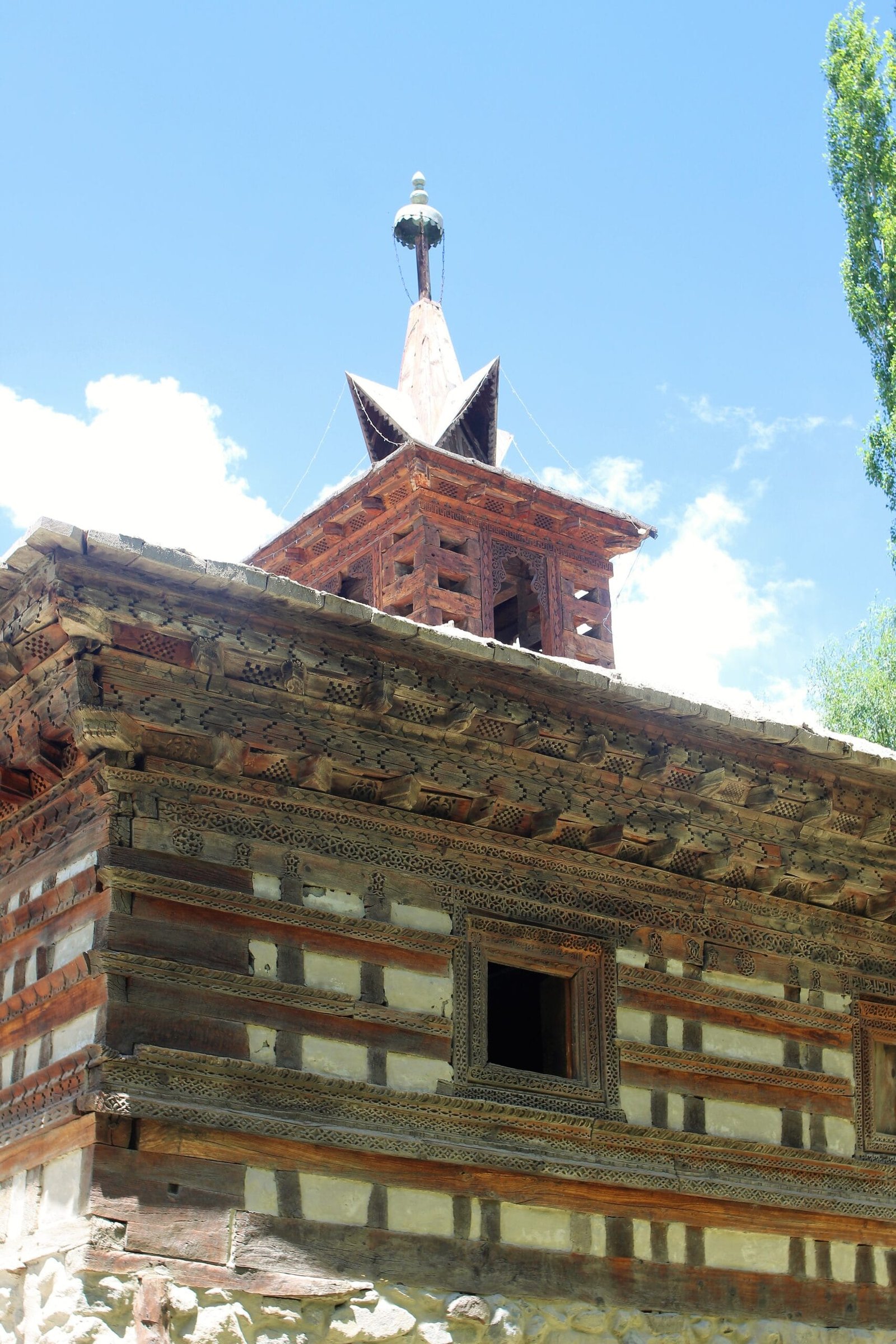
Wikipedia says Balti architecture shows Tibetan and Mughal influence, and that Buddhist-style wall paintings can be seen in forts and Noorbakhshi khanqahs, including the Chaqchan Mosque in Khaplu, the Amburik Mosque in Shigar, Khanqah-e-Muallah in Shigar, and Khaplu, Shigar and Skardu forts.
Our own guides add specifics:
- Shigar. Our guide describes Shigar Fort, called "Palace on the Rock", as a 17th-century raja's palace restored by the Aga Khan programme and now a heritage hotel. Read our Shigar guide.
- Khaplu. Our guide says the restored Khaplu Palace dates to 1840, and describes the Chaqchan Mosque as dated to 1370, one of the oldest mosques in Baltistan; it also notes that sources differ on who built it. Read our Khaplu guide.
A courtesy that costs nothing: these are living religious and community places, not just photo stops. Dress modestly, ask before photographing people, and follow your guide's lead at mosques. That advice is ours; it is not from a source.
What else is distinctly Balti?
- Polo. Wikipedia says polo is popular in Baltistan and indigenous to the Karakoram, played since at least the 15th–16th century, and that Ali Sher Khan Anchan introduced it to other valleys. The Balti name for the game, it says, means "horse riding game".
- Music and dance. The article says Balti folklore credits a Mughal princess with bringing musicians and artisans, and lists instruments including the surnai, karnai, dhol and chang, and several kinds of dance.
We are not describing festivals or customs beyond these, because we have no source for them.
How do Balti people appear in our trips?
We run trips in Baltistan with a local Balti team, and we say only what our pages say.
- On the Baltistan Cultural Tour, our FAQ says: "Your team is local Balti — our own guides and drivers from Gilgit-Baltistan, never subcontracted."
- On the Great Karakoram Traverse Trek, services included list "Local Balti guides and porters, all camping and kitchen crew."
- Our Broad Peak page describes its team as "the Balti outfit that lives under these mountains", and says the high-altitude porters and base-camp staff on every Broad Peak expedition are Pakistani, whoever sold the trip.
The Baltistan Cultural Tour itself is six days: Islamabad, a flight to Skardu with Kharpocho Fort and Satpara Lake, Deosai National Park, Shigar Valley and fort with the Amburiq Mosque and Upper Kachura Lake, Khaplu Valley and fort with the Chaqchan Mosque and Manthoka Waterfall, and the flight out. The page calls it suitable for all ages and fitness levels, with no prior trekking experience required.
Ready to meet Baltistan in person?
The Baltistan Cultural Tour is $900 per person in a group of seven to ten, $1,100 for four to six, $1,400 for two to three, and $2,400 for a solo traveller. A 10% deposit (minimum $50) confirms your spot, and the balance is due two weeks before arrival, or on arrival in Islamabad. See the Baltistan Cultural Tour page. Message us on WhatsApp with your dates and tell us what you most want to learn about the region.
Frequently asked questions
Who are the Baltis?
A Tibetic ethnic group native to Pakistan's Gilgit-Baltistan and India's Ladakh, per Wikipedia. Most are Muslims whose ancestors followed Bön and Tibetan Buddhism.
What language do Baltis speak?
Balti, a Tibetic language, written today mainly in the Perso-Arabic script. Wikipedia lists four mutually intelligible dialects.
Is Balti related to Tibetan?
Yes. It belongs to the Tibetic family, and Wikipedia says it is closer to Classical Tibetan than other Tibetan languages.
What is Baltistan?
A mountainous region of Gilgit-Baltistan, also called Baltiyul, whose main towns are Skardu, Shigar and Khaplu.
Where can I learn about Balti heritage on a trip?
On our Baltistan Cultural Tour: the forts and mosques of Shigar and Khaplu, plus Skardu and Deosai.
Are your guides Balti?
Our Baltistan Cultural Tour page says the team is local Balti, our own guides and drivers, never subcontracted.
Written by Zulfiqar Ali, founder of Karakoram Venture. History and language are read from Wikipedia on 13 November 2026; we invite corrections from readers who know these valleys better than we do.